Description
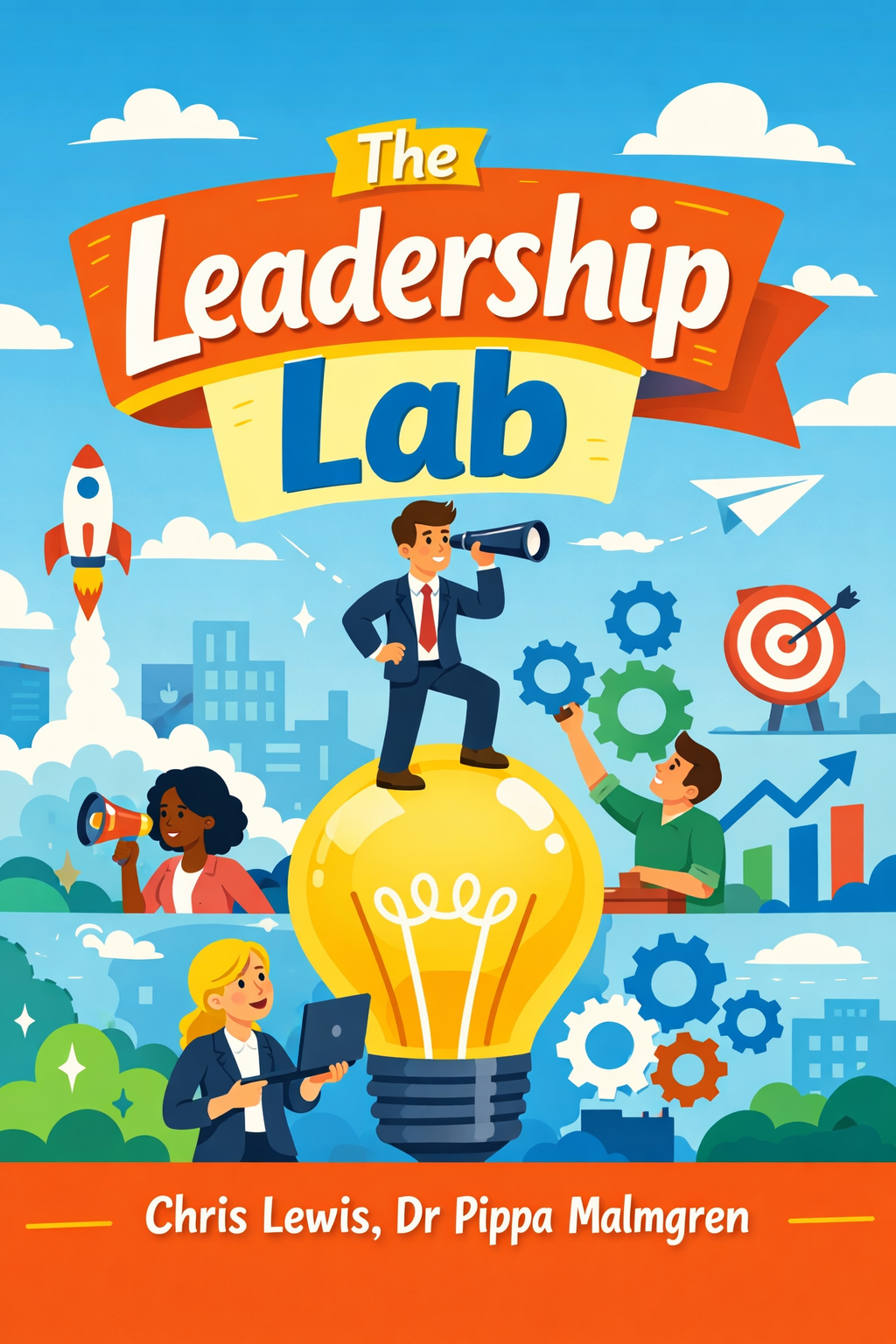
The Leadership Lab presents a vital guide for navigating the complexities of modern leadership. The world is transforming at a breathtaking pace, driven by technological leaps and economic shifts, creating widespread uncertainty. People naturally look to their leaders for direction, but the old rulebooks are obsolete. This book dismantles the key challenges of the twenty-first century and provides a new toolkit for fostering trust, inspiring teams, and driving efficiency in this new landscape. It argues that success now depends on understanding the human impact behind economic data, cutting through constant digital noise, and leading with both analytical rigor and profound humanity.
True leadership today demands a fusion of two distinct modes of thinking. For decades, effectiveness has been associated with left-brain thinking: logical, analytical, and data-driven. This approach solves precise problems and has propelled progress in science and industry. However, relying on it exclusively is a critical limitation. Our right-brain capacity—for broad, connective, qualitative, and creative thought—is equally essential. Insight often strikes not at the desk, but in moments of detachment like a walk or a shower, when the analytical mind rests and the creative mind synthesizes. Effective leaders must therefore cultivate both: drilling into the specifics while also making space for contemplation to see the bigger picture and forge innovative connections.
This balance is crucial because we are drowning in information. The constant digital deluge from emails, messages, and news forces our analytical minds into a frantic triage mode, filtering for immediate relevance at the expense of deeper understanding. Leaders, in this state, risk making swift but poorly considered decisions, missing crucial long-term signals. The remedy is to consciously step away from the flow, to create pauses for questioning and reflection. Leadership requires the discipline to stop consuming and start contemplating, to assess information deliberately rather than reactively.
A leader’s perspective must also reconcile broad economic trends with on-the-ground human reality. While global indicators may show growth and poverty reduction, these figures often mask acute local struggles with inequality, rising costs, and a pervasive sense of unfairness. When people see financial scandals and policies that seem to favor the wealthy, trust in institutions and their leaders erodes. A leader who cites positive macro-data while ignoring team members’ struggles with rent or stagnant wages loses credibility. Therefore, skillful leadership involves holding two truths simultaneously: understanding the overarching economic narrative while being acutely attuned to how it affects individual well-being and morale.
Furthermore, the technology that delivers this information overload has also bred a culture of impatience and distraction. Accustomed to instant gratification, people have shorter attention spans and higher expectations for engagement. Communicating a vision or strategy now requires clarity, repetition, and a compelling presentation that cuts through the noise. More importantly, leaders must actively model patience—a counter-cultural and vital virtue. This means persisting through setbacks, allowing room for learning and mistakes, and prioritizing others’ needs. By demonstrating this self-discipline and consideration, leaders build a foundational culture of trust and psychological safety.
This environment of stress and immediacy often manifests as widespread anger, visible online and in rising real-world tensions. Leaders inevitably face this frustration, sometimes as direct targets. To navigate this, they must develop inner resilience through mindfulness, which allows for measured responses over reactive ones. Coupled with genuine empathy—the effort to understand the roots of others’ frustration—these skills enable constructive conflict resolution. A leader who listens deeply and addresses concerns fairly can transform potential conflict into an opportunity for strengthening team cohesion.
Amidst these human challenges, technology offers powerful tools. Advances in data analytics and artificial intelligence present unprecedented opportunities to solve problems and shape the future. However, leaders must approach these tools with a strong ethical framework. Data is not an infallible truth; it can reflect biases and create surveillance concerns. The leader’s role is to ask critical questions about the data’s origin, purpose, and potential consequences, ensuring technology is used to empower and protect people, not to manipulate or control them.
Finally, addressing systemic issues like gender inequality is not just a moral imperative but a strategic one. Diverse teams that fully leverage all talent are more innovative and effective. Leaders must move beyond passive policies to actively challenge unconscious biases, ensure equitable access to opportunities, and create an inclusive culture where everyone can contribute their full potential. This maximizes collective capability and drives superior performance.
Ultimately, The Leadership Lab argues that modern leadership is an integrative practice. It requires the wisdom to balance hard data with human insight, the courage to pause in a world that prizes speed, the empathy to lead in an age of anger, and the ethical fortitude to harness technology for good. By synthesizing these capabilities, leaders can guide their teams with confidence and build organizations that are not only successful but also resilient and humane.