Description
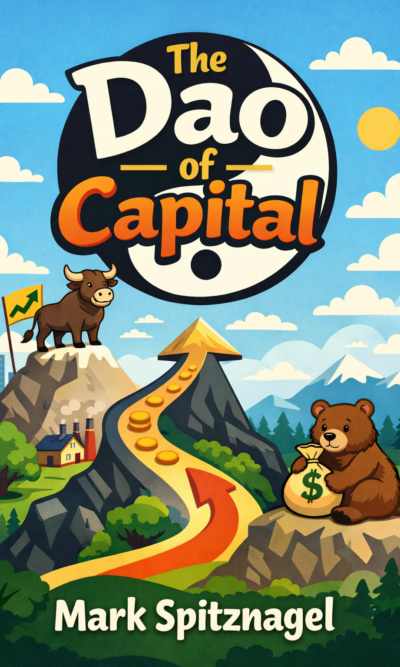
The journey to financial prosperity is less about decoding the market’s mysteries and more about understanding the person in the mirror. True wealth is built not on a foundation of hot tips or complex algorithms, but on the bedrock of disciplined psychology. This book argues that the greatest obstacle to investment success is our own hardwired emotional responses—fear, greed, overconfidence, and panic—which systematically lead us astray. The path forward, therefore, is one of rigorous self-mastery, where we learn to replace impulsive reactions with a structured, process-oriented approach.
At the heart of this philosophy is the construction of a personal investment framework, a set of unbreakable rules crafted during moments of calm reflection. This framework acts as a psychological anchor, a pre-written script for navigating the inevitable storms of market volatility. When prices plummet and fear screams to sell everything, the framework coolly dictates the conditions for a prudent purchase. When a bubble inflates and greed whispers that this time is different, the framework outlines clear criteria for taking profits or standing aside. This system removes the burden of decision-making in the heat of the moment, insulating the investor from their own worst instincts.
The text delves deeply into the specific cognitive biases that plague investors. We explore the devastating effects of loss aversion, where the pain of a loss feels psychologically twice as powerful as the pleasure of an equivalent gain, leading to the premature selling of winners and the stubborn holding of losers. We confront recency bias, which tricks us into believing that whatever has happened in the recent past will continue indefinitely, fueling buying at market tops and selling at bottoms. The narrative exposes the illusion of control and the narrative fallacy, where we craft convincing stories to explain random market movements, giving us a false sense of predictability and expertise.
Beyond identifying these pitfalls, the book provides practical mental tools for mitigation. A central technique is the conscious adoption of a long-term, cyclical view of markets. By internalizing the fact that downturns and recoveries are inherent features of the economic landscape, not existential threats, an investor can reframe short-term pain as future opportunity. This perspective encourages a mindset of “patient opportunism,” where capital is preserved during euphoric highs and strategically deployed during periods of pervasive pessimism when assets are undervalued.
Another critical tool is the development of emotional awareness. Investors are taught to recognize the physical and mental signs of stress, greed, or panic—the quickened pulse, the obsessive checking of portfolio values, the urge to make a dramatic move. By simply naming these emotions as they arise, we rob them of their impulsive power, creating a crucial pause between stimulus and reaction. This pause is the space where rational process can re-engage.
The author strongly advocates for a margin of safety in all investment decisions, a principle that serves as both a financial and psychological buffer. By insisting on purchasing assets significantly below a conservative estimate of their intrinsic value, an investor builds in a cushion for error in their analysis or for unforeseen market events. This practice not only improves potential returns but, more importantly, fosters a profound sense of calm and resilience. Knowing you have a built-in safety net reduces anxiety and makes it easier to endure volatility without capitulating.
Finally, the book emphasizes that successful investing is a game of consistent process, not sporadic outcomes. A sound process involves thorough research, clear entry and exit criteria, position sizing to manage risk, and regular portfolio reviews—all conducted according to the personal framework. A single investment can succeed or fail due to luck, but a robust process, faithfully executed over decades, virtually guarantees a successful outcome. The true measure of an investor is not their best-performing stock, but their ability to follow their own rules through complete market cycles, from manic peaks to depressive troughs and back again.
Ultimately, this is a guide to cultivating the character of a wealth builder. It is about developing the patience of a gardener, the discipline of a soldier, and the rationality of a scientist. Wealth, in this view, is the natural byproduct of a mind that has been trained to see clearly, act deliberately, and remain steadfast when others are ruled by emotion. The laws that govern its accumulation are, first and foremost, laws governing oneself.