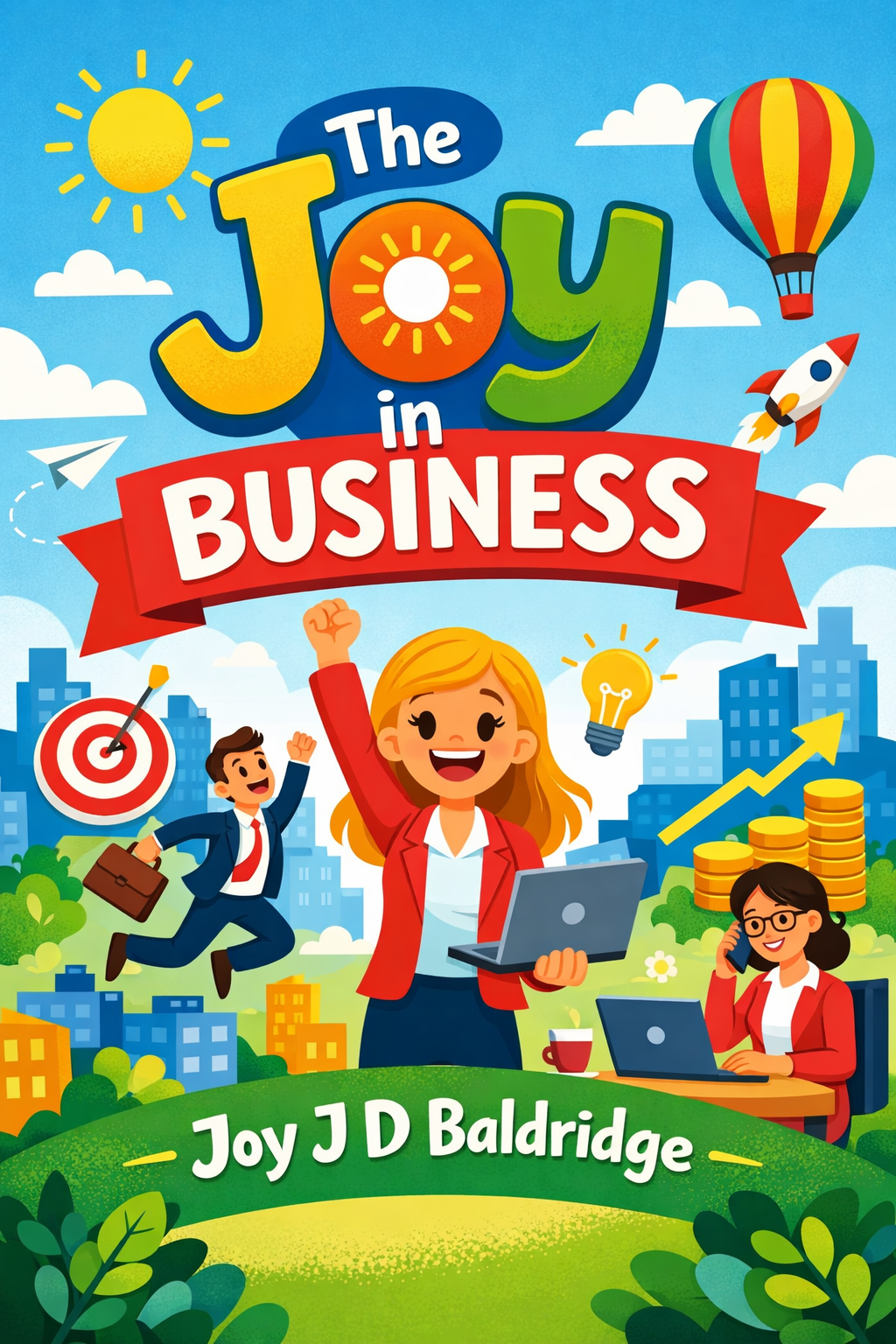
Description
The central promise of this book is that joy is not a random accident but a skill that can be cultivated through deliberate practice. It offers a toolkit of mental models, physical techniques, and communication strategies designed to help you reshape your daily experience, both personally and professionally. The premise is that by changing your internal landscape—your thoughts, habits, and self-talk—you can fundamentally alter your external reality, leading to greater satisfaction and success.
The journey begins with a powerful metaphor for understanding our emotional lives. Imagine four houses, each representing a primary emotional state: Sadness, Anger, Gladness, and Fear. We all visit each house throughout our days, but most people find themselves taking up long-term residence in the houses of Sad, Mad, or Scared, only occasionally visiting the House of Glad. The critical insight is that your primary emotional residence is not a fixed address. You have the agency to move. Recognizing that a prevailing mood is a temporary dwelling, not a life sentence, is the first step toward choosing a happier home. This metaphor reframes happiness as a place you can consciously decide to inhabit.
To make that move sustainable, you need to pay your RENT—an acronym for Rest, Exercise, Nutrition, and Thoughts. For Rest, the book goes beyond mere sleep, offering micro-techniques for instant recharge. One is the “Purple Break”: for sixty seconds, cover your closed eyes with your hands and count backward from fifteen with slow exhales. This simple act blocks light, allowing your visual system to restore itself and your mind to reset. Another is the discreet “4-4-6” breath: inhale for four seconds, hold for four, exhale for six. This practiced rhythm instantly anchors you in the present, dissolving anxiety about the future or regrets about the past. These are tools for finding calm amid chaos, always available and entirely free.
When it comes to Exercise, the advice counters the tyranny of ambitious, complex fitness regimes. Instead, it champions the power of small, spontaneous actions. Take the stairs, park farther away, or follow the “mailbox method”—run to one mailbox today, two tomorrow, and gradually build distance. The goal is to integrate movement seamlessly into life, reducing the need for daunting planning and sheer willpower. For Nutrition, the guidance is straightforward: prioritize protein for sustained energy and aggressively limit sugar. The book outlines a sobering list of sugar’s detrimental effects, from nutrient deficiencies to increased disease risk, making a compelling case for choosing nuts over candy to fuel your body and mind.
The final and most crucial component of RENT is Thoughts. Our internal dialogue shapes everything. Negative self-talk like “I can’t do this” becomes a self-fulfilling prophecy. The book teaches how to reframe that narrative. Add a simple pivot: “I can’t do this… but what *can* I do?” This shifts your brain from problem-dwelling to solution-finding. Another technique is encapsulated in the phrase, “Salt the hay; find the way.” If you can’t make a horse drink, you can make it thirsty by salting its hay. Similarly, for every obstacle, there is often an indirect, creative path forward. Cultivating this kind of positive, resourceful self-talk is the bedrock of resilient thinking.
To manage persistent worries and fears, the book introduces two memorable acronyms and a statistical concept. First, ask if your worry is a **T**iger, a **P**aper, or a **M**ovie. A “Tiger” is a real, immediate threat requiring action. A “Paper” tiger is a fear that looks scary but is ultimately harmless upon closer inspection. A “Movie” is a fictional story your mind is projecting about the future. Categorizing worries this way helps you respond appropriately instead of being chronically anxious. Second, practice **N**ot **O**ver **T**hinking **E**verything—literally give yourself permission to stop the mental loops. Finally, adopt the “Bell Curve” mindset: in any situation, most outcomes will cluster in the middle range. Catastrophic failure and phenomenal success are both rare outliers. This perspective helps neutralize the fear of worst-case scenarios.
The tools extend outward to improve how we connect with others. For giving feedback, remember “Four Words and a Trophy.” The four words are “What do you think?” Start by asking for the other person’s self-assessment before offering your own. The “trophy” is the practice of specifically praising effort and progress, not just innate talent, which fosters a growth mindset. For clearer communication, the book suggests understanding personality “languages.” Some people are direct and task-oriented, others are relationship-focused, some are idea-driven, and others are detail-conscious. Tailoring your message to the listener’s style prevents misunderstandings and builds stronger rapport.
Ultimately, this book is a compendium of accessible, actionable strategies. It argues that joy in business and life is built through a series of small, consistent choices: how we rest our eyes, how we breathe, how we talk to ourselves, and how we speak to others. By applying these conceptual and practical tools, you can construct a more resilient, positive, and effective life, turning the occasional visit to the House of Glad into a permanent residence.