Description
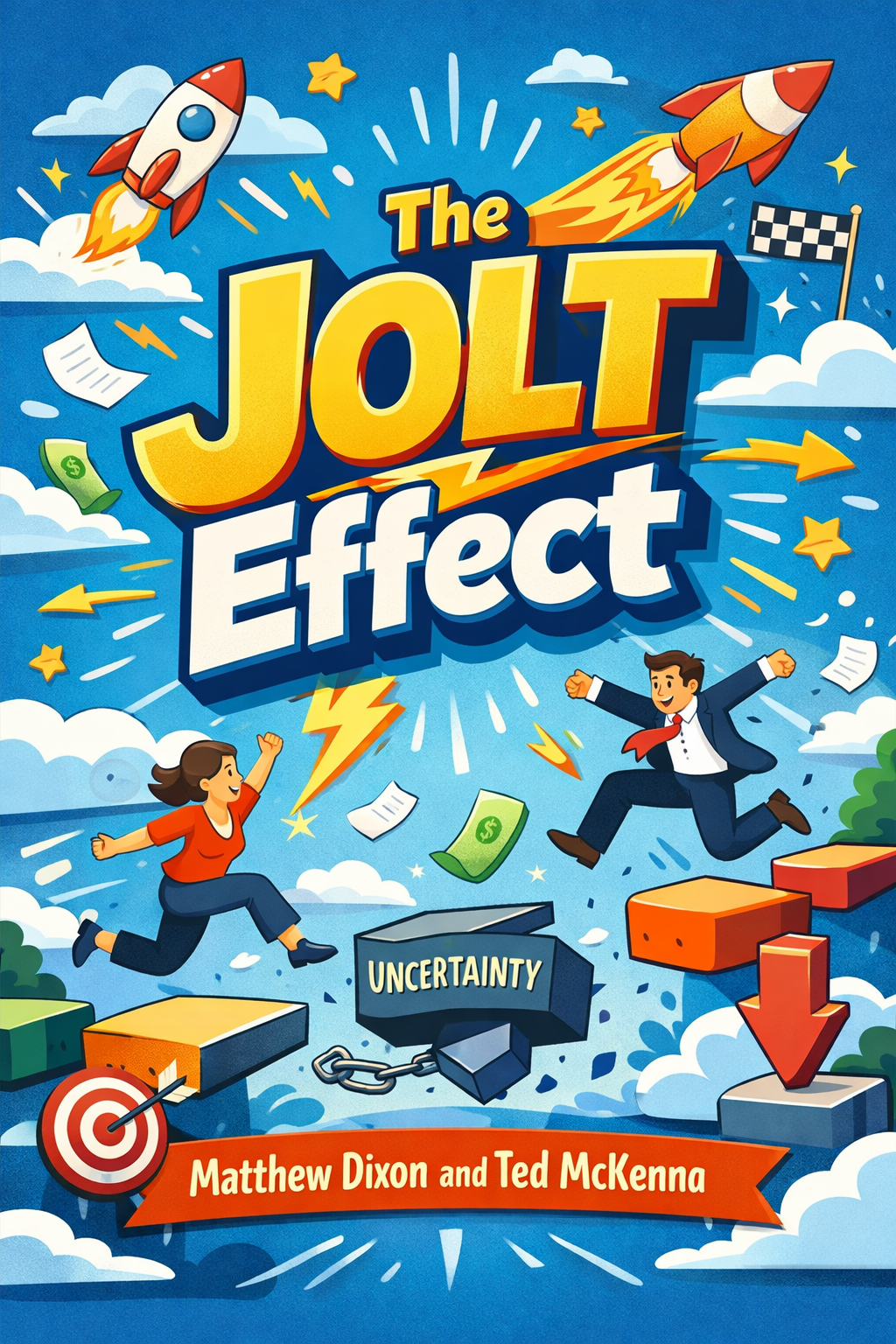
For years, the prevailing wisdom in sales held that the primary obstacle was a customer’s inherent bias toward their current situation. Salespeople were taught to aggressively overcome this “status quo bias.” However, groundbreaking analysis of millions of sales transactions reveals this core idea is mistaken. The true enemy of the close is not a preference for the familiar, but a paralyzing state of indecision. This indecision is responsible for more than half of all lost sales opportunities. The critical insight is that customers often know the status quo isn’t working, yet they still cannot move forward. This stems from a powerful human tendency: loss aversion. The pain of potentially making a bad decision (an active error) feels far worse than the regret of missing out on a good one (an error of omission). Faced with a choice, many customers would rather do nothing than risk a tangible loss. Traditional tactics, like re-arguing the product’s benefits, only worsen this anxiety, negatively impacting the vast majority of sales attempts.
The solution is a four-part framework designed to guide customers out of this paralysis. The first step involves judiciously diagnosing the root of the hesitation. Indecision generally springs from three distinct sources. The first is a valuation problem, where the customer is simply overwhelmed by options and cannot determine which is best for them. The second is an insatiable hunger for information, where the customer perpetually researches, seeking endless data points and delaying a decision in a quest for unattainable certainty. The third is outcome uncertainty, a deep-seated fear of the risk involved in making the wrong purchase, often fueled by past buying mistakes. Top performers excel at quickly identifying which type of indecision they are facing and, crucially, gauging its severity. They look for warning signs like customers who demand excessive information, constantly backtrack on progress, shift their decision criteria, or show an inability to accept a “good enough” solution. This diagnosis dictates the precise intervention needed.
For customers stuck in a valuation problem, paralyzed by too many choices, the most effective technique is to confidently offer a recommendation. This counters the “paradox of choice,” where an abundance of options leads to decision fatigue and inaction. The key is a shift from open-ended questioning to proactive guidance. Instead of asking, “What do you think you need?” the salesperson asserts, “Based on what you’ve shared, here is what you need.” This simple change dramatically increases win rates. To make this recommendation powerful, it should be framed as personal advocacy, using phrases like, “If I were in your shoes, I would choose this option.” This personal touch builds trust and transforms the salesperson from a presenter of options into a trusted advisor cutting through the noise.
When facing a customer suffering from information overload, the strategy shifts to limiting the exploration. The goal is to gently but firmly guide the customer out of an endless research loop. This is achieved by owning the flow of information, positioning oneself as the definitive expert so the customer feels confident in relying on your judgment. It also involves masterful anticipation, using “pre-buttals” to address concerns before the customer even voices them, which demonstrates deep understanding. Perhaps most importantly, it requires radical candor—a genuine care for the customer’s outcome paired with the courage to challenge unnecessary requests. This might mean politely declining a redundant demo to instead probe the real hesitation. Interestingly, effective communication here often involves “cooperative overlapping,” like interjecting with “Exactly” or “I see,” which shows active listening and builds conversational rapport, leading to better outcomes than passive silence.
The final, and often most critical, step is taking risk off the table for the customer gripped by outcome uncertainty. The outdated technique of instilling fear about missing out (FUD) only amplifies the customer’s anxiety. The superior approach is to systematically dismantle the perceived risk of the purchase. This can be done by offering a strong guarantee or return policy, thus providing a tangible safety net. Another method is to reframe the cost, breaking it down into a trivial daily expense or comparing it to a familiar, accepted cost. Finally, leveraging social proof through testimonials and case studies reassures the customer that others like them have successfully taken the same leap and been happy with the results. By directly addressing the fear of loss, the salesperson reduces the emotional burden of the decision, making it easier for the customer to say yes.
Ultimately, this framework represents a fundamental shift from persuading customers to change their minds, to guiding them out of a state of indecision. It recognizes that the modern buyer often has ample reason to purchase but lacks the psychological safety to act. By diagnosing the specific cause of hesitation, providing clear direction, curating information, and mitigating perceived risk, salespeople can transform frustrating stalemates into successful partnerships. This method is not about manipulation, but about empathy and leadership, helping customers navigate the discomfort of choice to reach a decision they feel confident about.