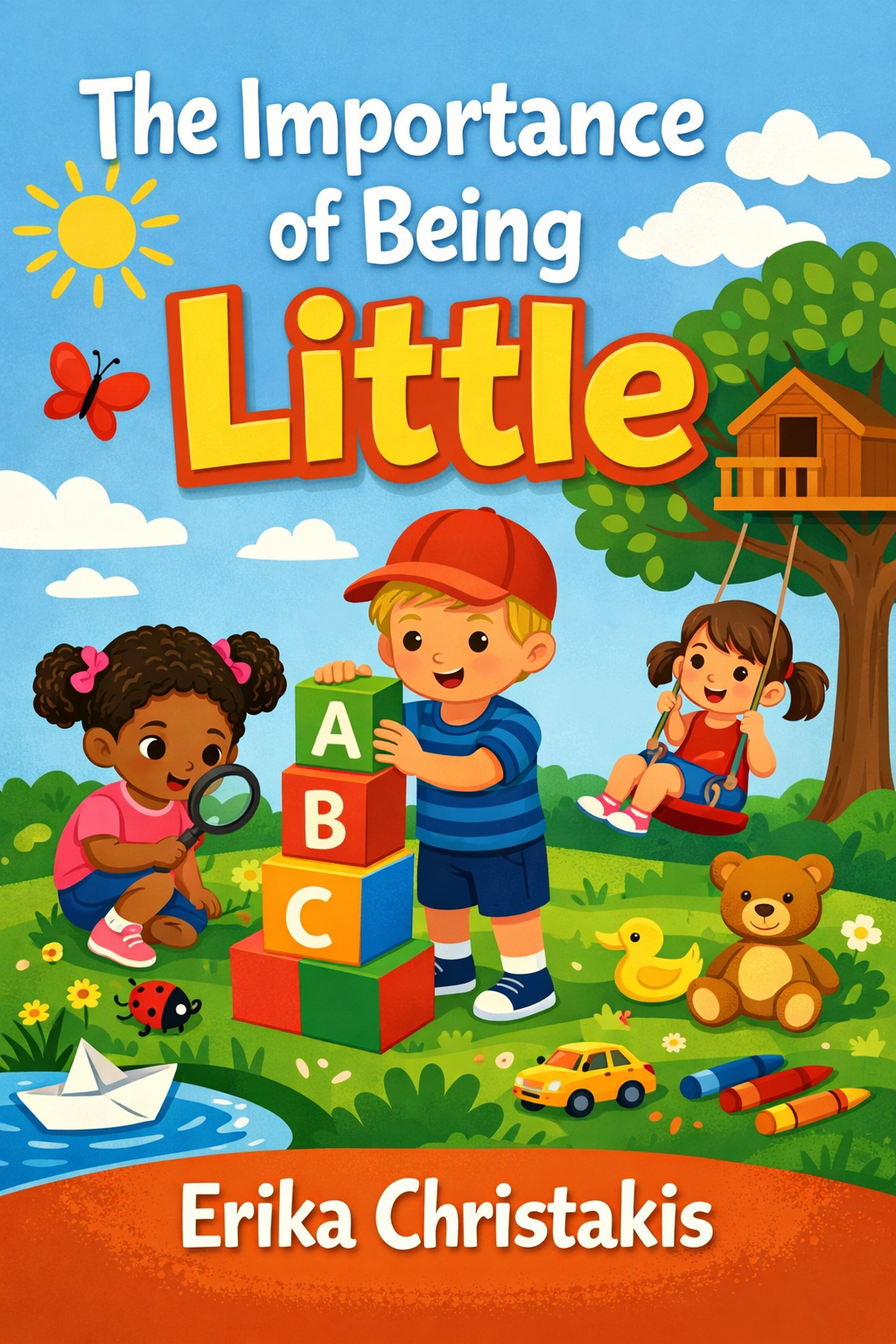
Description
In a world increasingly focused on metrics and early achievement, the early years of childhood are being reshaped into something they were never meant to be. This book presents a compelling case that modern preschool has lost its way, trading the rich, messy, and profoundly important world of child-led exploration for a rigid, academic-style curriculum ill-suited to young minds. The author argues that in our well-intentioned efforts to prepare children for a competitive future, we have forgotten a fundamental truth: young children learn best through the serious work of play, curiosity, and trusting relationships, not through standardized drills and passive instruction.
The transformation of preschool from a space of discovery to one of formal instruction is a relatively recent phenomenon, driven by a complex mix of social and political forces. As more parents entered the workforce, the demand for childcare grew, and with it, a societal anxiety about educational outcomes and “readiness.” This anxiety birthed well-meaning but flawed policies that imposed uniform academic standards on very young children, creating a system where ticking boxes on grammar and math worksheets often takes precedence over fostering imagination, problem-solving, and social-emotional skills. The result is an environment that often feels more like a miniature high school than a nurturing ground for the unique wonder of early childhood.
A central issue is that this system is designed primarily around the needs and anxieties of adults, not the developmental needs of children. Parents, understandably concerned about safety and future success, often equate quiet, orderly classrooms with effective learning. Meanwhile, the pressure of standardized assessments pushes educators toward “direct instruction”—a passive method where teachers simply dispense information. This approach misunderstands how children actually learn. Forcing a four-year-old to memorize the days of the week is often a futile exercise because their concept of time is not yet aligned with an adult’s calendar. It replaces authentic engagement with rote memorization, stifling the innate curiosity that drives true understanding.
This adult-centric perspective stems from a deeper failure: we have forgotten what it is like to be a child. We underestimate their cognitive capabilities while simultaneously overestimating their capacity for adult-style learning. Even infants possess astonishing abilities to discern patterns and languages, but they leverage these abilities through exploration and interaction, not formal lessons. When we pathologize normal child behavior—like a reluctance to sit still for hours—and label it as a disorder, we reveal how far our expectations have drifted from developmental reality. Children are not simply incomplete adults; they are experts in their own domain of discovery, and they instinctively seek out the experiences they need to grow.
Compounding these philosophical problems are stark practical ones, chiefly a chronic lack of funding and respect for early childhood education. The professionals entrusted with shaping our youngest minds are often paid wages comparable to bartenders or truck drivers, with minimal benefits and inadequate training. This economic reality makes it difficult to attract and retain high-quality educators and forces many to rely on scripted, one-size-fits-all curricula because they lack the resources and support to do otherwise. Teachers are caught between the developmental needs of their students and the rigid accountability measures their funding depends on, leading to impossible compromises.
The path forward, however, is clearly illuminated by decades of developmental science. The cornerstone of effective early learning is not a flashcard, but a trusting relationship with a caring, attentive adult. In the security of such a relationship, children feel safe to explore, ask questions, and take intellectual risks. Coupled with this is the irreplaceable role of play. Play is not a frivolous break from learning; it is the very engine of cognitive, social, and emotional development. Through play, children learn to negotiate, innovate, persevere, and make sense of their world. Whether building a fort or pretending to run a shop, they are developing executive function, language skills, and conceptual understanding in a context that is meaningful to them.
The ultimate vision offered is a return to child-centered education. This means creating vibrant, active learning environments where teachers act as guides and co-investigators, not just lecturers. It involves posing open-ended questions, following a child’s lead, and designing classrooms that invite exploration. Improvement comes from focusing on the whole child’s personal development—their creativity, empathy, resilience, and joy—rather than a narrow set of academic benchmarks. By rediscovering the importance of being little, we can create preschools that honor the profound capabilities of young children and lay a truly solid foundation for a lifetime of learning. The goal is not to accelerate childhood, but to deepen it, allowing young minds to flourish in their own unique and wonderful way.