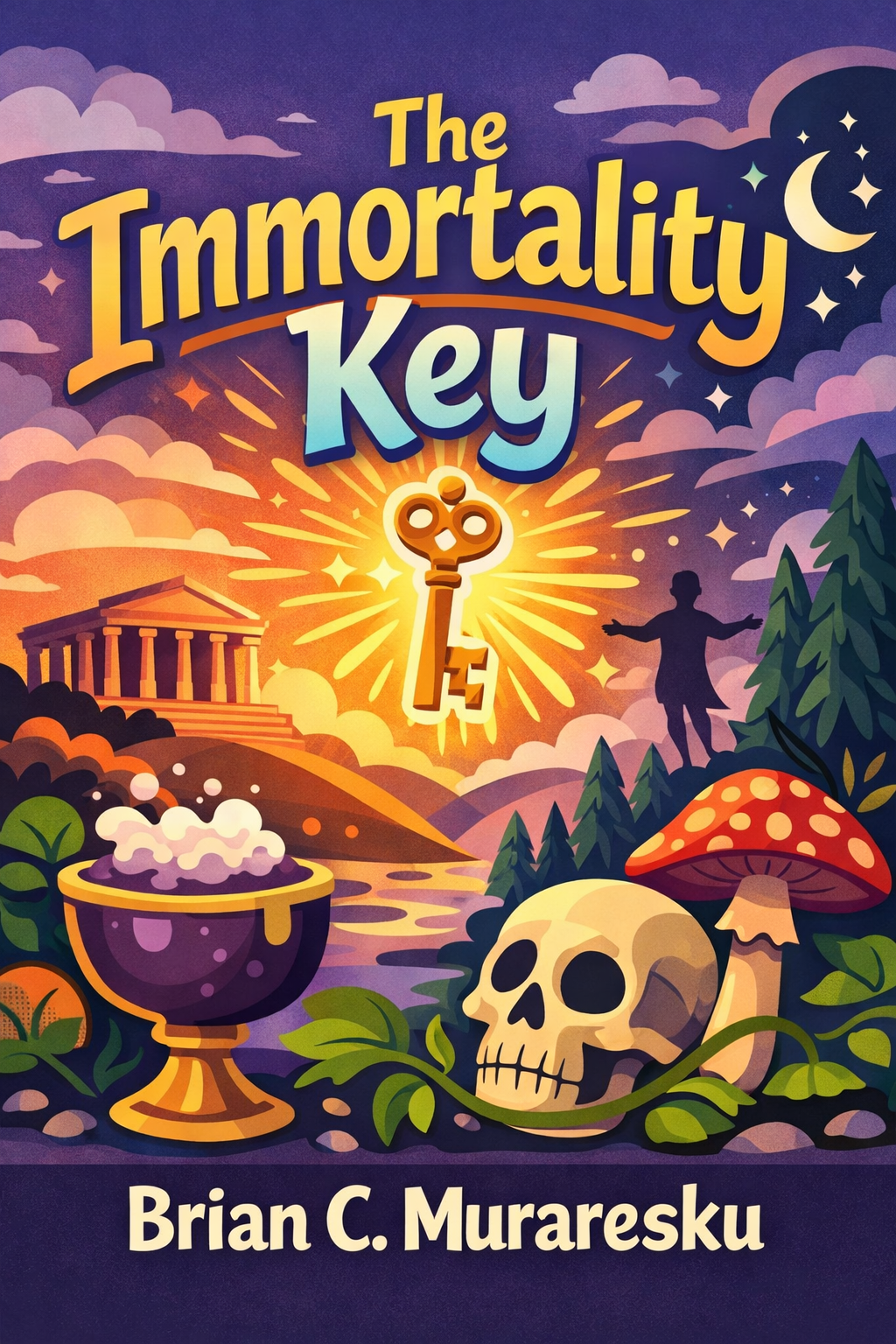
Description
The journey begins with a personal sense of spiritual absence. The author, a lawyer and scholar, reflects on the modern Christian ritual of the Eucharist—a symbolic sip of wine that often feels devoid of transformative power. This curiosity sparks a profound question: what if the original religious experiences of the ancient world were intentionally designed to be profound and mind-altering? What if the wines consumed in sacred rites were not ordinary, but infused with substances that opened doors of perception and facilitated direct encounters with the divine? This inquiry launches a twelve-year investigation across Europe, delving into archaeological sites, museum archives, and historical texts to trace a potentially hidden thread connecting spirituality and psychoactive plants.
Modern science provides a compelling starting point. Rigorous studies on substances like psilocybin, the compound in certain mushrooms, demonstrate their capacity to induce experiences participants describe as among the most meaningful of their lives. Individuals report overwhelming feelings of unity, sacred love, and a dissolution of the fear of death. These documented effects mirror the language used to describe profound religious or mystical states. In an age where traditional religious affiliation is declining yet a hunger for direct spiritual experience persists, this parallel demands attention. It suggests that the human quest for transcendence might have long been intertwined with specific tools for altering consciousness.
This leads the investigation back to the very cradle of Western civilization: Ancient Greece. For nearly two thousand years, pilgrims traveled to the sanctuary of Eleusis to participate in the secretive Eleusinian Mysteries. Initiates swore a vow of silence, on pain of death, about what transpired. Yet historical accounts agree that those who emerged were profoundly changed, having witnessed awe-inspiring visions and gained a new perspective on life and death. Classical figures like Plato hinted at the supreme revelations found there. Scholars have long speculated that a sacramental drink called *kukeon* was central to the ritual. A controversial but persistent theory posits that this potion contained a psychoactive component, such as ergot, a fungus that grows on grain. This would provide a tangible explanation for the consistent, life-altering visions reported by initiates across centuries.
The search for evidence turns to archaeology. At a Greek settlement in Spain, excavations of a ritual space linked to the Mysteries yielded a crucial discovery: a ceremonial cup and a human jawbone that, when analyzed, tested positive for traces of ergot. This provides physical proof that hallucinogenic substances were present in a sacred, ritual context. Further evidence emerges from ancient texts. The Greek physician Dioscorides, in his first-century encyclopedia of medicine, provides dozens of recipes for medicinal wines. Among them are explicit instructions for blending wine with plants from the nightshade family, known for their potent psychoactive properties, noting they produce “not unpleasant visions.” Artistic evidence, such as a Greek vase depicting a priestess adding a mysterious herb to a wine vessel, supports the practice of enhancing wine for ritual purposes.
The final, and most provocative, part of the quest asks whether this pagan tradition secretly flowed into the early Christian world. The first Christians practiced their faith within the Greco-Roman milieu, where mystery religions and ritualized intoxication were common. The author explores the possibility that the earliest Eucharistic ceremonies, especially those held in secret catacombs, might have used a similarly potent sacrament. Could the “sober” ritual of today be a later development, a dilution of an originally ecstatic practice designed to facilitate a direct encounter with the divine? The book meticulously examines early Christian art, texts, and heresies, building a case that the original power of the rite may have been pharmacological as well as symbolic. The implication is staggering: the foundational spiritual experiences of the West might have been consciously facilitated by sacred plants, offering a forgotten key to the mystical heart of religion itself.
The narrative does not seek to discredit faith but to expand our understanding of its historical manifestations. It argues for a reassessment of psychedelic substances, not as mere recreational drugs, but as technologies of consciousness that our ancestors may have revered as sacred. By uncovering this obscured history, the book invites a deeper conversation about the human yearning for transcendence and the tools we have used, and perhaps forgotten, to satisfy it.