Description
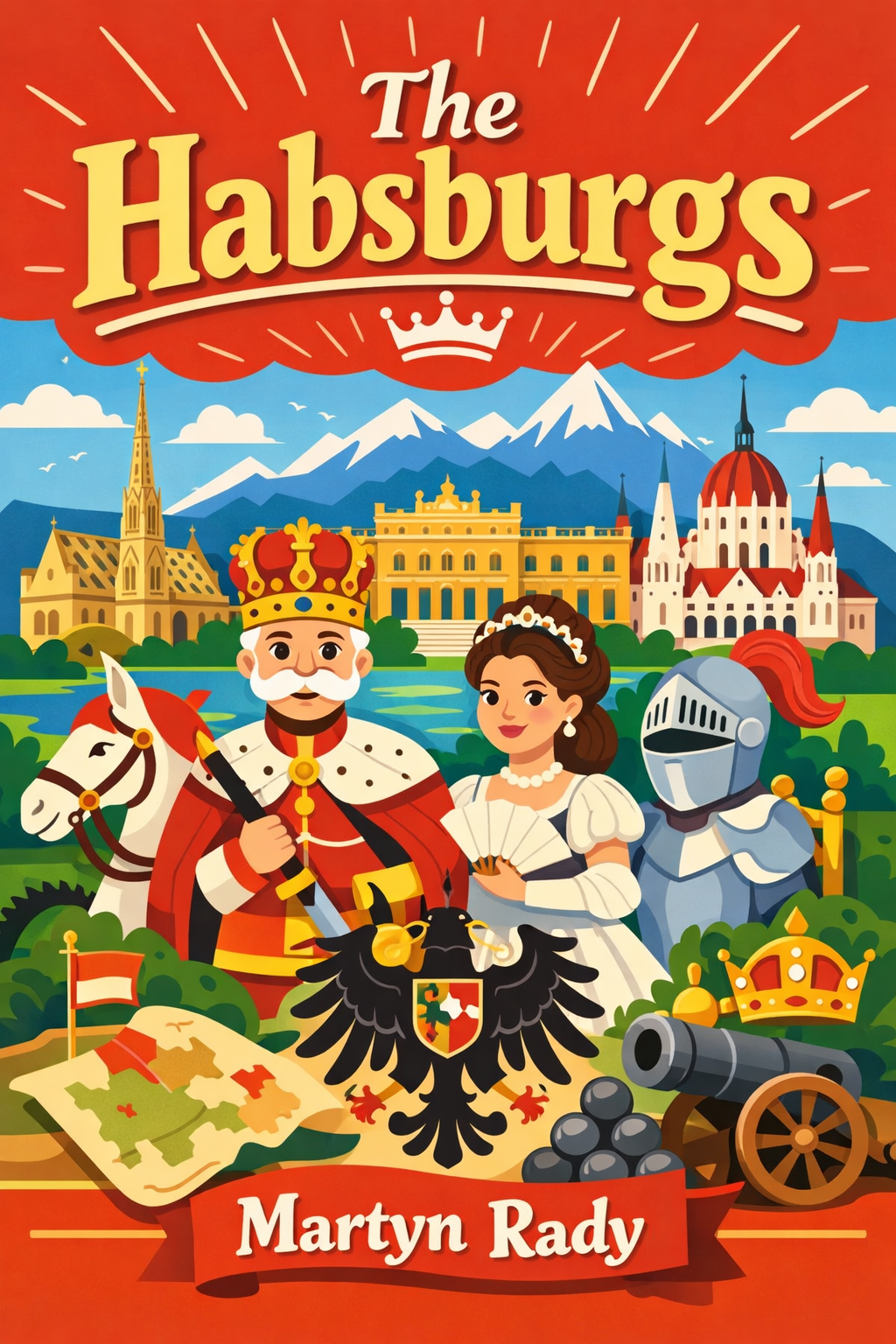
The story of the Habsburgs is a centuries-long epic of improbable rise, dazzling dominance, and slow-motion unraveling. It begins not with kings and emperors, but with a minor noble family in a modest Swiss castle. Their initial ascent was almost accidental, propelled by a strategic election that made Rudolf I Holy Roman Emperor in 1273. From this foothold, the family secured the Duchy of Austria, shifting their power base to a richer, more central European heartland. Yet their true genius lay not in the battlefield, but in the marriage chamber. They perfected a strategy of dynastic expansion, using carefully arranged unions to absorb territories and inherit titles. The motto coined by Emperor Maximilian I encapsulated this approach: “Let others wage war; you, happy Austria, marry.” His own marriage to Mary of Burgundy brought vast wealth, while his son’s union with Joanna of Castile positioned the Habsburgs to inherit Spain and its burgeoning New World empire.
This strategy reached its breathtaking apex under Charles V in the sixteenth century. He ruled a collection of territories so vast it was said the sun never set upon them. From the silver mines of Peru to the banking houses of Antwerp, from the plains of Hungary to the palaces of Naples, his dominion spanned continents. Yet this very greatness contained the seeds of division. The empire was too sprawling, its cultures and conflicts too diverse for any one man to manage. Exhausted, Charles performed an unprecedented act, voluntarily dividing his inheritance between his son, Philip II of Spain, and his brother, Ferdinand, who took the Austrian lands and the imperial title. This split created two mighty branches of the family, allies bound by blood but now navigating separate destinies.
Both branches faced the turbulent currents of early modern Europe. They became fervent champions of the Catholic Counter-Reformation, a stance that fueled the catastrophic Thirty Years’ War. Though the peace that ended that war curtailed their direct power in Germany, the Habsburgs adapted, transforming Vienna into a dazzling baroque capital where cultural patronage became a new language of power. The early eighteenth century brought a profound shock with the extinction of the Spanish line. The last Spanish Habsburg, Charles II, was a tragic figure whose severe physical and mental ailments were widely attributed to generations of royal inbreeding. His death triggered a continent-wide war over the succession, resulting in the loss of Spain itself to a French dynasty. The Austrian Habsburgs, however, proved resilient. Under the formidable Maria Theresa, they defended their core lands, implemented sweeping modernizing reforms, and weathered the revolutionary storm of Napoleon, who finally dissolved the ancient Holy Roman Empire in 1806.
The nineteenth-century Habsburgs reinvented themselves as emperors of Austria, presiding over a sprawling, multi-ethnic empire of Germans, Hungarians, Slavs, and Italians. They maintained a fragile stability through bureaucracy, compromise, and paternalistic rule, but the rising tides of nationalism, liberalism, and social change constantly threatened to breach the dams. The dynasty’s final act began with a single pistol shot in Sarajevo in 1914. The assassination of Archduke Franz Ferdinand, heir to the throne, by a Serbian nationalist ignited the First World War. Defeat in that catastrophic conflict spelled the end. In 1918, the last emperor, Charles I, was deposed, and the centuries-old empire dissolved into a patchwork of nation-states. The Habsburgs, who had mastered the art of dynastic marriage to build a realm, ultimately fell victim to the very forces of modern politics and ethnic identity that their ancient, personal form of rule could no longer contain. Their legacy is a paradox: a family that shaped European history for over half a millennium through calculated unions and adaptive statecraft, yet whose decline was written in the tangled branches of its own family tree and the unstoppable march of history.