Description
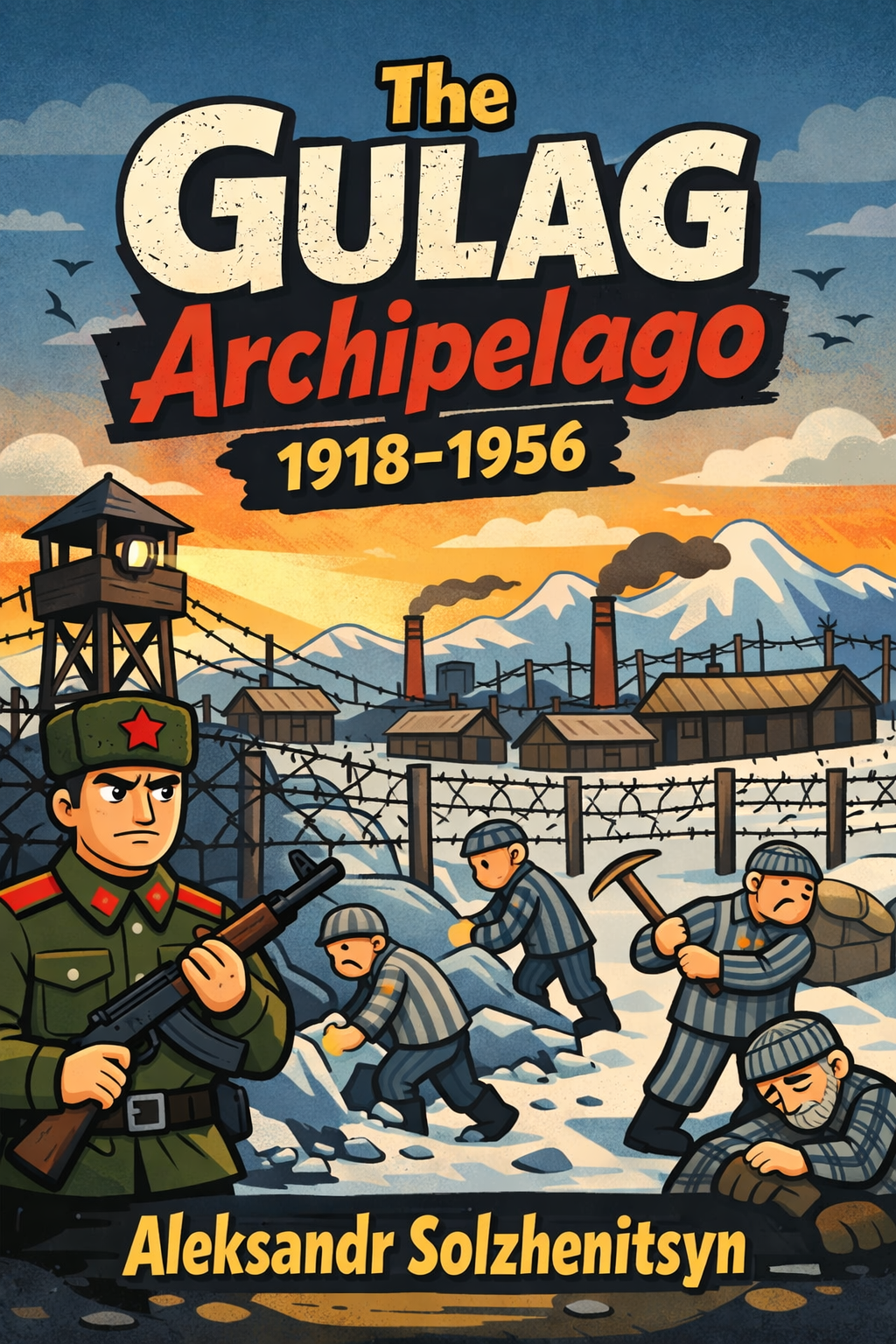
Aleksandr Solzhenitsyn’s monumental work is not merely a history but a seismic exploration of a hidden nation within a nation. He constructs a powerful metaphor: the vast network of Soviet prison camps forms a secret archipelago, a chain of isolated islands scattered across the map of the USSR, invisible to ordinary citizens yet populated by millions. This “country” had its own laws, its own economy, and its own doomed citizens, known only as prisoners. The book traces the birth of this monstrous system from the early days of the Bolshevik Revolution, showing how the first camp on the Solovetsky Islands became a grim blueprint for an empire of coercion. It solidified after World War II, not as a temporary tool of terror but as a permanent, essential pillar of the Soviet economy, fueled by endless, disposable human raw material.
The journey to this shadow world began with an arrest, typically by the state security apparatus, known as the Organs. These arrests were arbitrary, driven by quota, not evidence. A person could be seized from their home at night, from their workplace, or off the street, often with no explanation beyond the cryptic accusation of being an “enemy of the people.” The purpose was not to punish crime but to eradicate any potential dissent, independent thought, or past affiliation deemed inconvenient. The ensuing interrogation was a ritual of destruction, designed not to uncover truth but to break the individual. Sleep deprivation, psychological torment, and brutal physical torture were standard tools to extract a confession—any confession—to fabricated charges, thereby providing a veneer of legality to the entire process.
Once condemned, the new inhabitant of the Archipelago was transported in sealed railway cars, akin to steel ships moving between invisible ports. These were windowless cattle wagons, crammed with humanity, where the basic needs for air, water, and space were denied as a matter of policy. Upon arrival at the camp, life was reduced to a single, grinding purpose: exhausting labor. Prisoners felled timber, dug canals, mined gold, and built cities in the most inhospitable climates, all while systematically starved. Food rations were tied to impossible work quotas, creating a cycle of malnutrition, exhaustion, and death. The body and spirit were under constant assault from cold, disease, violence from guards, and the desperate struggle for survival among the prisoners themselves.
Solzhenitsyn meticulously documents how the Archipelago consumed all who entered its maw. It swallowed not only alleged political enemies but also ordinary peasants, soldiers who had been prisoners of war, entire ethnic groups, women, and even children. The camps corrupted everyone they touched, turning survival into a moral compromise and reducing human beings to a state where a crust of bread could outweigh any principle. The labor itself was often pointless or mismanaged, a spectacle of waste that produced little of value except for the perpetuation of the system itself. The true product of the Archipelago was the annihilation of the human soul.
Yet, within this abyss, Solzhenitsyn finds glimmers of defiant humanity. He recounts stories of those who attempted escape against impossible odds, and more importantly, those who resolved to remember and to bear witness. The act of preserving one’s dignity, of secretly recording events, or of simply refusing to internalize the lies of the state became forms of spiritual resistance. Eventually, some prisoners were “released” not into freedom but into perpetual exile in remote settlements. The death of Stalin in 1953 began the slow, partial dismantling of the system, causing this continent of pain to gradually recede, though never fully disappearing from the land or the memory of its people.
Ultimately, the book is a profound meditation on evil administered through bureaucracy, the fragility of justice, and the resilience of memory. Solzhenitsyn argues that to forget this history, to allow it to be obscured by ideology or indifference, is to invite its repetition. By mapping the geography of the Gulag Archipelago, he ensures that this hidden nation of suffering is permanently charted on the moral conscience of the world.