Description
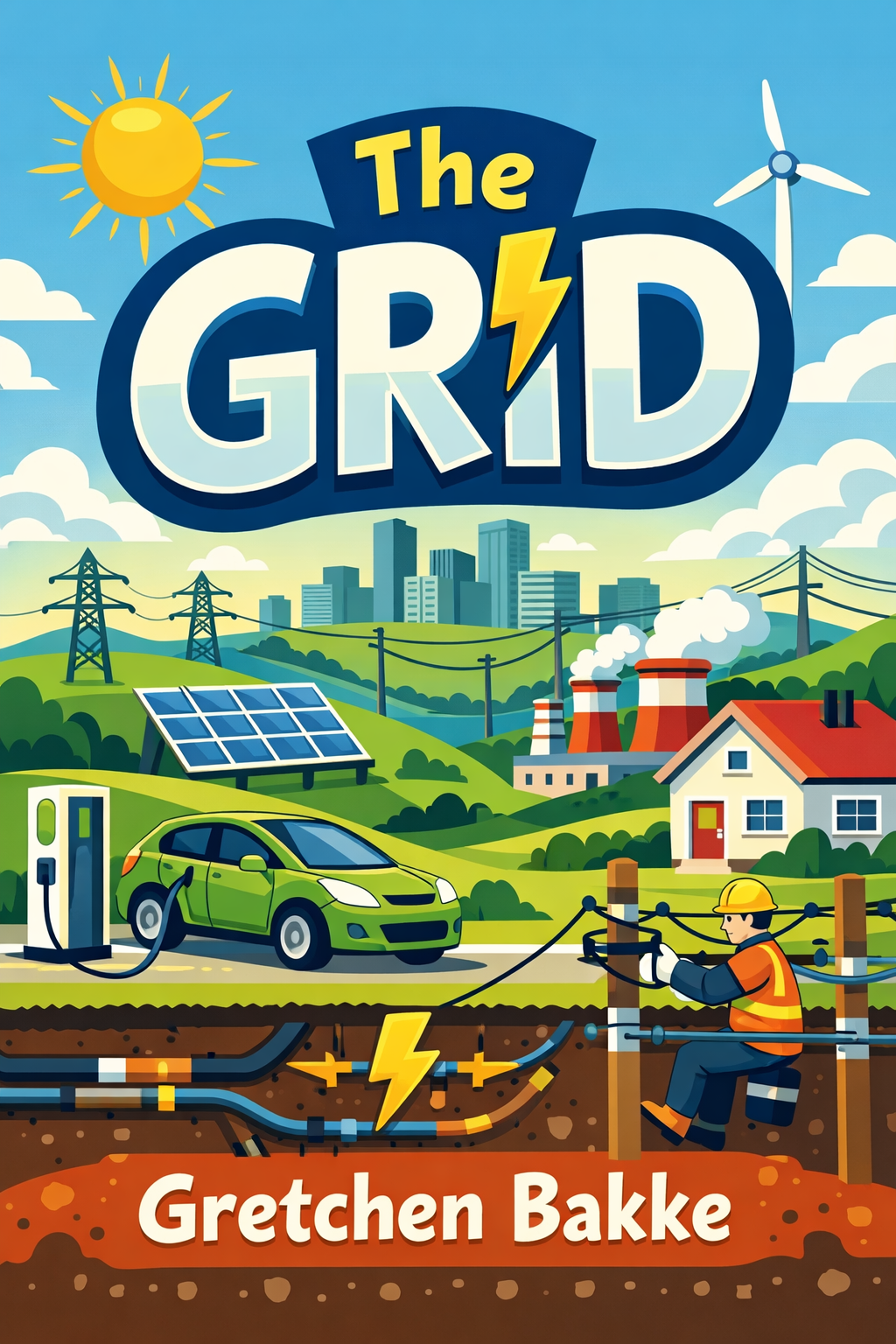
The silent, humming network that powers our civilization is a modern miracle with a tumultuous history. This exploration begins not with a corporate titan, but with a curious priest in 1870s San Francisco. Father Joseph Neri, experimenting with battery power, managed to illuminate a single light in his window—a tiny beacon that ignited a revolution. His demonstration proved the potential of electric light, leading directly to the first true, if modest, grid in San Francisco by 1879: two dynamos powering twenty lamps. The true breakthrough, however, came from Thomas Edison, who solved a critical flaw. Early systems wired lights in a series, meaning one failed bulb plunged everything into darkness. Edison’s parallel circuit allowed current to flow through multiple paths, making large-scale lighting practical and reliable. Soon, parallel-strung bulbs adorned newspaper offices and city streets, pushing back the night and extending the productive day.
Yet this new power was chaotic. Cities like New York became forests of wires, a tangled mess owned by dozens of competing small companies. This was not a unified grid but a patchwork of isolated systems. The key to unification arrived with alternating current (AC). Unlike direct current, AC could be transformed into high voltages, allowing it to travel vast distances with minimal loss. This technical leap meant a single power plant could serve an entire region. The monumental plant built at Niagara Falls in the 1890s, delivering power to Buffalo twenty miles away, stood as a testament to this new era of possibility. The stage was now set for visionaries who saw not just light, but empire.
Enter Samuel Insull, who arrived in Chicago with a monopolist’s dream. He quickly faced a fundamental obstacle: electricity, unlike oil or steel, cannot be stored. A plant must generate exactly what is consumed at any given moment, leading to wild inefficiency as demand soared in the evening and plummeted by day. Insull’s ingenious solution was to create constant demand. He slashed prices to attract a diverse customer base—factories that ran by day, streetcars, and eventually homes. He sold cheap, off-peak power to industries, ensuring his generators hummed constantly. This model of “load balancing” proved wildly successful, allowing him to achieve vast economies of scale. His strategy was copied nationwide, and by the late 1920s, a handful of holding companies controlled three-quarters of American electricity, realizing the monopoly vision. But this centralized, growth-at-all-costs model contained the seeds of its own vulnerability.
The physical limits of efficiency soon imposed themselves. Early coal plants converted a pitiful two percent of fuel energy into electricity. While engineering advances pushed this to around forty percent by mid-century, a hard ceiling existed—the laws of thermodynamics made surpassing fifty percent practically impossible and prohibitively expensive. Seeking better margins, the industry shifted toward oil, only to be caught in the geopolitical storm of the 1973 Arab oil embargo. Prices skyrocketed, forcing utilities to raise rates and angering consumers. This crisis sparked a profound cultural shift: the birth of the energy conservation movement. For the first time, the public questioned the imperative of endless consumption that the utilities had fostered.
This new awareness led to legislative action that shattered the old monopolistic model. Laws were passed to encourage alternative power producers and force utilities to buy from them. The grid, once a closed empire, was forced to open its gates. This deregulation, combined with aging infrastructure, created a system under immense strain. The grid’s interconnected nature means a single fault—a sagging power line in Ohio, a software glitch—can cascade into blackouts affecting millions, as seen in major North American outages. Utilities, now competing entities, often defer costly maintenance, further increasing fragility.
Today, the grid stands at a crossroads. Technological solutions like the “smart grid”—using digital communication to manage flow and integrate renewable sources—promise a more resilient and efficient future. Yet this raises legitimate concerns about privacy and vulnerability to cyberattack. Furthermore, the increasing frequency of severe weather events, from hurricanes to wildfires, highlights the peril of vast, centralized systems. One compelling answer is to go smaller: microgrids and local renewable generation can keep communities powered when the main grid fails. The story of electricity, therefore, is unfinished. It is a tale of brilliant innovation and overreach, of centralized control fragmenting under pressure, and of a search for a new model—one that is robust, responsive, and sustainable enough to carry us into an uncertain future.