Description
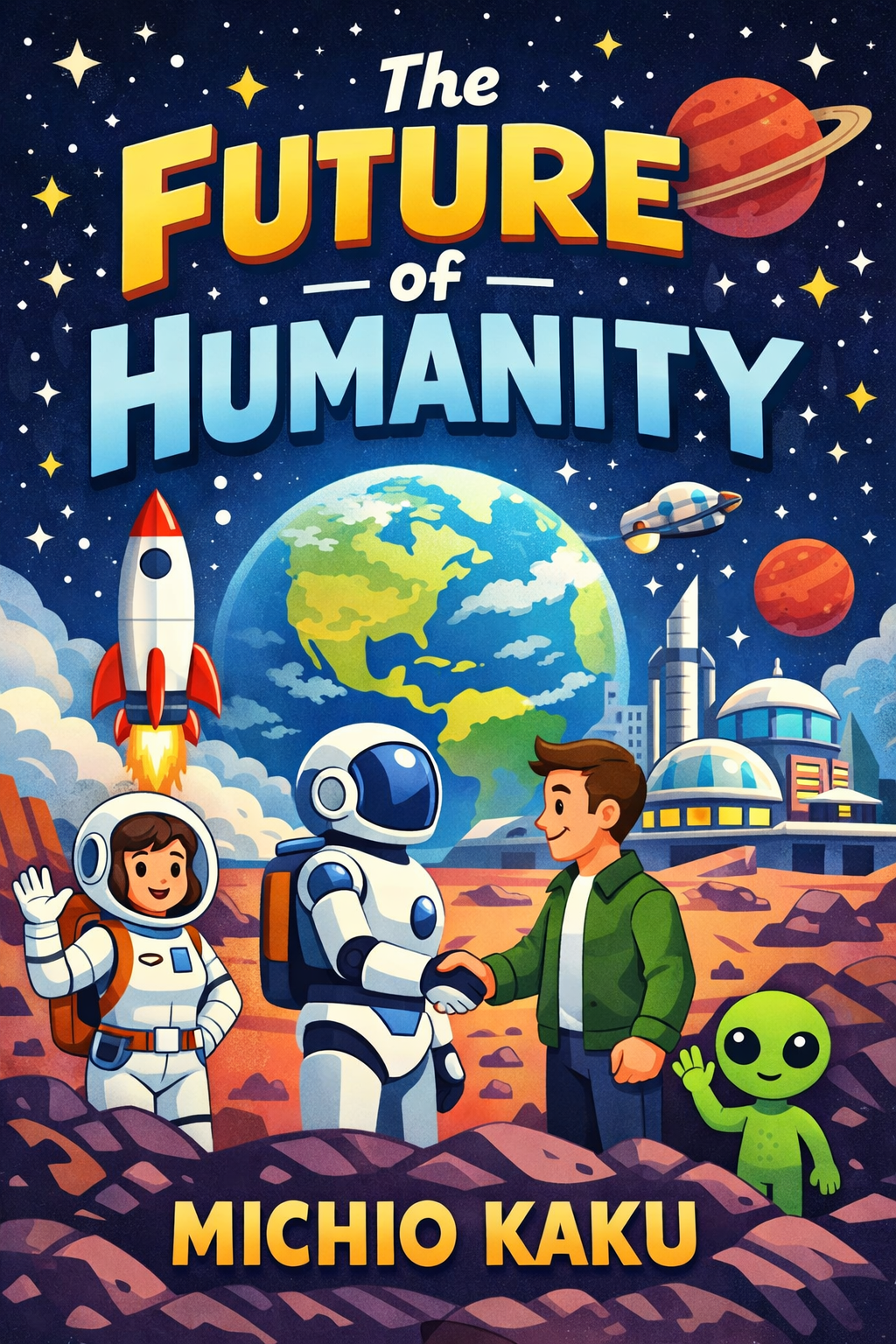
Our species stands at a precipice, gazing outward with a renewed and urgent hunger. For generations, science fiction has painted visions of our destiny among the stars, but today, that destiny is being drafted not by novelists, but by engineers and entrepreneurs. The dream of becoming a multiplanetary civilization is transitioning from fantasy to a tangible, though staggeringly complex, project. This journey begins with a look back at the rocket scientists who turned equations into escape velocity, from Tsiolkovsky’s foundational calculations to the morally complicated legacy of Wernher von Braun, whose V-2 weapon of war later birthed the Saturn V that carried Apollo to the Moon.
The Moon itself, that silent companion, is once again a target, not just for flags and footprints, but for settlement. The triumphant landings of the 1960s gave way to decades of earthly concerns, but now, figures like Jeff Bezos envision a future of lunar supply lines and colonies. The challenges are monumental. A world without breathable air, with water locked in shadowed ice, and bathed in lethal radiation demands ingenious solutions. Survival may mean living not under domes, but within the ancient, protective lava tubes that snake beneath the dusty surface, using harvested oxygen and carefully cultivated food to sustain life.
Yet for visionaries like Elon Musk, the Moon is merely a stepping stone. Mars, the Red Planet, calls as humanity’s next home. Companies like SpaceX are revolutionizing access to space with reusable rockets, dramatically lowering costs and plotting ambitious timelines for manned missions. But Mars is a harsh master. Its thin, toxic atmosphere offers little protection, its gravity weakens human bodies, and its distance from Earth ensures profound isolation. Building a city there seems a financial impossibility—unless we change the very tools of construction. The answer may lie in the microscopic realm of nanotechnology, in materials like graphene and carbon nanotubes, which promise strength and utility far beyond steel. And the builders may not be human at all, but intelligent robots, tasked with the dangerous, repetitive work of forging a new world.
To venture beyond our solar system, to truly reach for the stars, demands even more radical leaps. The distances are so vast that conventional propulsion is useless. Concepts like light sails, propelled by the gentle but constant pressure of starlight, could one day carry tiny probes to neighboring star systems. For human crews, the voyage would span generations, requiring either multigenerational starships—self-contained arks where children are born, live, and die en route—or breakthroughs in suspended animation or radical life extension. These are not mere engineering problems, but profound sociological and ethical frontiers.
This grand search for a new home inevitably leads to the oldest question: are we alone? The discovery of intelligent alien life would shake humanity to its core. While their biology and technology might be unimaginably different, the laws of physics and mathematics are universal, suggesting a potential common ground for communication. Such a encounter would force us to reevaluate our place in the cosmos, for better or worse.
Ultimately, the future of humanity is a story of existential risk and transcendent opportunity. It is a technical manual written in rocket fuel and carbon atoms, and a philosophical treatise on survival and curiosity. It argues that our long-term survival depends on not keeping all our eggs in Earth’s fragile basket. The path is fraught with peril, expense, and unknown hardship, but it is driven by an irrepressible human instinct to explore, to adapt, and to endure. The journey to the stars begins with a single, audacious step, and we are now gathering the courage to take it.