Description
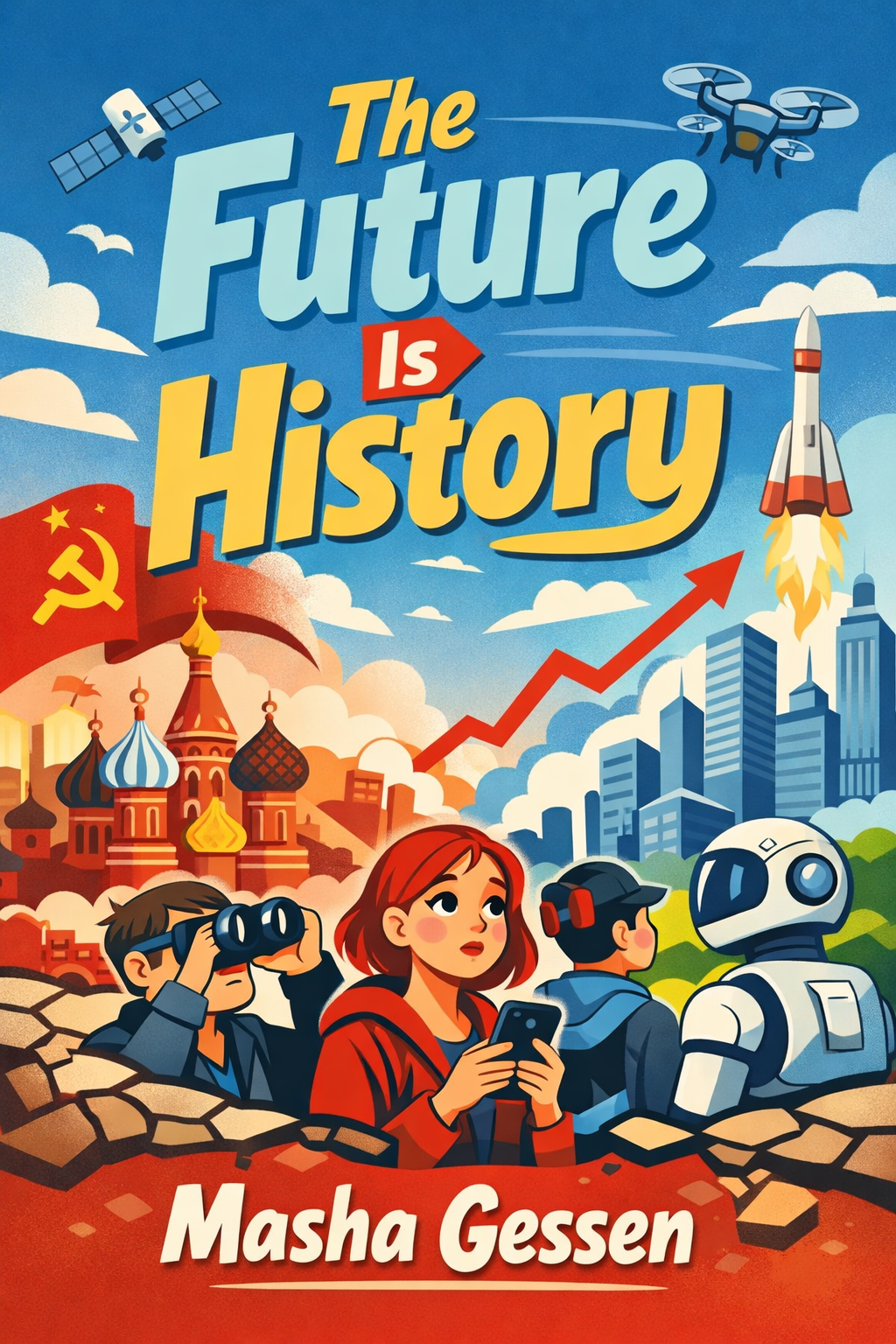
Masha Gessen’s “The Future Is History” is a profound and unsettling journey into the soul of post-Soviet Russia, explaining how a nation that glimpsed freedom after the collapse of the USSR ultimately chose a path of repression and authoritarian control. The narrative unfolds not as a dry political history, but through the deeply personal lives of several Russians born as the Soviet Union was dying. Their hopes, traumas, and disillusionments become the lens through which we witness a society’s tragic reversal.
The story begins in the late Soviet period, a time when disciplines essential for understanding the self—like psychology and sociology—had been systematically eradicated by the state. The Soviet project aimed to create a new kind of person, the Homo Sovieticus, who derived identity entirely from the collective and viewed introspection as a threat. When Mikhail Gorbachev’s reforms of perestroika and glasnost cracked the system open in the 1980s, Russian society was psychologically unequipped for the sudden burden of individuality and choice. There was no language for the self, no framework to process the coming chaos.
As the Communist Party imploded and Boris Yeltsin took power, the 1990s became a period of terrifying, exhilarating, and brutal transformation. The book unflinchingly depicts the decade not as a simple march toward democracy, but as a traumatic shock. The state’s sudden withdrawal created a vacuum filled by violent opportunism and crippling poverty for many, while a tiny few amassed obscene wealth. The old social contract—where the state provided a grim stability in exchange for obedience—shattered, leaving people adrift in a world of bewildering choices and profound insecurity. This collective trauma, Gessen argues, following the thinking of psychoanalyst Erich Fromm, created a desperate yearning for a “savior” who could restore order and relieve the populace of the unbearable weight of freedom.
Vladimir Putin’s rise is portrayed not as an anomaly, but as the logical culmination of this yearning. Seizing power amid the chaos of economic collapse and apartment bombings shrouded in mystery, Putin offered a simple bargain: he would restore Russia’s greatness and provide stability, and in return, the people would surrender their political rights. The book meticulously details how this bargain was enforced. Independent media was silenced, political opposition was marginalized or murdered, and a new ideology, blending Soviet nostalgia, Orthodox conservatism, and imperial ambition, was constructed to replace the void left by communism.
Crucially, Gessen shows how the state, under Putin, launched a direct assault on the very concept of the autonomous individual that had begun to tentatively emerge. Through the stories of her subjects—including a sociologist, the granddaughter of a dissident, and a gay man—we see how tools of repression became more sophisticated. The government resurrected Soviet-style psychiatry to discredit dissent, passed laws against “homosexual propaganda” to enforce a rigid, traditionalist identity, and wielded a pervasive surveillance apparatus. The goal was to return society to a pre-perestroika state, where the individual is subsumed by the collective will of the state, and any deviation is pathologized as a threat to national security.
“The Future Is History” is ultimately a tragic diagnosis. It reveals how a society, deeply scarred by its totalitarian past and traumatized by a botched transition, actively conspired in the dismantling of its own fragile freedoms. The future promised by the end of the Cold War—of integration and liberal democracy—was rejected in favor of a familiar past, repackaged as a strong and defiant new history. Gessen’s masterful work is a chilling reminder that history does not move in a straight line, and that the desire for a simple, ordered past can be a powerful force in destroying a complex, uncertain future.