Description
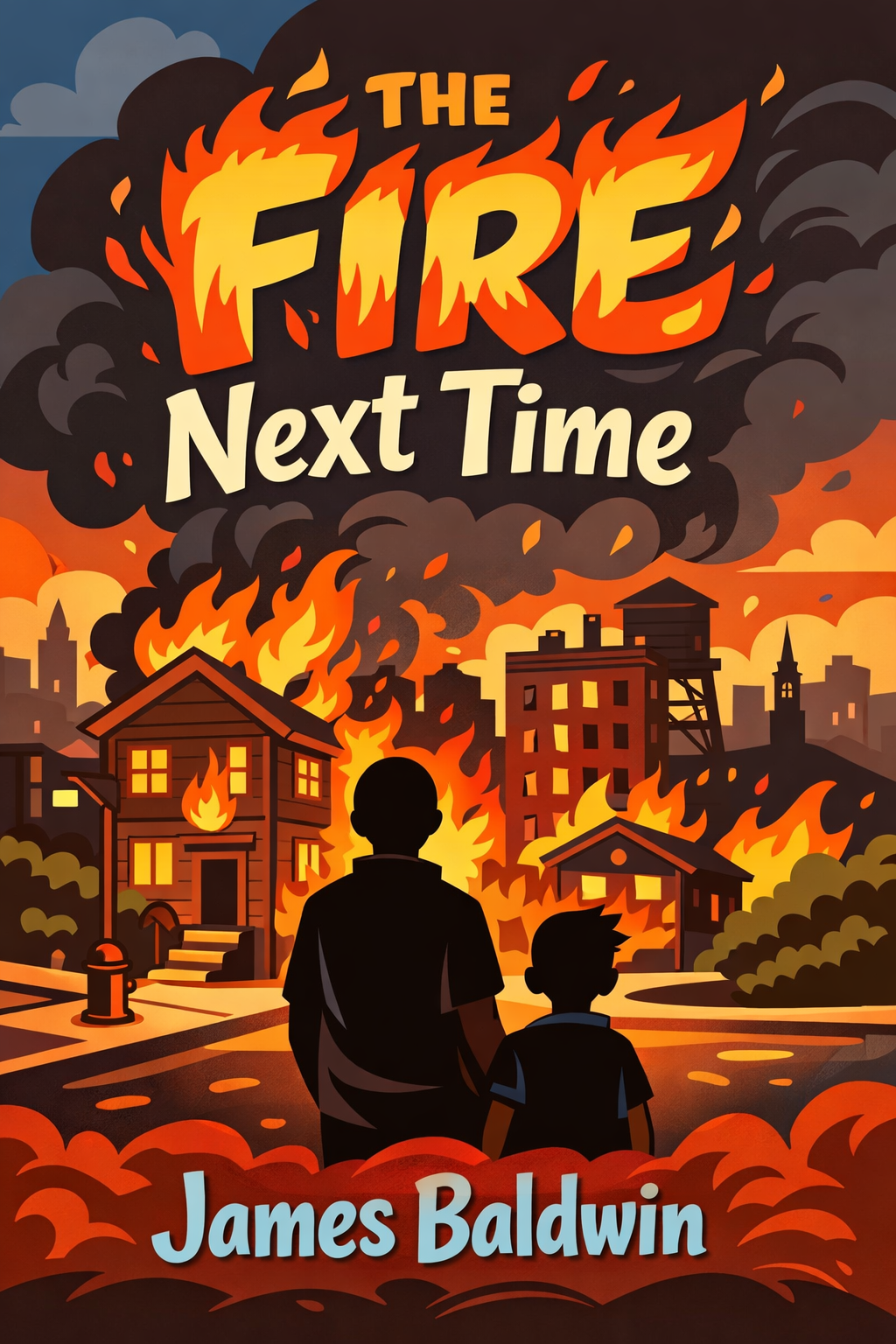
James Baldwin’s *The Fire Next Time* is not merely a book; it is a searing indictment and a profound lament, a letter to his nephew and a sermon to a nation teetering on the brink. Through two distinct yet interconnected essays, Baldwin constructs a panoramic view of the Black American experience in the early 1960s, weaving together the threads of personal history, racial terror, and a desperate hope for redemption. The work transcends simple political analysis, delving into the corrupted heart of a national identity built on a lie, and issues a warning that is as spiritually urgent as it is socially immediate.
The journey begins with “My Dungeon Shook,” a short, devastating letter addressed to Baldwin’s fourteen-year-old namesake. In these few pages, Baldwin dismantles the mythology of white supremacy with a tender, uncle’s firmness. He instructs his nephew that the “innocent country” he must accept is not innocent at all, but is, in fact, responsible for crafting a system designed to convince him of his own worthlessness. This letter is an act of liberation in itself, a shield offered to a young boy. Baldwin tells him that the failures and fears of white America are not his burdens to bear, that their need to believe in their own superiority is a testament to their spiritual poverty, not his. It is a foundational lesson in self-love crafted in a crucible of societal hate, setting the stage for the deeper excavation to follow.
The second and longer essay, “Down at the Cross,” expands this intimate conversation into a national dialogue. Baldwin revisits his own harrowing adolescence in Harlem, where the “fire” of racial hatred was not an abstraction but a daily reality. He recounts his temporary refuge in the church, a desperate flight from the violence of the streets into the theatricality of Pentecostal fervor. With breathtaking clarity, he dissects the allure and the ultimate insufficiency of this religious escape, portraying it as another kind of cage, one that offered a fantasy of purity and vengeance but failed to address the tangible, earthly hell of racism. This personal narrative seamlessly folds into his razor-sharp encounter with the Nation of Islam and its towering spokesman, Elijah Muhammad.
Baldwin meets the Black Muslim movement with a complex mix of understanding and profound dissent. He articulates the raw, historical logic of Black separation and anger with a sympathy few white writers of his time could muster. He validates the bitterness as a natural, even righteous, response to centuries of brutality and dehumanization. The movement’s diagnosis of America’s sickness, he acknowledges, is tragically accurate. Yet, he ultimately rejects its prescription. For Baldwin, the dream of a separate Black state or the idolatry of a vengeful god is just another dead end, a mirror image of the very racial hatred it seeks to overcome. It replaces one mythology of supremacy with another, perpetuating the cycle of division he believes must be broken.
Here lies the core of Baldwin’s prophetic challenge. The crisis of race, he argues, is not a “Negro problem” but a white problem. It is a crisis of identity for a people who have built their sense of self on the plundered bodies and denied humanity of others. “White people,” he writes, “are trapped in a history which they do not understand.” Their innocence is a willful delusion, a dangerous fantasy that insulates them from the bloody truth of their legacy and the humanity of their fellow citizens. Baldwin insists that until white Americans can confront this history and relinquish this myth, they can never be free. Their fear of Black equality is, at its root, a terror of their own insignificance once the false pedestal of race is kicked away.
Therefore, the solution Baldwin proposes is not political in a conventional sense, but fundamentally moral and spiritual. Integration, for him, is not about Black people seeking entry into a white world, but about all Americans—Black and white—working to create a new world, a new identity. It demands a love that is not sentimental but demanding, a love that is “hard as nails.” This love requires white people to see Black people not as symbols or problems, but as complex, suffering, and joyous human beings. It requires Black people to find the strength to forgive, not for the sake of the oppressor, but for their own liberation from the poison of hatred. It is a call for a radical acceptance of our shared, flawed humanity.
The title, drawn from an African American spiritual about Noah’s flood, serves as Baldwin’s final, chilling prophecy. “God gave Noah the rainbow sign, No more water, the fire next time.” The flood of biblical judgment has passed; America has been warned by the long, drowning centuries of slavery and segregation. If the nation fails to heed this warning, if it continues to cling to its myths and its hatred, then the next reckoning will not be with water, but with fire—the fire of violence, rage, and ultimate destruction. This fire is not something Baldwin advocates; it is something he desperately seeks to prevent by speaking the truth with unflinching courage.
*The Fire Next Time* endures not because the America it describes has vanished, but because it has not. Baldwin’s analysis of the psychic wounds of racism, the bankrupt innocence of whiteness, and the urgent need for a love that can remake the world remains terrifyingly relevant. The book is a masterpiece of American literature because it forces every reader, regardless of background, to look into the mirror of the nation’s soul and answer the question it poses: Will we finally accept our shared history and birth a new identity, or will we, through our refusal, summon the fire?