Description
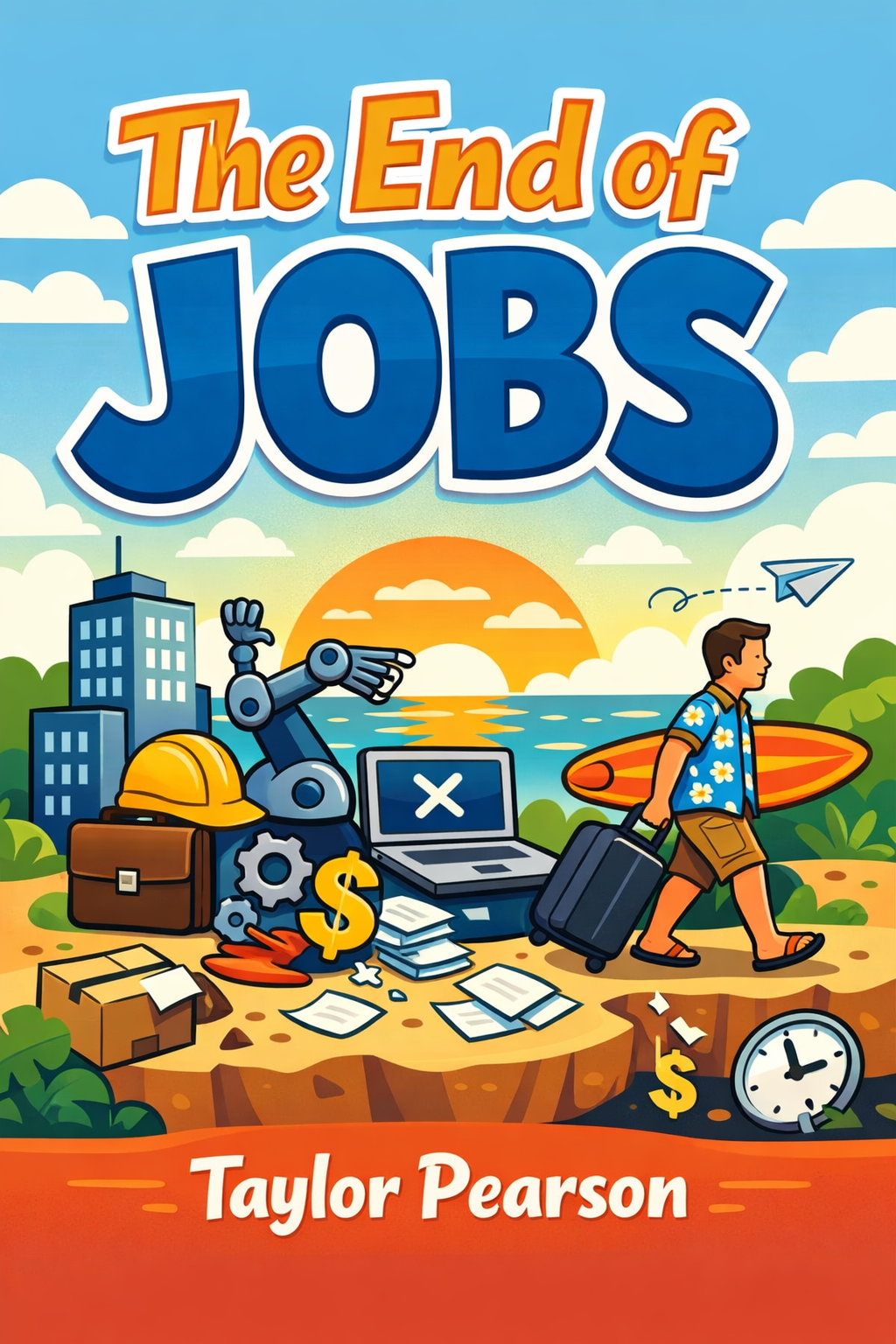
For generations, the formula for a secure life seemed clear: get a good education, earn your credentials, and secure a steady job. This path, deeply ingrained in our culture, promised stability and prosperity. However, the world has undergone a fundamental shift. The very foundation of the job-based economy is cracking, not due to a temporary recession, but because the system itself has reached its natural limit. We are witnessing the decline of the knowledge economy and the rise of a new paradigm where entrepreneurial ventures, not traditional employment, offer the greatest potential for financial security, personal fulfillment, and meaningful impact.
Historically, economic power has shifted between different limiting factors that control growth. In medieval England, it was land, controlled by the church. The industrial age shifted the limit to capital, controlled by bankers. The twentieth century saw knowledge, proliferated by corporations and universities, become the new source of power. Today, that knowledge economy is plateauing. The evidence is everywhere: populations are growing faster than jobs, and a college degree no longer guarantees a career, let alone a prosperous one. We have reached peak 9-to-5. The new constraint—and therefore the new opportunity—is creativity and innovation. The power players of this emerging economy are not employees with impressive resumes, but entrepreneurs who identify problems and build creative solutions.
This shift is accelerated by two powerful forces: globalization and technology. Knowledge work is no longer bound by geography. A company in New York can easily hire a talented software developer in Manila or a graphic designer in Berlin at a fraction of the local cost. Simultaneously, automation and software are replacing not just manual labor but also routine cognitive tasks. This might seem threatening, but for the entrepreneurial-minded, it presents an unprecedented advantage. The tools to build, market, and distribute a product or service are now affordable and accessible to anyone with an internet connection. You can run a “micro-multinational” from your laptop, assembling a global team and serving a worldwide niche market with minimal upfront investment. The barriers to entry have crumbled.
Consequently, the long-held belief that a job is the safer option is now a dangerous illusion. A salaried position carries a hidden, systemic risk: the risk of sudden obsolescence, outsourcing, or layoffs, over which you have little control. It creates a false sense of security, much like a turkey being fed every day until Thanksgiving. Entrepreneurship, by contrast, trades that hidden risk for visible, manageable ones. An entrepreneur might face cash flow challenges or product failures, but they retain full control to adapt, pivot, and build systems that create value. They develop a versatile skill set and multiple income streams, making them resilient to economic shocks. Their mindset is akin to a poker player calculating expected value—understanding that a series of smart, calculated bets leads to long-term success.
The practical path forward is no longer about sending out more resumes, but about starting to build. A method like the Stair Step Approach allows you to begin this journey without quitting your job or risking everything. It involves starting a small, manageable venture on the side—a simple service, a digital product, a niche blog—that generates initial revenue and invaluable experience. Each step funds and informs the next, gradually building your confidence, skills, and financial runway until your entrepreneurial venture can fully support you. This process aligns your work with what is personally meaningful, offering a level of autonomy and purpose that a traditional job rarely can.
We stand at an inflection point. The structures that defined our parents’ working lives are giving way. While this transition creates uncertainty for those clinging to the old model, it unlocks extraordinary potential for those willing to embrace the new. The tools are democratized, the global marketplace is open, and the premium is on creativity and initiative. The end of jobs is not a crisis, but a call to action. It is an invitation to stop trading your time for a salary and start building equity in your own vision, to stop being a replaceable cog and start becoming the architect of your own economic destiny. The future belongs not to the most credentialed employee, but to the most resourceful creator.