Description
R.D. Laing’s seminal work delves into the profound and often terrifying experience of individuals who lack a secure, foundational sense of self. For most people, a stable identity forms naturally in early childhood through a continuous, reciprocal relationship with caregivers. A child expresses a need, a parent responds, and in this dance of recognition, the child learns they are a distinct being, separate from the world yet connected to it. They develop an “ontological security”—a basic confidence in their own reality and autonomy.
However, Laing illuminates a different path, one where this fundamental development goes awry. He describes the plight of the “ontologically insecure” person, for whom the very question of their own existence is a source of perpetual anxiety. This insecurity can stem from early environments where a child’s expressions are ignored, invalidated, or met with such inconsistency that they never learn to trust their own being. Paradoxically, a child who is “too good,” who never cries or demands, may not be virtuous but rather failing to assert a self at all. They may grow unsure of where they end and another person begins, sometimes believing others can read their thoughts, making deception seem pointless.
For such individuals, the social world becomes a minefield of existential threats. While they desperately need the reflection of others to feel real—much like an infant who fears disappearing when a parent leaves the room—any closeness is perceived as dangerous. Love, understanding, or even simple concern from another person can feel like an engulfment, a swallowing of their fragile identity. If you understand them completely, they reason, perhaps the boundary between you has dissolved. They are caught in a paralyzing bind: isolation makes them feel unreal, but connection threatens to annihilate them.
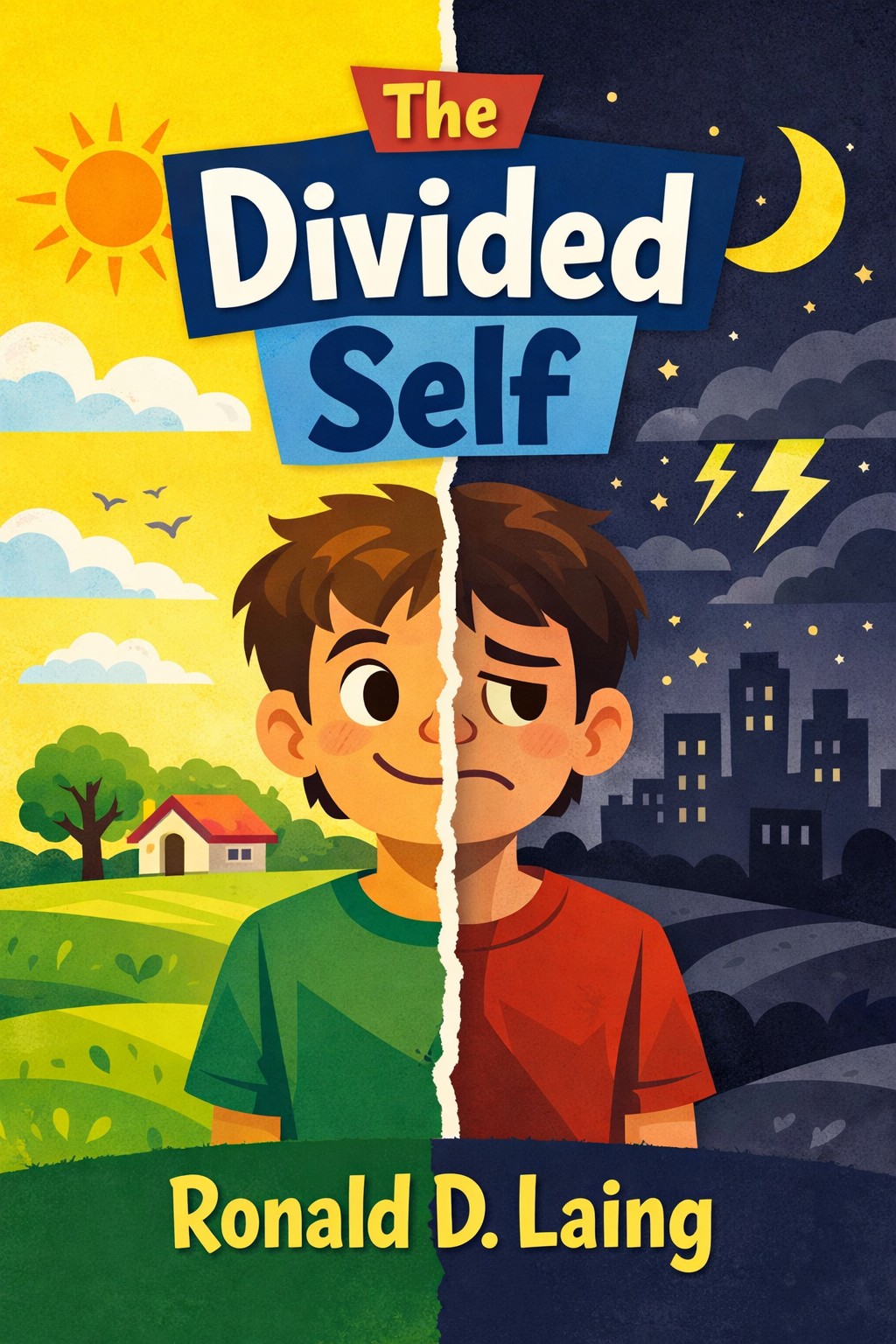
To navigate this impossible dilemma, the psyche resorts to a drastic defense: it splits. The individual cultivates a “false self,” a compliant, often hollow persona that performs the rituals of social interaction. This shell manages the external world, saying the right things and displaying expected emotions, all while protecting a hidden, inner “true self” that remains detached, unexpressed, and often contemptuous of the performances it must orchestrate. What begins as a protective strategy, however, can become a prison. The false self grows autonomous, and the true self retreats further into isolation, becoming a mere spectator of its own life.
This division extends beyond psychology into a person’s very embodiment. Some individuals feel profoundly disconnected from their physical bodies, viewing them as objects separate from their inner consciousness. They may feel like ghosts trapped in a machine, watching their own hands move as if controlled by another. This disembodiment further severs their connection to the shared, tangible world, amplifying their sense of unreality and alienation.
Laing argues that this state of radical division is not a sudden collapse but the extreme endpoint of a continuum of human experience. What we label as schizophrenia, he suggests, can be understood as a comprehensible, albeit desperate, strategy for survival in a world that has consistently threatened the individual’s core sense of being. It is a final retreat into an inner sanctuary when the false self can no longer bear the strain and the true self sees no other path to preservation. The book is not merely a clinical study but a profound plea for empathy, urging us to see the logic within the madness and the human struggle for existence beneath the symptoms of profound distress.