Description
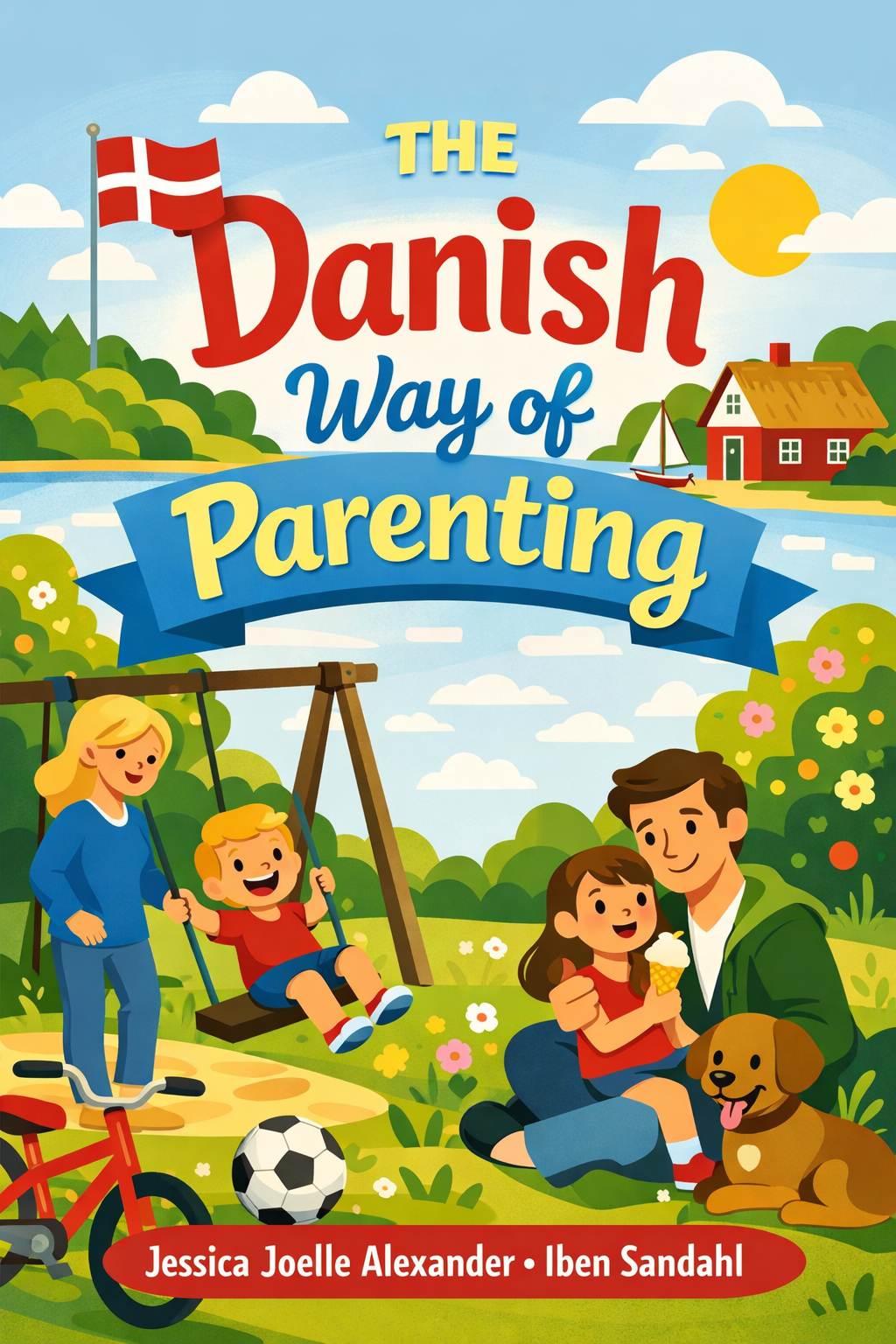
For decades, Denmark has consistently ranked as one of the happiest nations on earth. This remarkable societal well-being is no accident; many trace its roots to a distinctive and nurturing approach to raising children. This philosophy, which cultivates emotional security, resilience, and contentment from the earliest years, can be understood through a simple yet powerful framework built on six foundational pillars: Play, Authenticity, Reframing, Empathy, No Ultimatums, and Togetherness. Together, these principles form a holistic guide that moves beyond quick fixes and behavior control, focusing instead on developing the whole child and fostering a deeply connected family life.
The journey begins with Play, but not the scheduled, adult-directed variety so common today. Danish culture champions unstructured, free play as the essential work of childhood. Schools release young children early to engage in *skolefritidsordning*, or “free time school,” where the agenda is set by imagination alone. This isn’t mere frivolity; it’s a critical developmental engine. Through self-directed play, children naturally encounter and solve problems, navigate social conflicts, and test their physical limits. They learn to calibrate risk, manage minor stressors, and build resilience—all on their own terms. The national toy, LEGO, whose name literally means “play well,” embodies this spirit of open-ended creativity. The Danish approach suggests that by providing a rich environment and then stepping back, parents allow children to develop the internal resources they will need to thrive as adults.
This trust in a child’s natural development is paired with a commitment to Authenticity. Danish parents believe in being emotionally genuine rather than projecting a façade of constant cheerfulness. They understand that children benefit from seeing their parents experience and process a full range of human emotions in healthy ways. This honesty extends to how they communicate with their children, offering age-appropriate truths rather than evasions. It profoundly shapes how they give praise, too. Instead of automatic declarations like “You’re so smart!” Danish parents tend to use “process praise,” focusing on effort and strategy with comments like, “You worked so hard on that drawing. Tell me about your choices.” This nurtures a growth mindset, teaching children that ability is built through dedication, helping them persevere through challenges rather than fear failure.
When challenges inevitably arise, the Danish tool of choice is Reframing. This is not about naive positivity but about consciously shifting perspective to find constructive angles within difficult situations. It’s the art of turning “This rainy day ruined our picnic” into “Now we get to build an amazing blanket fort!” Danish parents actively help their children practice this skill, transforming “I can’t do this” into “I can’t do this *yet*.” They avoid definitive, limiting labels like “shy” or “clumsy,” instead describing behavior in a way that opens the door to change. By externalizing a problem—”Your focus is having a hard time today” instead of “You are so distracted”—they separate the child’s identity from the temporary struggle. This practice builds remarkable resilience and cognitive flexibility, teaching children that how they view a situation powerfully influences how they feel and respond to it.
The fourth pillar, Empathy, is the social glue of Danish society. From a young age, empathy is actively taught in schools and modeled in homes. Danish parents understand that empathy isn’t just about being nice; it’s a critical skill for collaboration, relationship-building, and personal success. They nurture it by helping children name and understand their own emotions and, crucially, by guiding them to recognize feelings in others. Reading stories together and discussing characters’ motivations is a cherished ritual that expands a child’s emotional vocabulary and perspective. The Danish system reinforces this by minimizing cutthroat academic competition in early schooling, instead creating mixed-ability classrooms where cooperation is valued over individual triumph. This emphasis ensures that children learn to see the world through others’ eyes, building a foundation for strong, supportive communities.
To maintain these respectful connections, Danish parents adhere to a principle of No Ultimatums. Authority is not based on “because I said so,” but on explanation, respect, and democratic problem-solving. The goal is to prevent conflicts through clear expectations and involvement, not to win power struggles with harsh punishments. This approach, known as *differentiere* or differentiation, recognizes that each child is unique and that discipline should be understanding and tailored, not one-size-fits-all. Rules are often discussed and created collaboratively, giving children a voice and helping them understand the *why* behind boundaries. This fosters intrinsic motivation and self-discipline, as children feel respected and part of the family team rather than merely subjected to its rules.
All these elements culminate in the final principle: Togetherness. The Danish concept of *hygge*—a deep, cozy sense of connection and presence—is a cornerstone of family life. It’s about creating protected time, free from distractions and stress, where the family can simply enjoy each other’s company. This could be sharing a meal, playing a game, or reading by candlelight. *Hygge* is a sacred space where authenticity is safe, empathy is practiced, and playfulness is encouraged for all ages. It reinforces the message that the family unit is a reliable source of comfort and joy. This consistent investment in togetherness provides children with an unshakable sense of security and belonging, the ultimate bedrock for happiness. By weaving these six threads into the fabric of daily life, the Danish way offers a compassionate and effective blueprint for raising individuals who are not only happy and resilient but also equipped to contribute to a kinder, more connected world.