Description
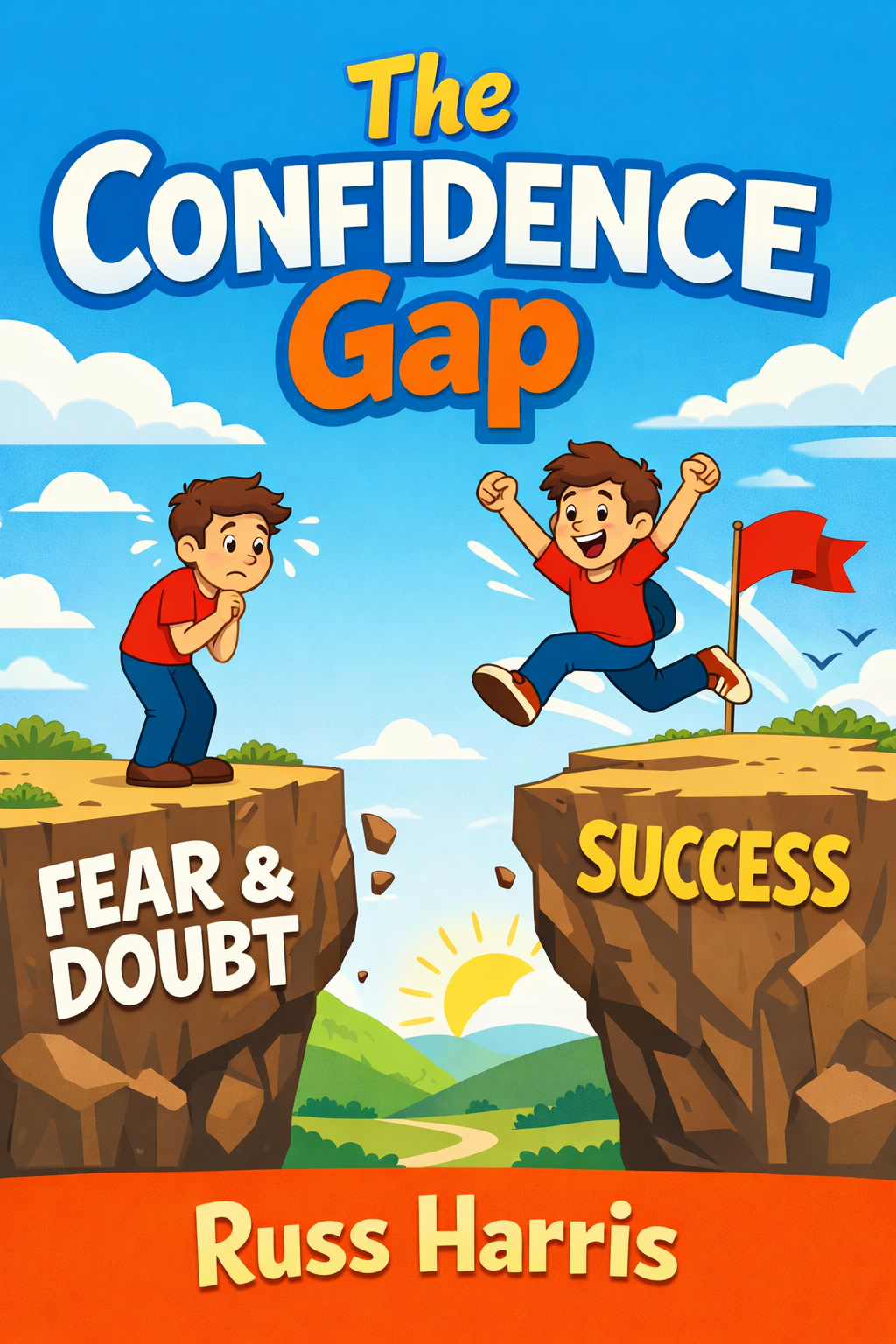
Many of us believe we must first feel confident before we can act boldly. We wait for that magical inner certainty to appear, imagining it as the fuel that will propel us toward our goals. This book turns that common assumption on its head. It argues that this very belief is the central obstacle holding us back—the true “confidence gap.” The core insight is that confidence is not the cause of successful action; it is the consequence. Real, enduring confidence is built through a process of engaging with life directly, taking steps forward even when we are filled with doubt, anxiety, and fear.
The journey begins with understanding the mind’s natural tendencies. Our brains are wired for survival, not happiness. They are expert threat-detectors, constantly generating a stream of negative predictions, harsh self-criticism, and exaggerated fears. We mistakenly treat these thoughts as absolute truths or commands we must obey. The first step across the confidence gap is learning to defuse from these thoughts—to see them for what they are: mere words and pictures created by a protective brain. This involves observing the mental chatter without getting entangled in it, creating space between ourselves and our unhelpful thinking patterns. It is about acknowledging fear without letting it dictate your choices.
Once we create this space, we can turn our attention to our values. Values are not goals or feelings; they are the compass directions for our lives. They answer the question: What do you want to stand for? What truly matters to you in your relationships, your work, and your personal growth? Courage is not the absence of fear; it is fear walking hand-in-hand with your values. By clarifying what is deeply important, we find a reason to act that is more compelling than the reason to stay safe. Our values provide the motivation to move despite discomfort, giving our actions meaning and purpose beyond simply seeking a confident feeling.
With values as our guide, the essential practice becomes taking effective action. This is the engine of confidence. We build it not by positive thinking, but by positive doing. The action must be specific, concrete, and aligned with our values. It often means starting small, with manageable steps that stretch us just beyond our comfort zone. Perhaps it’s speaking up in a meeting when your heart is pounding, asking for a raise despite the voice that says you’re not worthy, or simply committing to a difficult conversation you’ve been avoiding. Each time you act in accordance with your values, even imperfectly, you send a powerful message to yourself. You collect evidence of your own capability.
This process is iterative and often uncomfortable. Failure, criticism, and setbacks are not signs that the approach is wrong; they are integral parts of the path. The practice is to accept the discomfort, learn from the outcome, and return to your values to determine the next right step. Over time, this cycle of valued action creates a genuine, hard-earned self-assurance. You stop waiting to feel like a different person and start building that person through your choices. The shaky, performative “confidence” of needing to feel certain is replaced by a quieter, more resilient trust in your ability to handle uncertainty and move forward anyway.
Ultimately, the book is an invitation to stop fighting your mind and start engaging with your life. It dispels the myth of the fearlessly confident hero, replacing it with the image of the courageous human who moves forward with their fears in tow. The gap is closed not by a leap of faith in yourself, but by a series of small, deliberate steps taken in a direction that matters. The confidence you seek does not exist in a vacuum; it is woven into the fabric of a life lived with purpose, courage, and acceptance. By embracing this approach, you stop being a hostage to your internal world and become the author of your own story, one brave action at a time.