Description
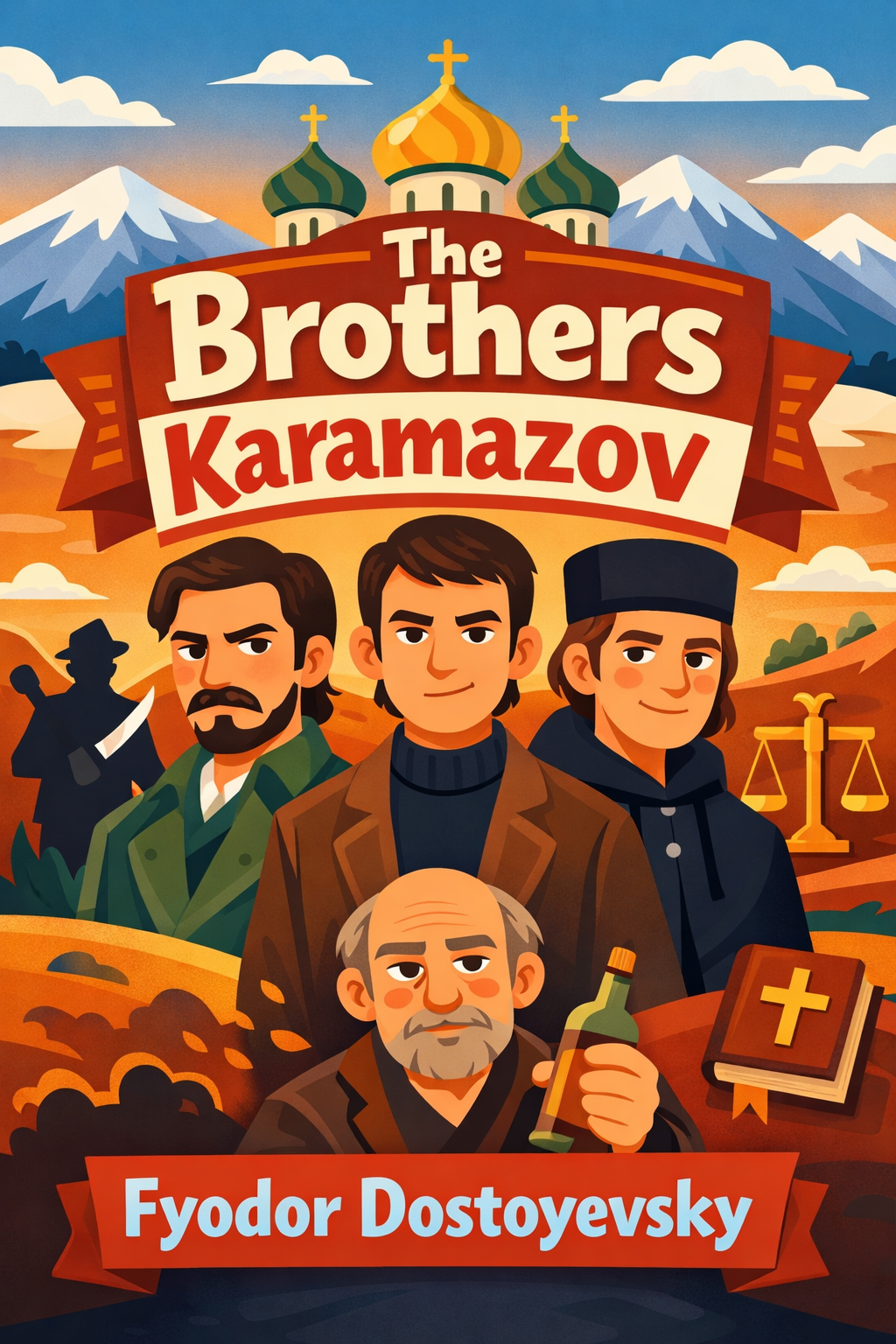
Fyodor Dostoevsky’s final novel is a monumental exploration of the human soul, set against the backdrop of a fractured family in 19th-century Russia. At its heart are the three Karamazov brothers, each representing a different facet of the human condition, locked in a spiritual and philosophical struggle that escalates into a devastating crime. Their father, Fyodor Pavlovich, is a depraved and buffoonish landowner, a man of unrestrained appetites who has neglected and embittered his sons. The ensuing drama is not merely a family saga but a deep inquiry into the existence of God, the burden of free will, and the very foundations of morality.
The eldest brother, Dmitri, is a passionate officer, a man torn between sensuality and a desperate yearning for redemption. He is engaged in a bitter financial dispute with his father and, more explosively, in a rivalry for the affections of the captivating Grushenka. His life is governed by impulse and emotion, making him volatile and unpredictable. In contrast, Ivan, the intellectual middle brother, is a cold rationalist and an atheist. He constructs elaborate philosophical arguments against God, most famously in his poem “The Grand Inquisitor,” where he posits that human freedom is a curse and that humanity craves not truth but mystery, authority, and miracle. He represents the modern mind grappling with a world where faith seems irrational.
The youngest brother, Alyosha, is their opposite: a gentle novice at the local monastery, guided by the saintly elder Zosima. Alyosha embodies a Christianity of active love and compassion, seeking to heal the divisions around him. He serves as the moral center of the narrative, though he is not untouched by doubt. Lurking in the background is the fourth, illegitimate brother, Smerdyakov, the cynical and epileptic servant, whose resentful nature is shaped by a lifetime of humiliation.
The novel’s first major movement brings the entire toxic family together at the monastery in a failed attempt at reconciliation, orchestrated by Alyosha. The meeting is a fiasco, exposing the deep hatreds and philosophical rifts. Fyodor behaves scandalously, Dmitri erupts in threats, and Ivan delivers his chilling critiques of faith. It is here that Elder Zosima, a figure of serene wisdom, offers cryptic prophecies of future suffering and kneels before Dmitri, foreshadowing the tragedy to come.
The central plot is catalyzed by the murder of the loathsome Fyodor Pavlovich. All evidence points to Dmitri, who has publicly threatened his father and is in desperate need of money to escape with Grushenka. He is arrested, tried, and condemned, despite his protests of innocence. The true murderer, however, is Smerdyakov, who confesses to Ivan that he acted upon what he understood to be the logical conclusion of Ivan’s atheistic philosophy: if God does not exist and everything is permitted, then why not commit the crime? He believed he had Ivan’s tacit approval. This revelation shatters Ivan’s detached intellectualism, plunging him into a feverish mental breakdown where he is haunted by a devilish hallucination that mocks his own ideas.
The courtroom drama that forms the climax is less about legal guilt and more about a societal judgment on the Karamazov spirit—their passion, their extremism, their questioning. While the factual case against Dmitri is flawed, the jury convicts him as a symbolic rejection of the chaos he represents. The novel concludes not with a neat resolution but with a fragile hope. Alyosha, after the death of his mentor Zosima and the family catastrophe, leaves the monastery to live in the world. At the close, he speaks to a group of schoolboys at the funeral of a young friend, urging them to remember each other with kindness. This simple act of connection suggests that the answer to the book’s immense philosophical questions may lie not in grand theories but in everyday, active love—the only force capable of binding a broken world.
Through this sprawling narrative, Dostoevsky wrestles with the most profound dilemmas. Is faith in God necessary for morality, or can humanity be good without it? Is free will a divine gift or an intolerable burden that leads to suffering? The novel offers no easy answers, but immerses the reader in the lived experience of these questions. Each brother’s path—Dmitri’s path of suffering and potential regeneration, Ivan’s path of rational despair, and Alyosha’s path of humble service—presents a different response to the mystery of existence. It is a work that challenges the reader to confront the darkness within and without, while never relinquishing a glimpse of the possibility of grace.