Description
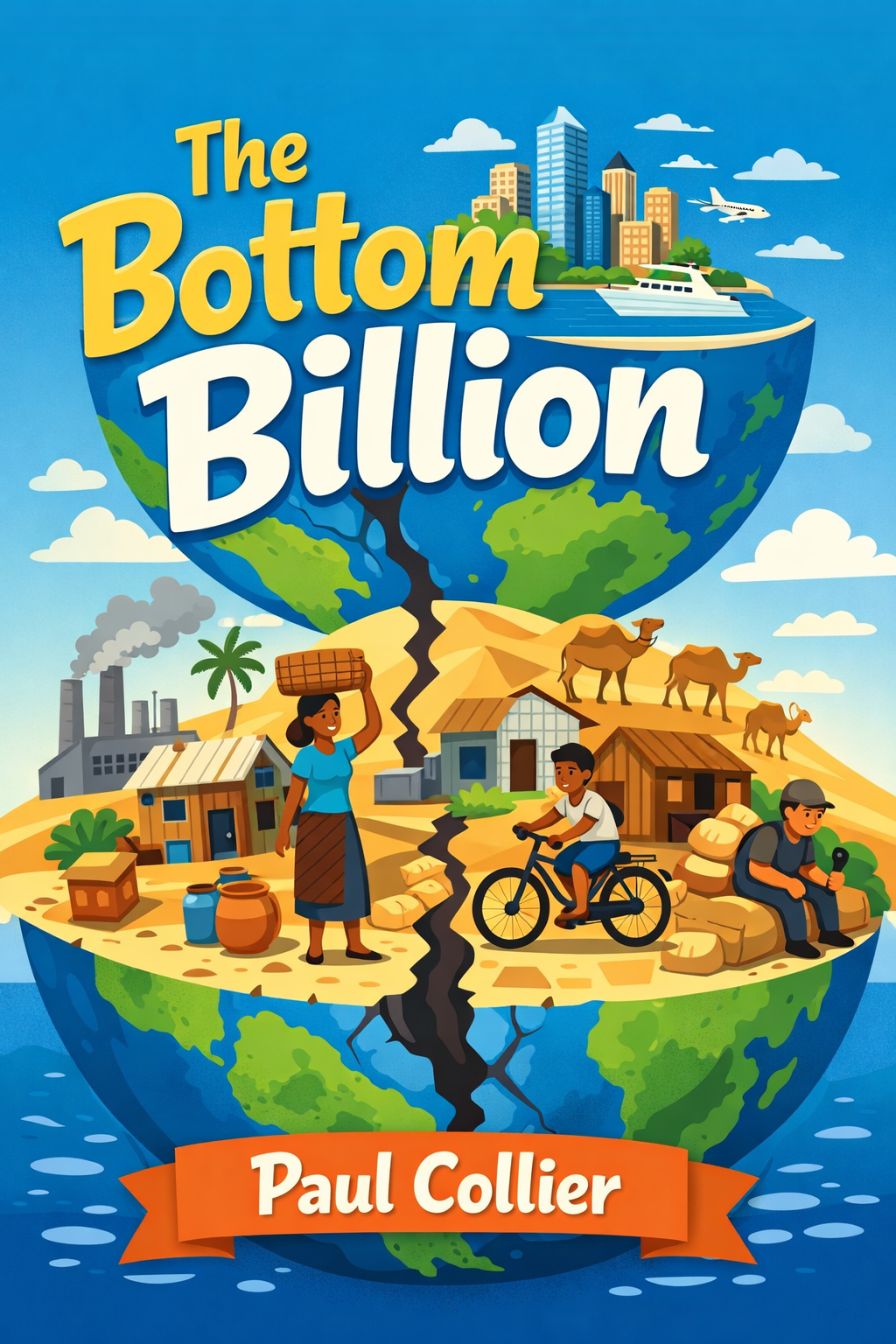
In a world of increasing global wealth, a stark division persists. While many nations develop rapidly, a group of approximately sixty countries, home to the poorest billion people on earth, are stuck. They are not developing; they are falling further behind. This book argues that traditional models of aid and development have failed this “bottom billion,” and their plight stems from a series of devastating traps that prevent economic growth and perpetuate misery.
The central problem is a vicious cycle where poverty itself begets more poverty. Economic stagnation creates desperation, weakens institutions, and fuels the conditions for conflict and corruption, which in turn crush any chance for growth. Unlike other developing nations that have ridden waves of globalization, these countries have missed the boat. Their economies are not integrating into the global system; they are diverging from it, creating a widening and potentially permanent gap. The challenge is not merely a lack of money, but a complex set of structural problems that lock nations into failure.
One of the most brutal traps is the conflict trap. The world’s poorest countries have a shockingly high risk of civil war, often fueled by the grievances and desperation that economic stagnation creates. War, in turn, devastates economies, destroying infrastructure, killing or displacing populations, and diverting all resources to fighting. A country emerging from conflict has a roughly fifty percent chance of falling back into violence within a decade, creating a cycle of bloodshed from which escape seems impossible. Peace is not just a humanitarian goal; it is the fundamental prerequisite for any economic development.
Paradoxically, the discovery of valuable natural resources like oil or diamonds often becomes another trap, known as the natural resource trap. Instead of blessing a nation with wealth, a sudden influx of resource revenue can distort the entire economy, making other exports uncompetitive—a phenomenon called “Dutch disease.” More insidiously, this easy money fuels corruption and bad governance. In states with weak institutions, resource wealth becomes a prize to be captured by elites, who use it to entrench their power through patronage and repression, rather than investing it for public good. The resource curse turns potential wealth into a catalyst for political and economic failure.
Geography can also be a cruel determinant of fate, particularly for nations that are landlocked and surrounded by bad neighbors. A landlocked country is utterly dependent on its neighbors’ transport infrastructure to reach global markets. If those neighbors are also poor, unstable, or hostile, the cost of trade becomes prohibitive. Growth in a coastal neighbor boosts a landlocked country’s economy only marginally, trapping it in a prison of geography. Strategies for such nations are limited, requiring either massive regional infrastructure investment or innovative ways to bypass their neighbors entirely.
Underpinning many of these traps is the governance trap of corruption and failed political systems. Where checks and balances are absent and transparency is minimal, the incentives for leaders to plunder the state are overwhelming. This is especially true when large sums from resources or international aid flow through government coffers with little oversight. Corruption stifles entrepreneurship, diverts funds from essential services like health and education, and destroys public trust. It makes meaningful reform from within nearly impossible, as those in power are the primary beneficiaries of the dysfunctional system.
Confronting these interconnected traps requires moving beyond simplistic solutions. The book argues that well-intentioned but generic financial aid has often been ineffective or even harmful, propping up bad governments and creating dependency. Effective assistance must be highly tailored, focusing on post-conflict reconstruction, supporting reformers within governments, and building critical infrastructure. Military intervention, in the form of international peacekeepers, can sometimes be a necessary, if controversial, tool to secure the space for peace and political reform in shattered states, preventing an immediate return to chaos.
Finally, the international community can leverage its power through smart standards and laws. Voluntary international charters—covering areas like budget transparency, natural resource management, and democratic elections—can provide clear benchmarks for reform. They offer technical assistance and, crucially, a signal of credibility to investors for governments that choose to sign and adhere to them. This creates external incentives for good behavior that can help tip the balance inside a country towards reformist factions.
The plight of the bottom billion is the most urgent economic challenge of our time. It is a problem of stagnant economies, broken politics, and deep human suffering. Solving it will not happen through market forces alone or by simply doubling aid. It requires a concerted, patient, and sophisticated combination of security, governance, and economic strategies tailored to break the specific traps holding each society back. The future of a billion people depends on the world’s willingness to understand these complexities and act with determined clarity.