Description
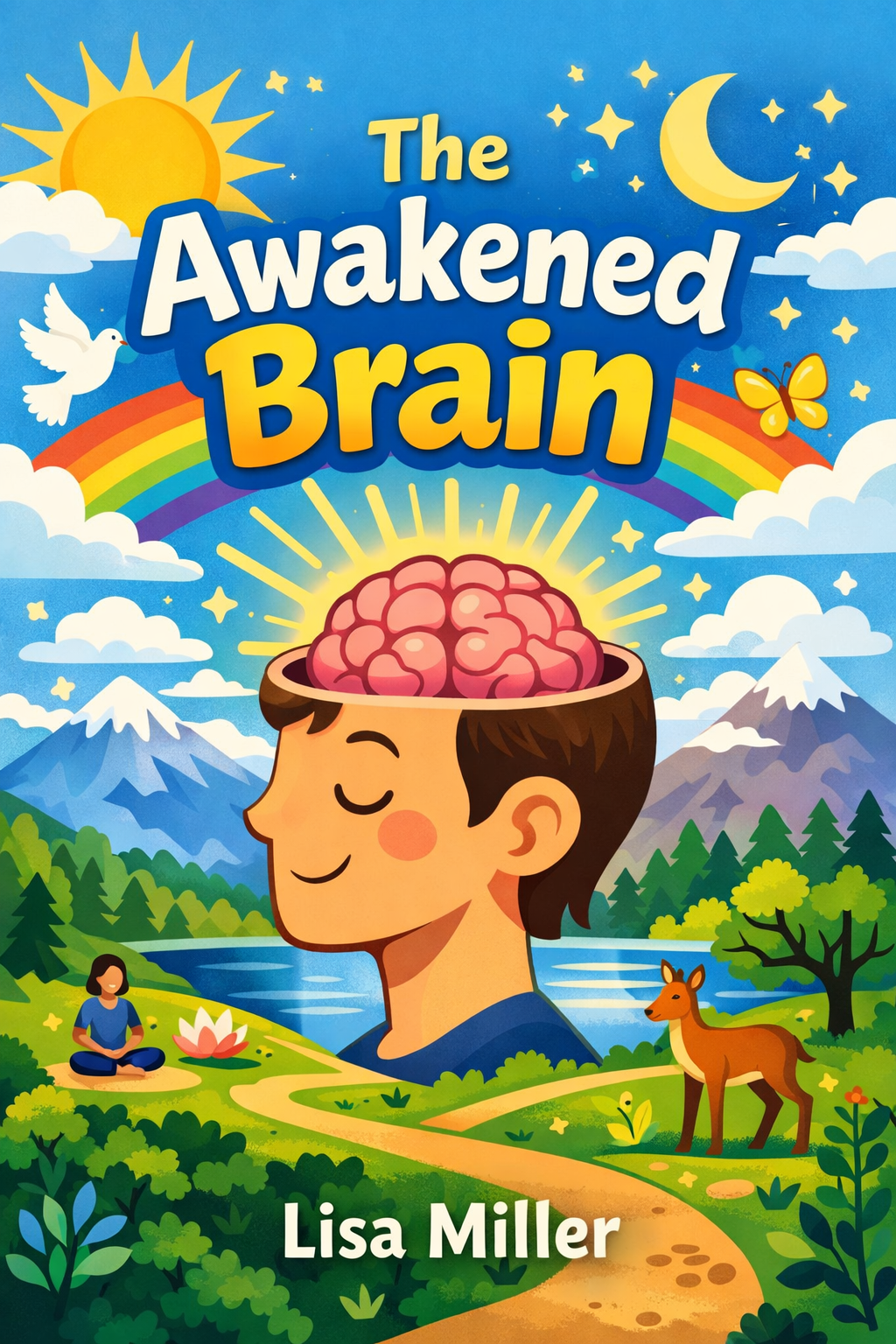
The Awakened Brain presents a radical and scientifically-grounded perspective on mental health, challenging conventional therapeutic models. It argues that our current approaches to treating depression, which often focus on reliving pain and restructuring thoughts, may be incomplete. Grounded in decades of rigorous research and clinical experience, the book proposes that depression is not merely a disorder to be eliminated, but can be a profound developmental signal—a calling to engage with a deeper, spiritual dimension of life that is hardwired into our biology. This journey explores the protective power of spirituality, the neural architecture of our awakened mind, and how shifting our perception can lead to profound healing and a renewed sense of belonging in the world.
A pivotal insight emerges from longitudinal studies tracking families over many years. When both a mother and her child share a deep sense of personal spirituality, the child demonstrates an 80 percent reduction in the risk of depression. This intergenerational transfer of spirituality stands out as one of the most potent protective factors ever identified, far surpassing many other social and environmental influences. This finding sparked a deeper investigation into the origins of this resilience, leading to a revolutionary understanding: spirituality is not solely a cultural or religious construct, but an innate, biological capacity. Groundbreaking genetic research involving twins reveals that our propensity for spiritual awareness is significantly heritable, much like other innate traits. We are all born with this capacity, which then develops throughout our lives, particularly during adolescence when personal spiritual beliefs begin to individuate from formal religious upbringing.
The exploration moves into the physical brain, where neuroscience reveals a stunning symmetry. Brain imaging studies show that individuals at high risk for depression often have a thinner cortex in regions associated with self-perception and understanding one’s place in the world. In a remarkable parallel, those with a strong personal spirituality exhibit a thicker, more robust cortex in these exact same regions. Even more compelling, individuals who are both spiritually inclined and at high genetic risk for depression show the greatest cortical thickness of all, suggesting a powerful biological interaction. This evidence positions depression and spirituality not as opposites, but as two sides of the same coin—both involving a deep sensitivity to our relationship with existence. One path leads to a sense of isolation and disconnection; the other, awakened, leads to a sense of unity and meaning.
Healing, therefore, is reframed not as a process of constructing new narratives from within, but of attuning to a larger consciousness and the meaning it reveals. This involves a shift from a top-down, goal-oriented mode of attention to a bottom-up, receptive awareness. Instead of scanning the world for what we already seek, we learn to be open to the guidance, synchronicities, and messages that life presents. Personal stories illustrate this shift, where moments of struggle and longing become gateways to perceiving a world that seems to actively communicate, offering signs and pathways forward that the achieving mind would typically filter out. This receptive state is the gateway to the awakened brain.
The awakened brain is characterized by a fundamental shift in perception. It moves us from seeing a world of separate objects to perceiving a living, interconnected field that is reaching out to us. This is not a mystical abstraction but a different way of processing sensory and cognitive information. It allows us to see the profound connections between ourselves and others, to feel a deep kinship with nature, and to sense our part in a greater unity. Experiences in natural settings, like sitting within a canopy of willow trees, can catalyze this state, quieting the analytical, problem-solving mind and activating a mind that perceives relationship and wholeness.
Ultimately, this journey reveals that our innate spiritual capacity is a vital component of human health. By learning to recognize and cultivate this awakened state, we can access a profound source of resilience, transform our relationship with suffering, and navigate life with a renewed sense of purpose and connection. The science confirms what many have sensed: we are not alone in a meaningless universe, but are participants in a conscious, interconnected reality. Awakening this biological capacity is the key to unlocking a richer, healthier, and more meaningful human experience.