Description
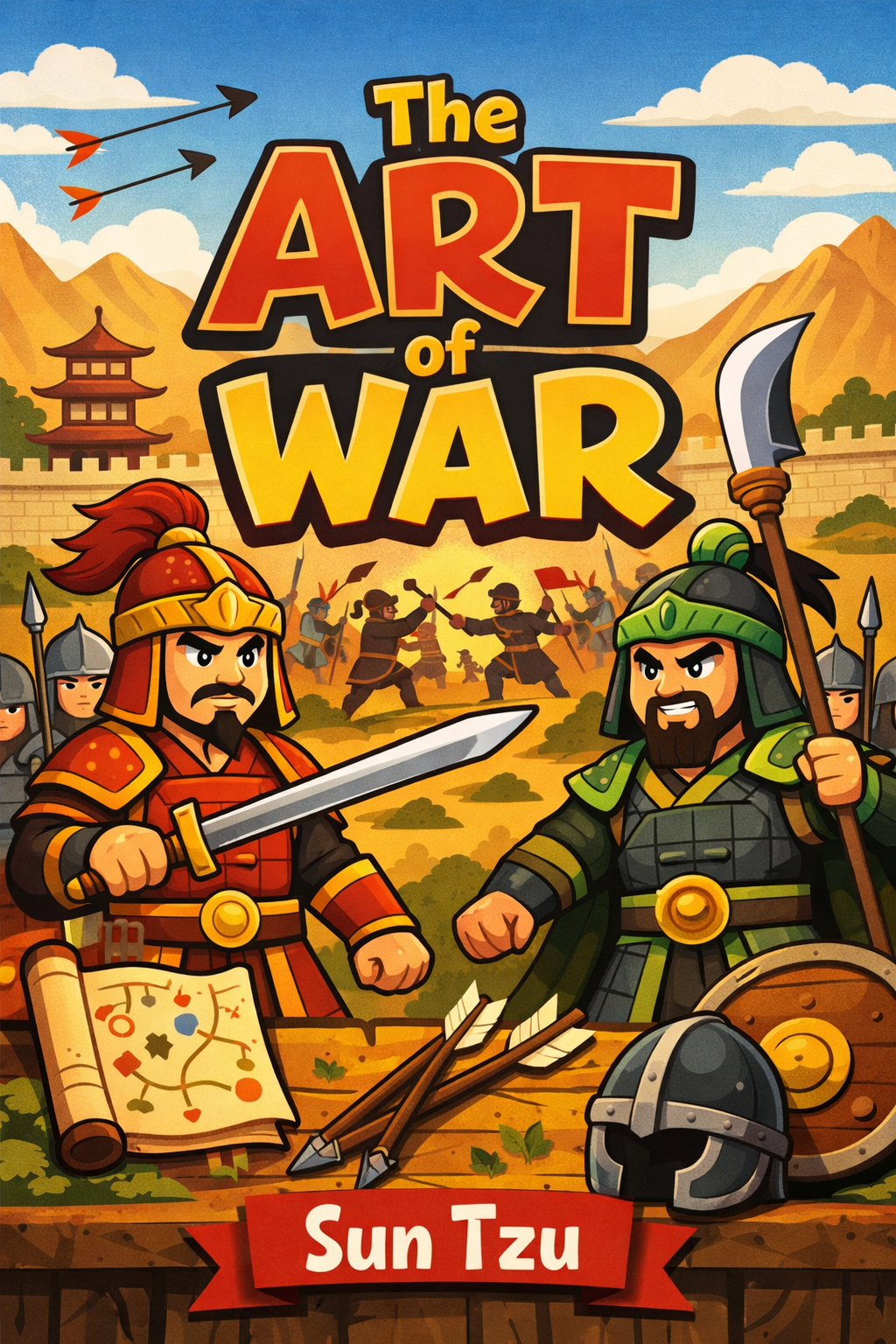
Sun Tzu’s ancient treatise, far more than a simple manual for generals, presents a profound philosophy of competition applicable to any arena of conflict. At its core, the book argues that the highest form of warfare is to subdue the enemy without ever fighting a battle. True mastery lies not in glorious, bloody conquest, but in careful planning, psychological insight, and strategic positioning that renders opposition futile before the first blow is landed. Victory is secured long before the armies meet, in the quiet calculations of the commander and the morale of the troops.
The foundation of all success is thorough self-knowledge and an even deeper understanding of the adversary. You must assess not only tangible factors like terrain, weather, and logistics, but also the intangible spirit of your own forces and those you face. A leader who knows their own strengths and weaknesses, and who can discern those of the rival, will never be in peril. This principle extends beyond the battlefield; it is the essence of any competitive endeavor, from business to politics. Deception becomes a critical tool in this understanding. By appearing weak when you are strong, or disordered when you are prepared, you manipulate the enemy’s perception and lure them into disadvantage.
The text places immense importance on adaptability and the fluid nature of conflict. Just as water has no constant shape, so in warfare there are no fixed conditions. The skilled strategist does not rely on rigid plans but shapes their approach to the endless variations of circumstance. They mimic the qualities of water, flowing around obstacles, seeking the path of least resistance, and striking with overwhelming force at the point of greatest weakness. This requires flexibility of thought and the ability to respond instantly to changing situations. An army that moves with speed and unity, like a sudden torrent, can overcome one that is larger but sluggish and disjointed.
Leadership is dissected with piercing clarity. A general must embody the virtues of wisdom, sincerity, humanity, courage, and strictness. The welfare of the troops is paramount; they must be treated with humanity and care, but governed with unwavering discipline. Morale is the invisible engine of an army. When soldiers share the spirit of their commander and believe in their cause, they become formidable. The text warns of the dangers of a leader who is reckless, cowardly, quick-tempered, overly delicate, or excessively concerned with reputation. Such flaws are calamities that can destroy an army.
Practical guidance is given on the use of terrain, the management of supplies, and the handling of different tactical situations. The book categorizes ground—from accessible to treacherous—and prescribes specific conduct for each. It discusses the nine varieties of campaign ground, from scattered borderlands to deadly terrain where one must fight for survival. The central idea is always to turn the environment to your advantage and to deny its benefits to the foe. Logistics are the lifeblood of campaign; a force that is hungry, exhausted, or poorly equipped is already defeated.
Ultimately, the philosophy extends to a grand strategic view. The state that excels is not the one that fights the most wars, but the one that cultivates its own strength, maintains harmony, and chooses its conflicts with supreme discretion. The complete victor cultivates the Way, ensuring the moral alignment of the people with their leaders, and thus wins the allegiance of all without resorting to siege or slaughter. The art of war, therefore, is revealed as the art of preserving peace, of achieving objectives with such efficiency and foresight that destructive conflict becomes unnecessary. It is a lesson in winning the whole game by mastering every move before it is made, a timeless call to pursue advantage through intelligence, preparation, and profound understanding rather than brute force.