Description
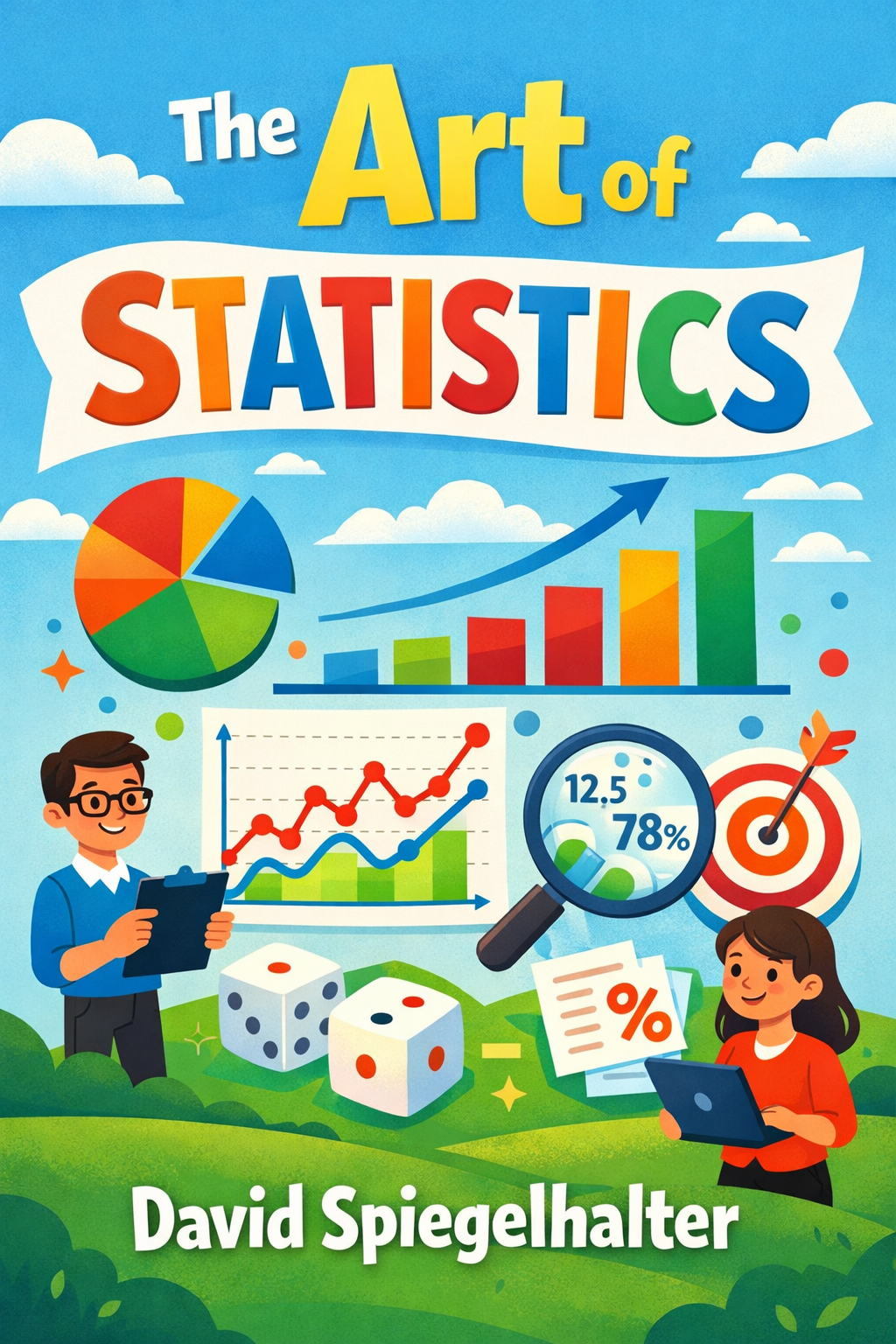
In a world awash with data, the ability to extract true meaning from numbers is more crucial than ever. This book presents statistics not as a dry, academic exercise, but as a vital, practical art form—a coherent set of principles for understanding the world. The author, a renowned statistician, argues that the core of this discipline is about asking the right questions, collecting appropriate evidence, and communicating findings with clarity and honesty. It is a science of reasoning under uncertainty, a guide for making better decisions when we cannot know everything for sure. The journey begins by dismantling the common fear of statistics, showing that its fundamental concepts are intuitive tools for clear thinking, desperately needed in an era of misinformation and big data.
The narrative guides us through the entire data lifecycle, starting with the critical first step that many overlook: problem formulation. Before any number is crunched, we must precisely define what we want to know. Is a medical trial testing if a drug works, or how well it works? The question shapes everything that follows. From there, the book explores the art and science of data collection, highlighting how easy it is to go astray. Through compelling examples—from flawed wartime plane analyses to modern political polls—it reveals how selection bias, confounding variables, and plain bad design can produce beautifully precise but utterly misleading results. Good statistics, therefore, starts with a healthy skepticism about where numbers come from.
Once data is gathered, the book delves into the powerful techniques of exploration and analysis. It explains foundational concepts like distributions, correlation, and regression not as abstract formulas, but as lenses to bring patterns into focus. A central and beautifully explained theme is the logic of inference: how we can cautiously generalize from a sample to a wider population, and how we can test hypotheses. The reader learns the real meaning of the “p-value” and the confidence interval, concepts often mangled in popular discourse. These are not magic bullets of truth but measures of uncertainty, helping us quantify what we don’t know. The author emphasizes that a single analysis is rarely enough; robustness comes from looking at data from multiple angles and using different methods.
A significant portion of the work is devoted to the pitfalls and perils of statistical reasoning. It tackles the prosecutor’s fallacy in courts, the regression to the mean that can fool coaches and doctors, and the dangers of data dredging—hunting for patterns until something, anything, appears significant. The book acts as a defense manual against being fooled by statistics, whether by others or by our own cognitive biases. It shows how easily graphs can distort, how averages can hide crucial details, and why “statistically significant” does not always mean “importantly different.” This critical perspective is presented not to breed cynicism, but to foster a more sophisticated and empowered literacy.
Ultimately, the book arrives at its most important chapter: communication. The art of statistics is incomplete if the insights remain locked in technical jargon. The author champions the need for transparent, accessible storytelling with data. This involves thoughtful visualization, honest acknowledgment of limitations, and a clear distinction between what the data shows and what we might speculate. In its concluding thoughts, the work positions statistics as a cornerstone of ethical citizenship. In facing global challenges—from pandemic response to climate change—we are all required to evaluate evidence. This book equips us not to become professional statisticians, but to be informed collaborators, critical consumers, and responsible communicators in a data-driven age, transforming numbers into genuine understanding and wiser action.