Description
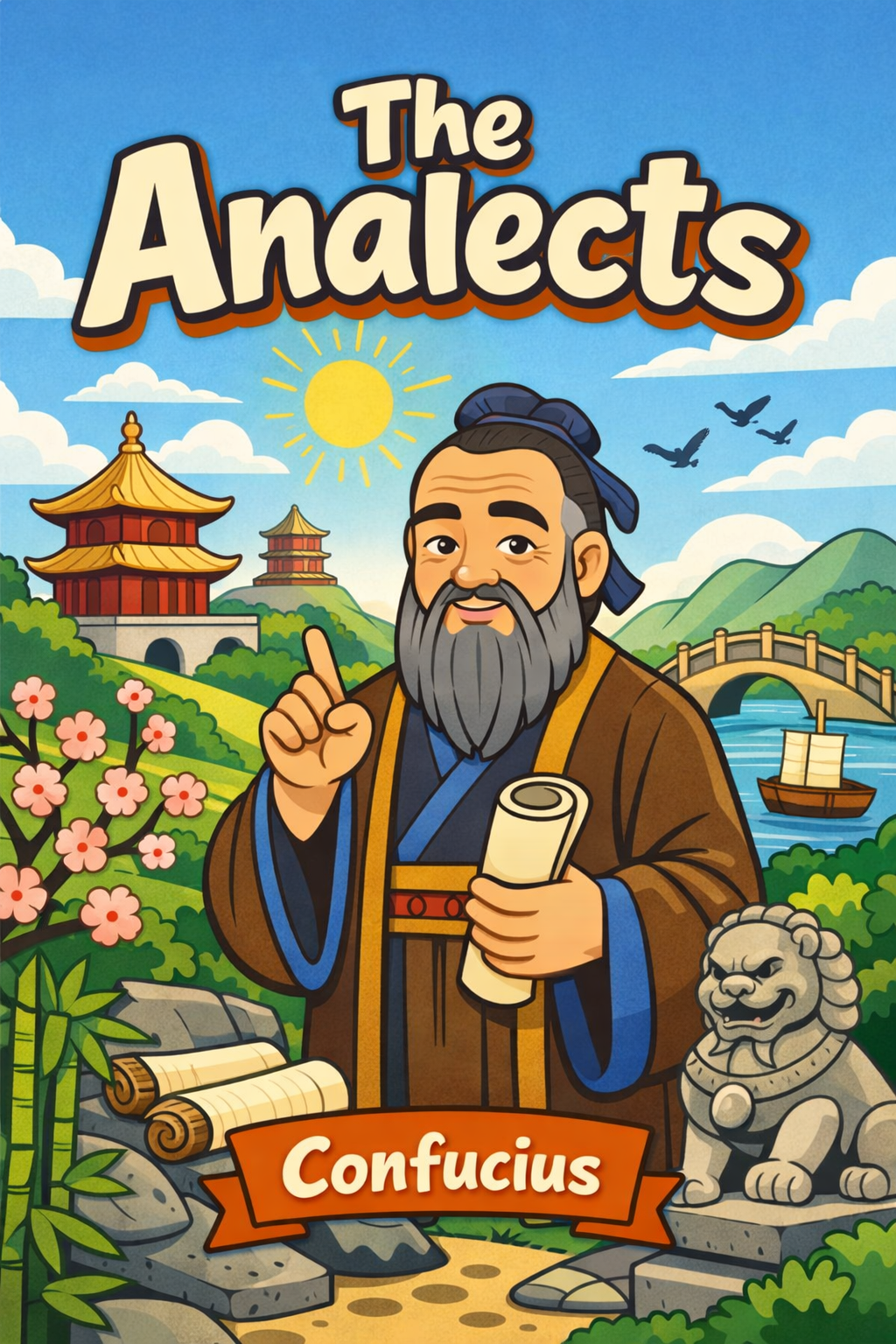
The Analects presents a timeless portrait of a society built not on force, but on moral character. Compiled by his disciples after his death, this text distills the teachings of Confucius, who lived during a period of significant social upheaval in ancient China. He witnessed a decline in the traditional rituals and ethical codes that he believed were the glue holding society together. In response, his philosophy offers a practical guide for cultivating personal virtue as the foundation for all relationships, from family life to the governance of states. The core of his teaching is not a set of abstract theories, but a pathway to becoming a better person, whose influence creates order and harmony naturally.
Central to this philosophy is the concept of the “gentleman” or noble person, who embodies virtue through sincere action. For Confucius, true goodness is not about grand gestures or eloquent speeches, but about consistency between one’s inner beliefs and outward conduct. He emphasizes the importance of “native substance”—genuine feeling—over mere ornamental display. A ritual performed without sincerity is empty; a claim to virtue without corresponding action is hypocrisy. The gentleman scrutinizes his own motives, especially when alone, and views mistakes as opportunities for self-improvement rather than failures to be hidden. This integrity forms the bedrock of trust and respect in all human interactions.
This cultivated virtue finds its most powerful expression in leadership. Confucius championed a model of influence that is effortless and magnetic, achieved through moral example rather than coercion. He argued that governing through harsh laws and punishments only teaches people to avoid shame, not to cultivate it. In contrast, a leader who embodies dignity, kindness, and a devotion to learning inspires the people to reform themselves. They become dutiful and industrious not out of fear, but out of a genuine desire to emulate the virtue they see. This ideal of “effortless action” suggests that the most profound influence flows naturally from who a leader is, not merely from what they decree.
The path to this virtuous state is a lifelong commitment to learning, which Confucius considered a joy and a duty. However, his definition of learning is profoundly active. It is not the accumulation of theoretical knowledge, but the diligent practice of ethical principles until they become second nature. One must “walk the walk,” integrating lessons into daily behavior until right action becomes effortless. This process involves constant self-reflection, humility, and surrounding oneself with virtuous companions who can offer correction and guidance. The gentleman never considers his education complete, remaining ever-curious and dedicated to refining his character.
Ultimately, the teachings in The Analects weave a vision of a harmonious social order that radiates outward from the individual. By mastering oneself through sincerity, ethical action, and relentless learning, a person naturally fulfills their roles as a respectful child, a trustworthy friend, and a just leader. This creates stable families, which in turn form the basis of a well-ordered state. While rooted in the concerns of its time, the book’s enduring power lies in its focus on the universal qualities of integrity, empathy, and responsibility. It reminds us that a good society is built one virtuous choice at a time, and that true authority begins with the mastery of one’s own character.