Description
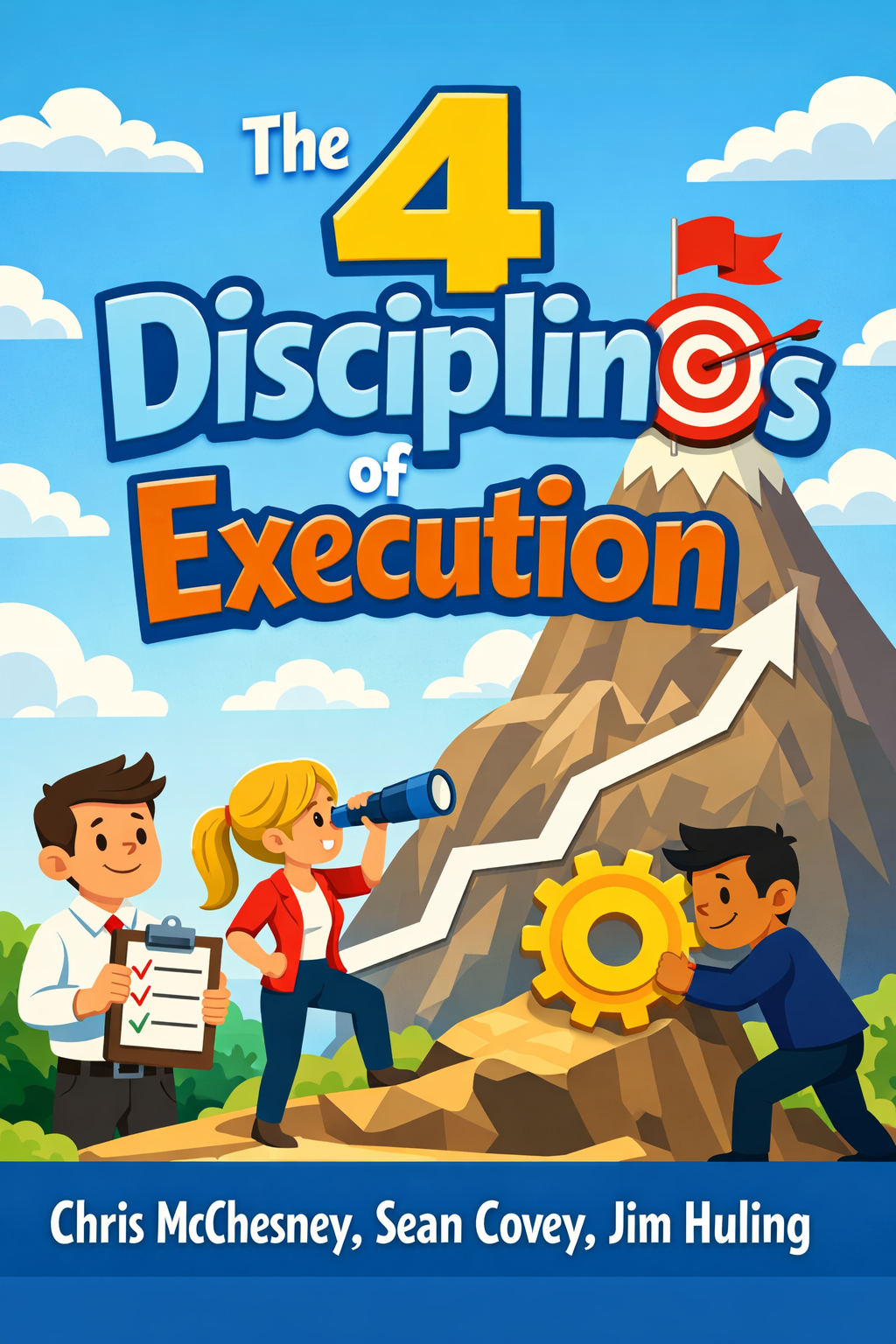
In the constant rush of daily business, ambitious plans often falter. The central challenge isn’t a lack of good ideas, but the profound difficulty of changing human behavior amidst the urgent demands of the day. This book presents a field-tested method for cutting through that chaos to execute strategic goals. The core insight is that execution requires a unique set of disciplines, separate from the skills of management, designed to help teams not just plan, but actually achieve their most important objectives.
The first discipline is an uncompromising focus on the wildly important. The enemy of execution is attempting too much. While the day-to-day operational whirlwind—the emails, meetings, and urgent problems—consumes all available time and energy, strategic goals get perpetually postponed. The solution is to identify one or two Wildly Important Goals (WIGs) that would make all the difference if achieved. These are not vague visions like “improve customer service,” but specific, time-bound targets such as “increase customer satisfaction scores from 85% to 95% by December 1st.” By narrowing the focus, a team can channel its collective effort toward a finish line that everyone can see, ensuring that the whirlwind does not obscure what truly matters.
Once a clear goal is set, the second discipline shifts attention from outcomes to behaviors. Most teams track lag measures, which are results-oriented metrics like monthly sales or quarterly profit. While important, these are history; by the time you see them, you can no longer influence them. The key is to identify and act on lead measures. These are the high-leverage activities that directly drive the lag measures. If the WIG is to increase sales, a lag measure is revenue, but a lead measure might be the number of new prospect calls made each day. Lead measures are predictive and influenceable. They empower a team because they focus on what they can do right now to affect tomorrow’s result, turning a distant target into daily, controllable actions.
Knowing the goal and the key behaviors is not enough. People play differently when they are keeping score. The third discipline is to create a compelling, visible scoreboard. This isn’t a complex report for managers; it’s a simple, engaging display for the players themselves. A good scoreboard tells the team at a glance whether they are winning or losing. It should show the WIG, the current lag measure, and the critical lead measures. When team members can see the direct impact of their efforts on the score, motivation shifts from theoretical to tangible. The energy of a game takes over, fostering engagement and a shared desire to win.
The final discipline installs a rhythm of accountability that sustains momentum. This is achieved through frequent, short meetings focused exclusively on the WIG. In these sessions, team members report on their previous commitments to advance the lead measures, review the scoreboard, and make new commitments for the coming week. The power of this process lies in its peer-to-peer accountability. Team members commit to each other, not just to the boss. This creates a positive social pressure and a culture of follow-through. The meetings are not for problem-solving the whirlwind, but for consistently advancing the strategic goal, one week at a time. This cadence of accountability transforms high aspirations into a series of manageable wins, building a track record of success that fuels further effort.
Implementing these disciplines is a deliberate process. It begins with selecting the right WIG from the top level of the organization, ensuring it is aligned with the overall strategy. The next critical step is brainstorming lead measures—activities that are both predictive of the goal and directly influenceable by the team. This requires moving beyond obvious metrics to find the true drivers of performance. The system is then operationalized by designing a player-focused scoreboard and establishing the recurring accountability meetings. When these four disciplines work in concert, they create a operating system for execution that enables teams to achieve extraordinary results, even amidst the relentless demands of the everyday whirlwind.