Description
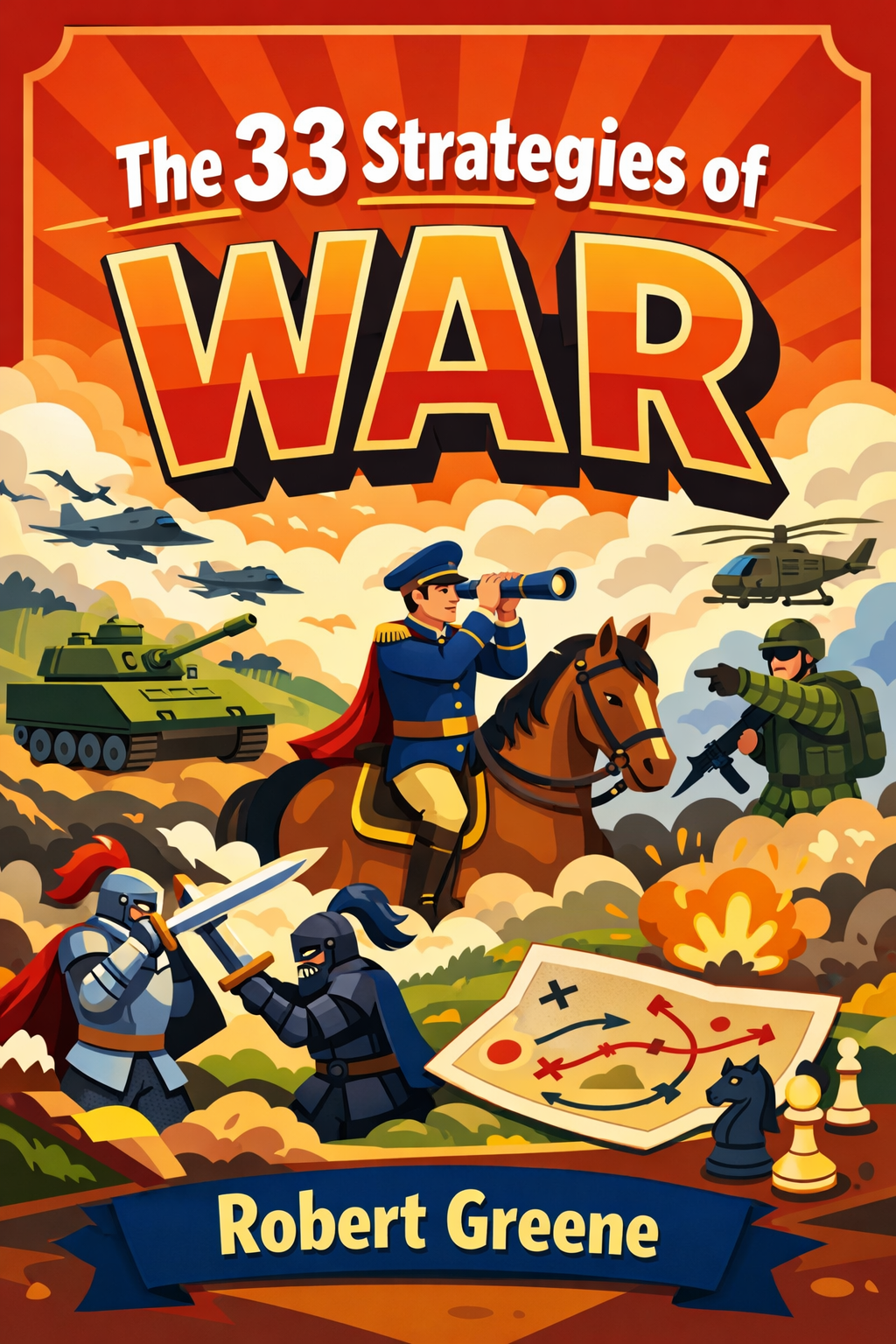
Beneath the surface of our daily lives, a silent war rages. It is not fought with weapons on a battlefield, but in boardrooms, social circles, and within the confines of our own minds. This book argues that conflict is an inescapable facet of the human condition, and to navigate it successfully, we must become strategic thinkers. Drawing from a vast tapestry of history—from the cunning maneuvers of ancient generals to the psychological ploys of modern masters—it distills the essence of warfare into thirty-three fundamental principles. These are not mere tactics for destruction, but profound strategies for understanding power dynamics, outmaneuvering opponents, and securing victory in any competitive arena.
The journey begins with a shift in perspective. We are encouraged to see ourselves as generals of our own lives, moving beyond reactive emotional responses to cultivate a detached, panoramic view of our conflicts. This involves rigorous self-assessment, understanding our own weaknesses and tendencies, and mastering the art of perception. The book teaches that often, the most powerful weapon is not force, but deception and misdirection. By controlling what your opponent sees and believes, you can dictate the terms of engagement, leading them into traps of their own making or causing them to waste resources chasing phantoms. The classic example of creating a false weakness to lure an enemy into vulnerability is presented not as historical anecdote, but as a viable strategy for business negotiations or personal rivalries.
A central theme is the psychological dimension of conflict. Warfare is ultimately a clash of wills, and victory often goes to those who can unnerve, demoralize, and paralyze their opponents. The strategies explore methods for getting inside an adversary’s head, predicting their reactions, and using their own character flaws—such as pride, impatience, or anger—against them. The concept of the “death-ground” strategy, where you deliberately place your own forces in a situation with no route for retreat, thereby unleashing their ultimate fighting spirit, is translated into committing so fully to a project or goal that failure is not an option, galvanizing extraordinary effort and creativity.
The book does not advocate for constant aggression. In fact, some of its most potent strategies involve the selective use of passivity and strategic withdrawal. Knowing when not to fight is as important as knowing how to fight. By refusing to engage on an opponent’s chosen terrain or timetable, you drain their energy and frustrate their plans. The graceful, non-resistant yielding of the bamboo in a storm, which allows it to survive while rigid trees snap, is offered as a metaphor for this resilient form of strength. Alliances and diplomacy are treated as critical theaters of war. The strategies guide the reader in forming necessary coalitions, managing allies who may have divergent interests, and expertly neutralizing enemies without direct confrontation, often by turning their own allies against them or isolating them from support.
Ultimately, the goal is to win campaigns, not just battles. This requires long-term thinking, the careful conservation of resources, and the flexibility to adapt when circumstances change. The book warns against the “victory disease,” the hubris that follows a win and leads to carelessness. It emphasizes the need for relentless intelligence gathering—about the environment, the market, or the people around you—and the courage to occasionally make a devastating, all-out attack on a decisive point when the opportunity arises. The final strategies concern the inner war: maintaining morale, combating boredom and routine, and seeing through the “fog” of daily life to the strategic realities beneath.
This is not a manual for manipulation for its own sake, but a call to strategic awareness. It posits that in a world teeming with subtle conflict and competition, those who remain strategically naive are destined to be pawns. By studying these timeless principles of confrontation, psychology, and maneuver, we arm ourselves with the clarity to diagnose conflicts, the creativity to design solutions, and the strength to execute plans, thereby taking conscious command of the many battles that define our existence.