Description
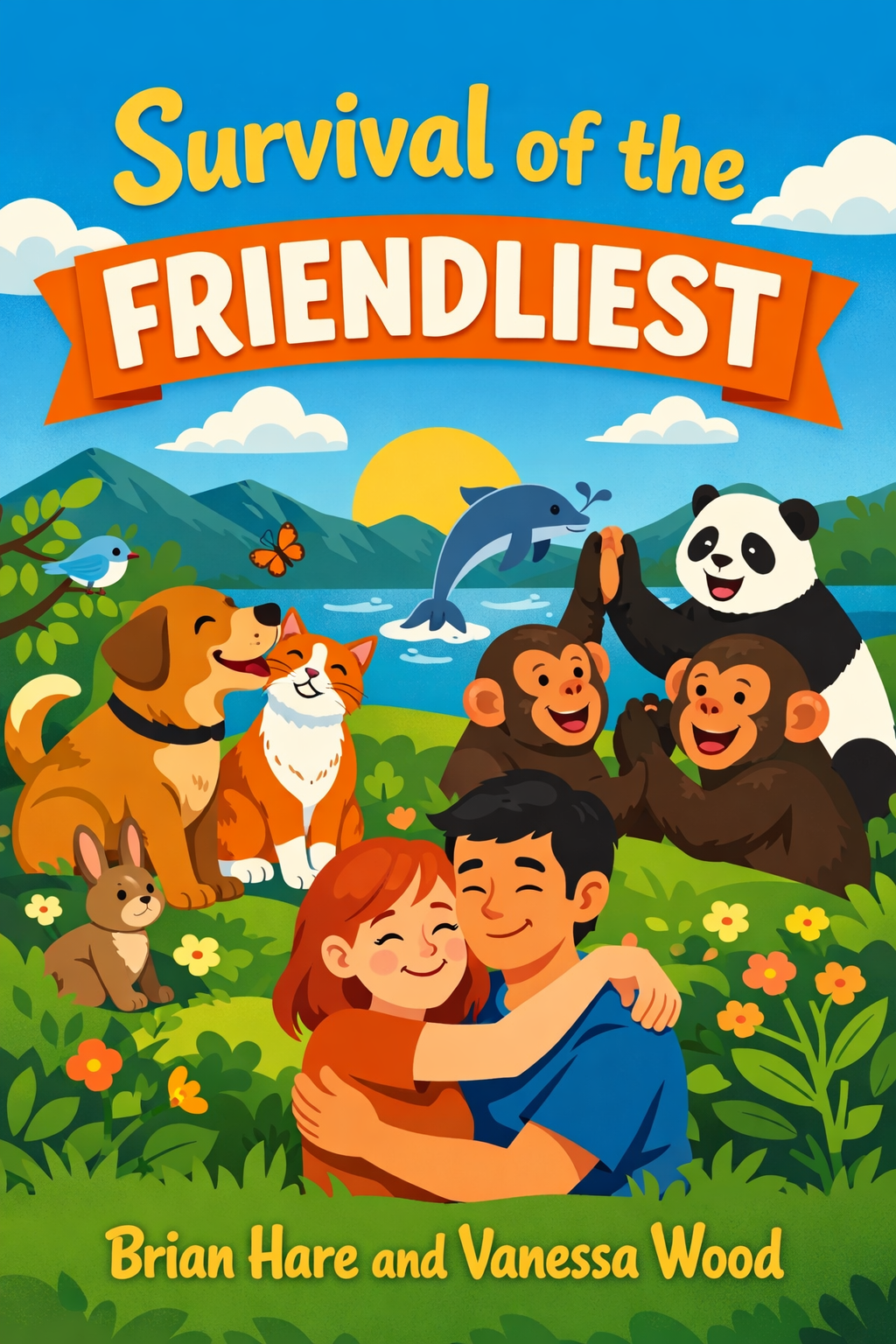
The common understanding of “survival of the fittest” paints a picture of a world won by the strongest and most aggressive. This book presents a revolutionary counterpoint: humanity’s true evolutionary advantage is friendliness. Our journey to planetary dominance was not secured through brute force alone, but through our extraordinary ability to cooperate, communicate, and form deep social connections. This capacity for friendship is woven into our very biology and history, shaping our minds, our faces, and our societies.
From infancy, humans display a unique cognitive skill called theory of mind—the understanding that others have their own thoughts and intentions. A simple game, like pointing to a hidden object, reveals this profound ability. While a chimpanzee might not grasp the gesture, a human infant will, demonstrating an innate readiness to engage in shared communication. This foundational skill is the bedrock of cooperation. Interestingly, domesticated animals like dogs also show a rudimentary version of this, suggesting a link between sociability and the ability to read social cues. The question then becomes: why did humans evolve this trait to such a refined degree?
A landmark experiment with Siberian foxes provides a crucial clue. When scientists selectively bred only the foxes that showed a natural affinity for humans, remarkable changes occurred over generations. The friendly foxes not only became more docile but also developed physical traits like floppy ears and varied coat colors. Most significantly, their cognitive abilities shifted; they became far better at following human gestures and communicating. This shows that selecting for friendliness genetically packages a suite of traits, including enhanced communication skills. It demonstrates that sociability and the ability to understand others are deeply linked in our biology.
This process of domestication isn’t exclusive to human intervention. In the wild, our primate cousin the bonobo offers a stunning example of self-domestication. Unlike the often-violent chimpanzee, bonobo society is strikingly cooperative and peaceful. Conflicts are frequently resolved through social bonding rather than aggression. Physically, bonobos have smaller jaws and teeth and more varied pigmentation compared to chimps—classic signs of domestication. Cognitively, they excel at cooperative tasks. Their success as a species is powerful evidence that evolutionary pressure can favor friendliness, producing a more harmonious and collaborative society.
The evidence suggests our own ancestors underwent a similar process. As Homo sapiens emerged among other hominid species, we thrived not because we were the fiercest, but likely because we were the friendliest. Fossil records show that over time, human faces became less robust, with shrinking brow ridges and jaws—features associated with lower testosterone and reduced aggression. The development of the whites of our eyes, which help signal gaze and intention, is another physical trait linked to enhanced social communication. This self-domestication hypothesis posits that friendliness granted us the ability to form larger, more stable groups, communicate complex ideas, and collaborate on technologies, ultimately making our species more resilient and innovative.
Our brains are fundamentally wired for connection. We form powerful social bonds that extend beyond kin to include strangers, united by shared identities, stories, and beliefs. This profound capacity for “fictive kinship” allows for the creation of vast, cooperative communities. However, this brilliant adaptation has a dark side. The same neural machinery that builds intense in-group loyalty can dehumanize those perceived as outsiders. The strong “us” can create a threatening “them,” leading to prejudice and conflict. Our history is scarred by this paradox, where our greatest strength becomes a vulnerability.
Yet, the solution lies within the same social framework. Intolerance is not a fixed state. Research shows that close, casual contact with others—working alongside or simply sharing experiences—can powerfully reduce prejudice and foster tolerance. This contact breaks down abstract categories and allows us to see the individual humanity in others. Furthermore, our circle of empathy can expand beyond our own species. The way we treat animals often mirrors our social attitudes; cultivating compassion for pets and other creatures can reinforce our capacity for kindness toward people, highlighting the interconnected nature of friendliness.
Ultimately, this book reframes human history and our potential future. Our survival and flourishing are a story of connection, not conquest. By understanding that friendliness is a core, evolved strength, we can consciously nurture it. The challenge and opportunity of our time is to harness this innate capacity for bonding to build broader, more inclusive circles of “us,” overcoming the destructive tendencies of tribalism. Our continued survival may indeed depend on the survival of the friendliest.