Description
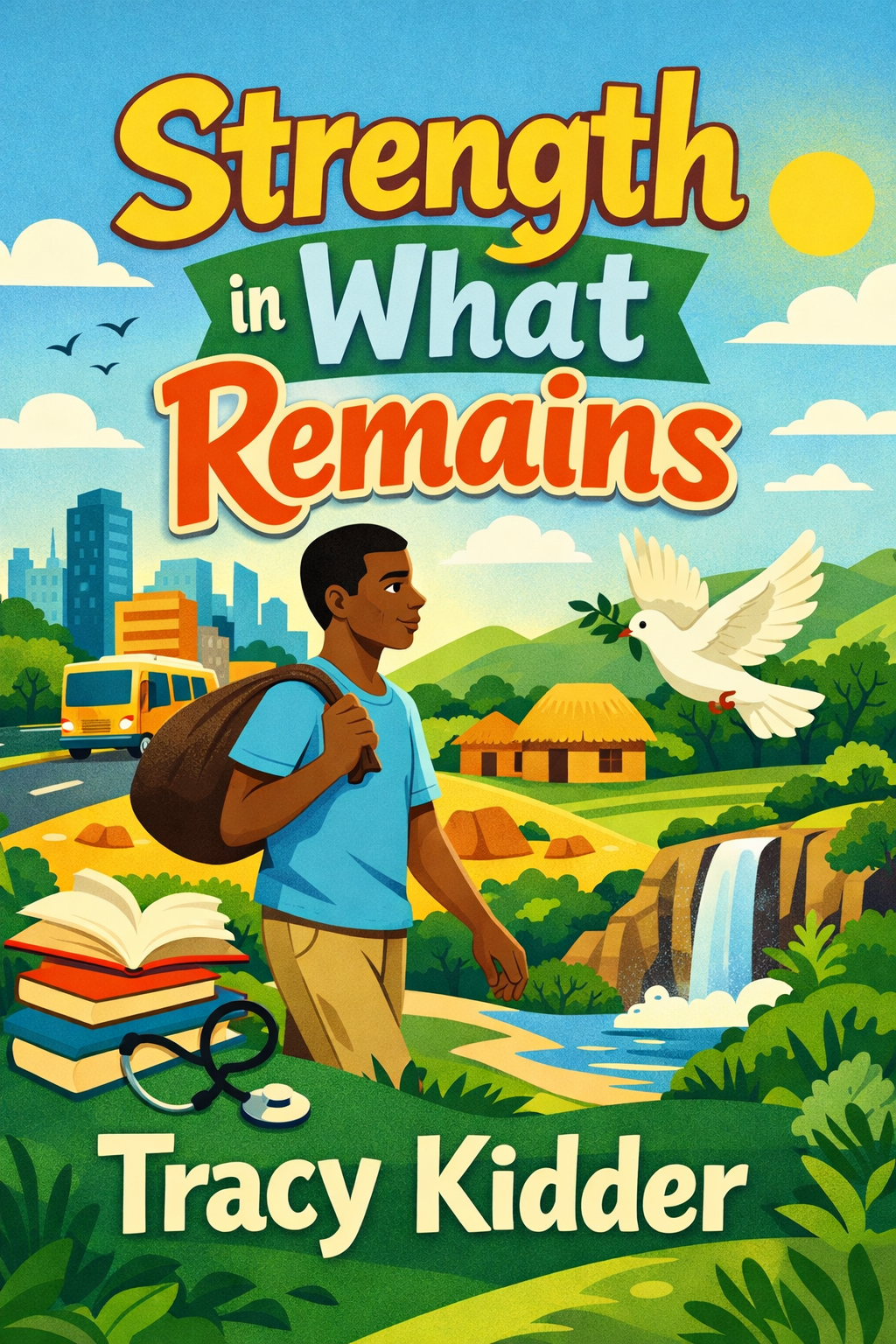
The story begins in the rural hills of Burundi, where a young boy named Deo tends his family’s cattle. His world, though poor and lacking basic infrastructure, is rich in familial bonds and the simple dignity of work. His parents, believing fiercely in the power of education, send him to school, where he excels despite a system rife with corporal punishment and political tension. Burundi is a nation divided, primarily between the Hutu and Tutsi ethnic groups, and ruled by a Tutsi-led military dictatorship. Deo’s Tutsi heritage, combined with his academic brilliance, becomes his ticket to advancement, eventually securing him a coveted spot at the University of Burundi’s medical school. For a brief moment, a future as a healer in his homeland seems within reach.
That future shatters in 1993 when the assassination of Burundi’s first democratically elected Hutu president ignites a cataclysm of violence. The country descends into civil war. As a Tutsi, Deo becomes a target. He is forced to abandon his medical studies and flee on foot, witnessing horrors that etch themselves permanently into his memory: burning homes, corpses lining the roads, and a pervasive atmosphere of terror. His flight takes him to Rwanda, only to find himself trapped again as genocide erupts there. In a harrowing journey, he navigates back through the bloodshed to Burundi’s capital, a ghost in his own life, assuming his entire family has been slaughtered.
A lifeline appears in the form of a wealthy friend who secures for Deo a plane ticket and a visa to New York. He arrives at JFK Airport in 1994 with two hundred dollars, no English, and no contacts. His survival hinges on the first of many critical acts of kindness from a stranger—a Senegalese airport worker named Muhammad, who translates for him and offers a temporary floor to sleep on. When Muhammad departs, Deo’s situation plummets. He endures homelessness, sleeping in Central Park and in squalid, dangerous abandoned buildings, surviving on a pittance from a grueling grocery delivery job. Illness from contaminated water and the constant threat of violence are his daily realities.
A turning point comes during a delivery to a Manhattan church, where he meets Sharon McKenna. Moved by his plight, she finds him medical care and, crucially, shares his story with her friends, Nancy and Charlie Wolf. The Wolfs, embodying a profound and selfless generosity, invite the stranger into their home. They provide stability, an allowance, and unwavering support. They help him learn English and, recognizing his intellect, encourage his academic ambitions. With their backing, Deo navigates the complex process of proving his previous education—his Burundian medical school initially lists him as dead—and gains admission to Columbia University.
At Columbia, Deo studies biochemistry and philosophy, grappling with the weight of his past while building a new future. A monumental piece of news arrives during his sophomore year: a phone call reveals that his parents and some siblings are alive. The joy is tempered by the confirmation that many other relatives were lost. Driven by a renewed sense of purpose, he works odd jobs to send money home. After graduating, his dream of becoming a doctor in America meets a formidable barrier: his immigration status. Without a green card, medical schools will not consider him. Despite this, he refuses to surrender his passion, taking public health classes and working in research.
The narrative weaves together the profound impact of his benefactors. The Wolfs and Sharon McKenna are portrayed not as saints, but as people whose own life experiences and moral compasses predisposed them to act with extraordinary compassion. Their support, combined with Deo’s own relentless resilience, creates the foundation for his redemption. Finally, after years of effort by a pro bono lawyer, Deo receives his green card. He is accepted to the Dartmouth School of Medicine, fulfilling his long-deferred dream.
The journey comes full circle. In 2006, armed with his medical degree and a deep-seated need to heal the wounds of his homeland, Deo returns to Burundi. He is no longer the fleeing refugee but a builder. In his home village, where people once died from easily treatable diseases, he works to construct a public health clinic. This act is the ultimate testament to his strength—a strength forged in the remnants of a shattered childhood, honed in the struggle of exile, and finally directed back to its source. The clinic stands as a physical manifestation of hope, built not from forgetting the past, but from transforming its pain into a lasting remedy for others.