Description
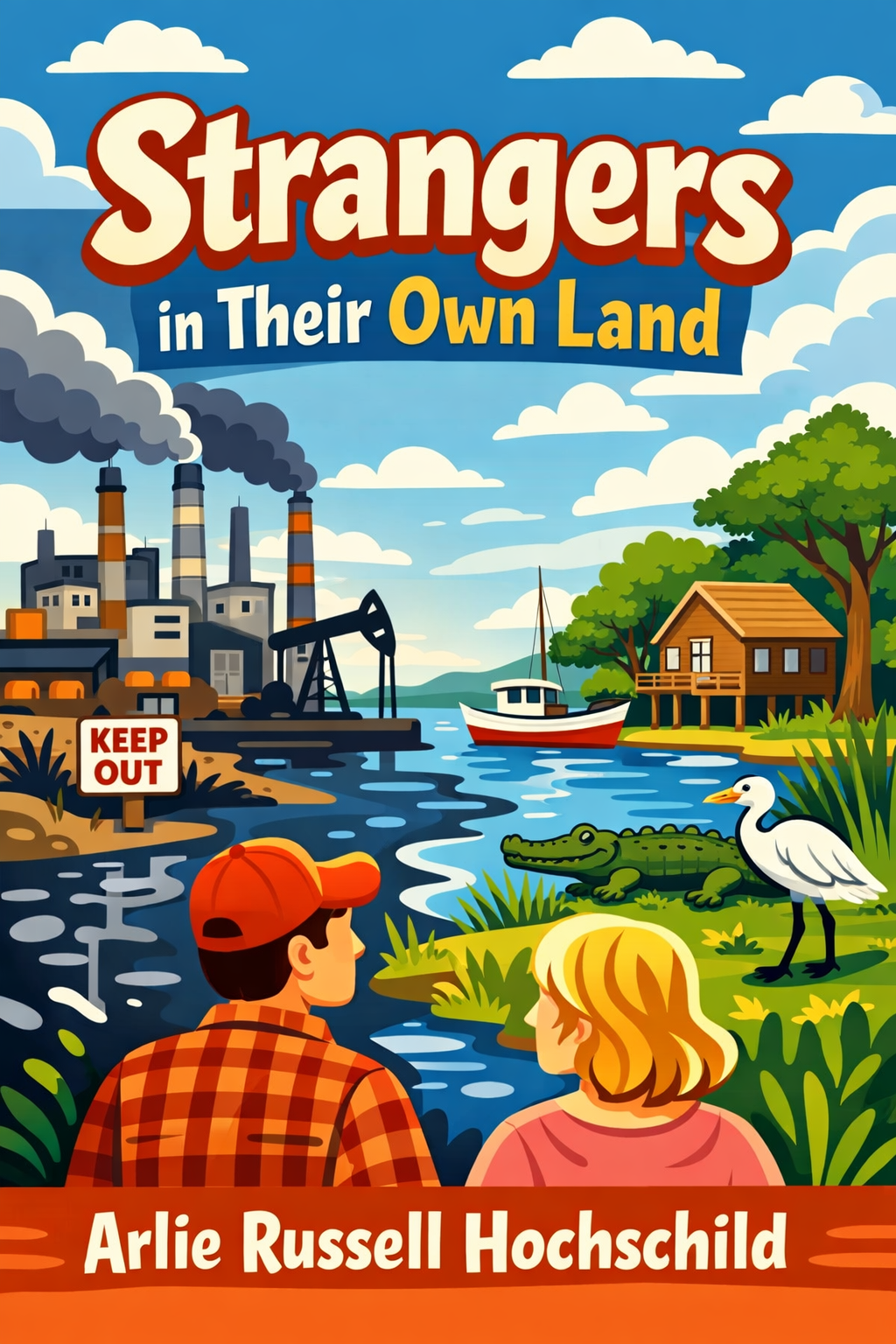
In “Strangers in Their Own Land,” the author embarks on a profound sociological expedition to the bayous of Louisiana, aiming to scale what she calls the “empathy wall”—a barrier that makes it difficult for those on opposing political sides to understand one another. She chooses Louisiana because it presents a striking paradox: it is a state plagued by severe industrial pollution, crumbling public infrastructure, and deep poverty, yet its citizens consistently vote for politicians who champion deregulation and shrink the very government agencies that could offer protection and aid. To understand this, she immerses herself in the lives of Tea Party supporters, listening not to debate, but to comprehend the deeply held narratives that shape their world.
The narrative uncovers a community bound by a powerful “deep story”—a felt, emotional truth that feels like common sense to those who hold it. This story paints a picture of hardworking, traditionally minded Americans waiting patiently in a line stretching up a hill toward the American Dream. They have played by the rules, worked tirelessly, and waited their turn. Yet, from their perspective, they see others—minorities, immigrants, refugees, environmentalists—cutting in line ahead of them, aided by a federal government that hands out special favors. They feel they are being pushed back, their dignity insulted, their sacrifices forgotten, while they are simultaneously told to feel guilty for their way of life. This sense of perceived injustice and marginalization fuels a powerful resentment toward Washington and the “coastal elites” who they believe look down on them.
This emotional landscape is set against a physical one of breathtaking ecological devastation. The author documents the catastrophic consequences of the state’s allegiance to the oil and gas industry: toxic sinkholes swallowing whole neighborhoods, waterways poisoned by effluent, and alarming cancer clusters devastating families. The people she lives alongside are often the direct victims of this pollution, losing loved ones and livelihoods. The paradox deepens as they express love for their bayous and hunting grounds while supporting politicians who gut environmental regulations. The explanation lies in a hierarchy of perceived threats. For many, the immediate threat is not a chemical spill, but a federal government seen as disrespectful, confiscatory, and morally intrusive. The environmental damage is a tragic, often accepted, cost of preserving economic hope and a sense of autonomy.
The media, particularly conservative news outlets, play a crucial role in reinforcing this worldview. By focusing on cultural battles, portraying the federal government as an overreaching villain, and framing environmental protection as an attack on jobs and freedom, they direct attention away from corporate accountability and toward a narrative of cultural defense. This creates a feedback loop where distrust is amplified, and the very concept of government as a potential force for public good is eroded.
Ultimately, the book is not a political polemic but a work of human understanding. It reveals that the political choices of the people in Louisiana are not a simple calculus of economic self-interest, but a complex reaction born of pride, fear, and a profound sense of lost honor. They feel like strangers in their own land, watching a country change in ways that seem to exclude and condemn them. By listening to their deep story, the author argues that the only way to bridge the nation’s chasms is to first acknowledge the powerful emotions and perceived betrayals that drive political behavior. True dialogue cannot begin with facts that challenge a worldview, but with a genuine effort to understand the heart of the grievance. The path forward requires recognizing the shared yearnings for respect, security, and a place in a changing world, even when the proposed solutions could not be more different.