Description
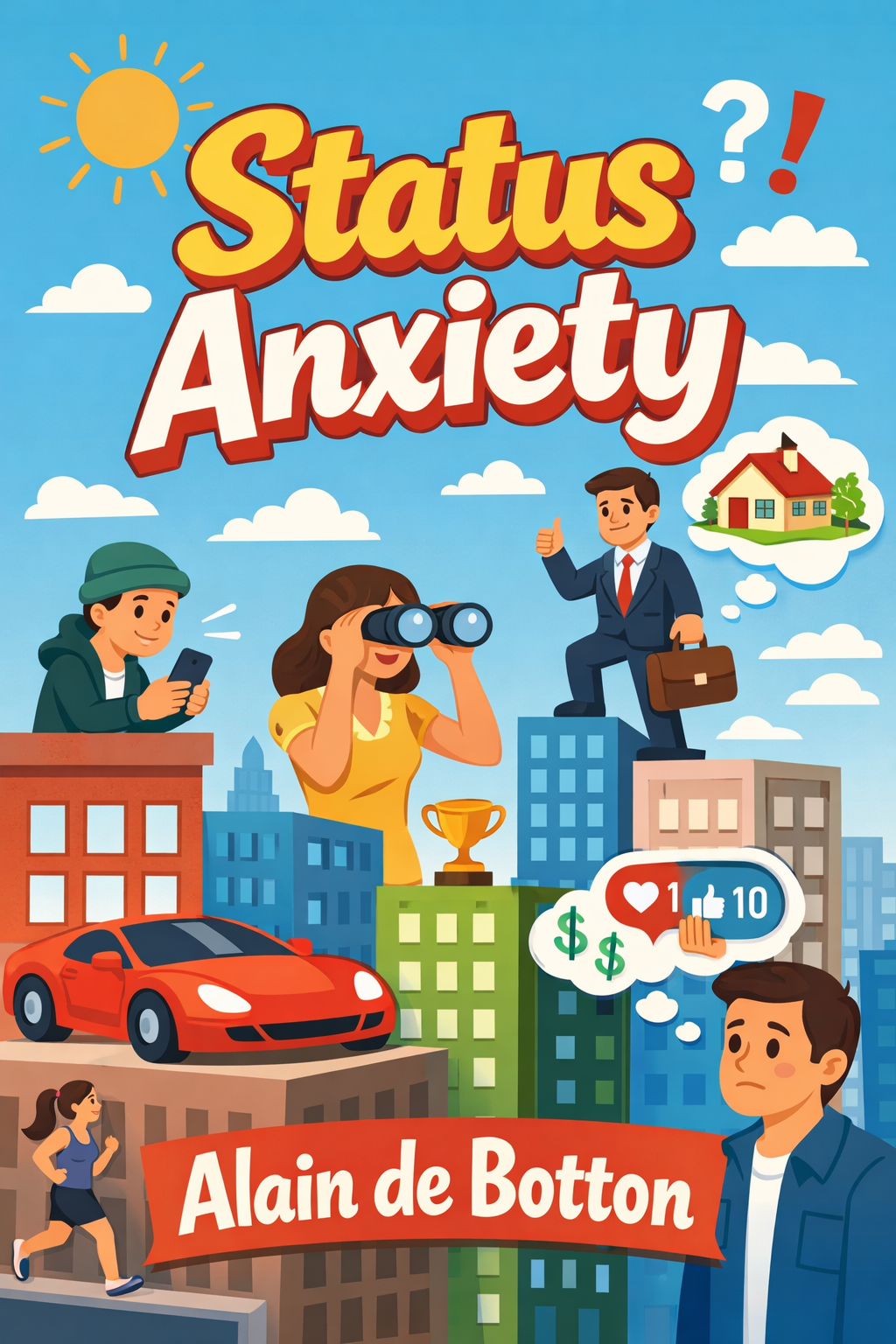
We live in an age of unprecedented material comfort, yet a nagging, pervasive fear of being judged as inadequate seems to haunt our daily lives. This is the condition of status anxiety, a chronic worry about our value in the eyes of the world. It stems not from a simple desire for more things, but from a deeper, more human craving for love and recognition. Our sense of self is fragile, built upon the reflections we see in others. When we are met with indifference or disdain, our self-worth deflates. The pursuit of status, then, becomes a desperate quest to secure the respect and attention that assures us we matter.
This anxiety is powerfully amplified as we leave the unconditional approval of childhood and enter a world governed by snobbery. Snobs, a breed defined since the 19th century, equate human worth entirely with social rank and external achievement. They dismiss the inner qualities of wisdom or kindness if they are not adorned with the right credentials, job titles, or possessions. This corrosive worldview is reinforced at every turn—by media that obsessively chronicles the lives of the rich and famous, and by families that pass down ingrained associations between low status and personal failure. We find ourselves constantly striving to please these invisible judges, measuring our lives against impossible standards set by others.
A cruel paradox of modernity is that our expectations have risen alongside our prosperity. In earlier eras, where a person’s station was largely fixed by birth or divine will, there was less restless agitation about moving up. The revolutionary ideals of equality and meritocracy, while just and liberating, created a new burden: the belief that high status is within everyone’s reach. When this promised success feels elusive, we don’t just feel disappointed; we feel humiliated. Our reference for “enough” is no longer our past self, but our seemingly more successful neighbor, colleague, or acquaintance from school. The marketplace of life is now saturated with stories of self-made triumphs and guides to success, which collectively breed a culture of lofty expectation and inevitable inadequacy.
Meritocracy, the idea that rewards are tied to talent and effort, has been a great engine of social progress. Yet it has a dark psychological underside. In a world where we believe status is earned, poverty and low standing are no longer seen as misfortune but as moral failure. To be without wealth or a prestigious position is to be publicly branded as lazy or incapable. This link between achievement and virtue turns financial struggle into a source of deep shame, a stark contrast to pre-modern times where a poor carpenter could be seen as spiritually blessed.
Our professional lives further entrench this anxiety. Most of us are now employees, our fates hitched to the fortunes of a company and the whims of an employer. Corporate structures are inherently pyramidal, guaranteeing that most will remain near the bottom. Advancement often depends less on pure merit than on navigating office politics and luck. This precariousness, combined with the volatile nature of booms and busts, means our sense of security and worth is perpetually at the mercy of forces beyond our control. We are left feeling like passive participants in our own story.
But there are ways to resist this tyranny of status. Philosophy serves as a powerful tool, challenging the dominant values of society by asking profound questions. It invites us to reconsider what truly constitutes a “good life,” separating the judgment of the world from the judgment of our own reasoned mind. It teaches us that the opinions of snobs are based on a narrow and flawed logic, and that our anxiety often stems from accepting their terms of debate.
Art, in its many forms, provides another sanctuary. It has the unique capacity to dignify the ordinary and spotlight the beauty in overlooked lives. A painting of a simple bowl of fruit, a novel about a mundane existence, or a film capturing everyday struggles can re-enchant the world, teaching us that significance is not the sole property of the rich and powerful. Art redistributes attention, asking us to find value in scenes and stories that the status-obsessed world ignores.
Gaining historical perspective can also be a profound solace. Viewing our brief lives against the vast timeline of human history reveals the fleeting nature of all empires, fortunes, and social hierarchies. Ruins of once-great civilizations stand as silent testaments to the fact that no status is permanent. This long view gently mocks our present anxieties, reminding us of the fundamental equality of all people before the immense scales of time and nature.
Finally, we can look to the tradition of Bohemianism, a conscious rejection of conventional societal games. Bohemians—artists, writers, free thinkers—create alternative communities where worth is based on creativity, authenticity, and freedom rather than income and title. They demonstrate that it is possible to opt out of the race altogether and find meaning and respect on one’s own terms. By upending the traditional hierarchy, they offer a living critique of society’s core values.
Ultimately, status anxiety is not a personal failing but a cultural condition. Its power lies in its invisibility; we mistake the values of our particular moment for eternal truths. By examining these pressures through philosophy, art, history, and alternative ways of living, we can begin to loosen their grip. We can see that our worth is not a single score dictated by the marketplace of opinion, but a complex, intrinsic quality that we have the power to define for ourselves. The path to liberation begins when we stop asking “How do I rise?” and start asking “Why is this ladder leaning against this wall in the first place?”