Description
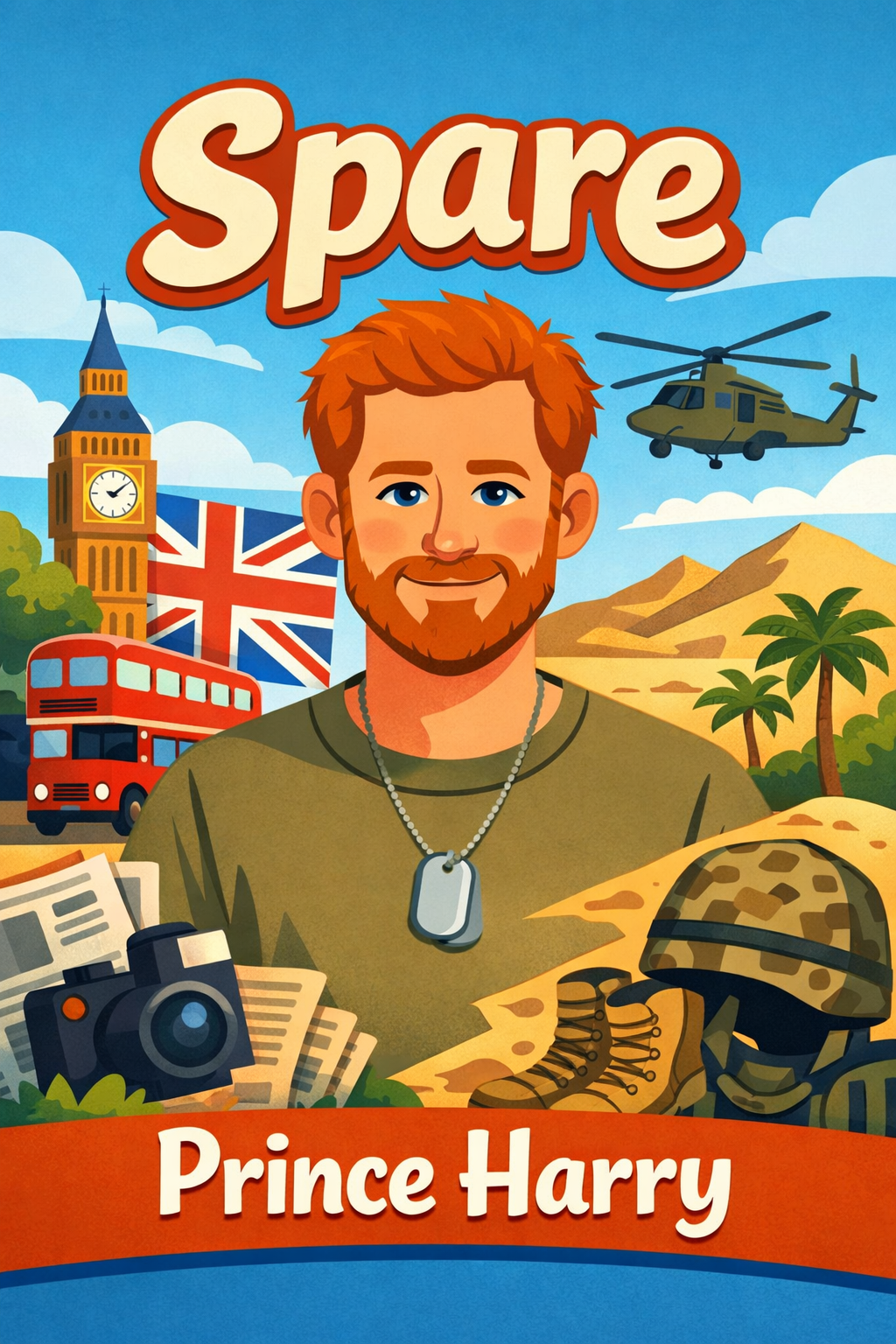
In this deeply personal account, the author unveils the human reality behind the royal title, framing his entire existence through the lens of being the “Spare.” From the moment of his birth, this label defined his role within the family and the institution: a backup, a secondary character in a story centered on the heir. This foundational dynamic shaped a life of bizarre contradictions, where immense privilege was forever entangled with a profound lack of autonomy, normalcy, and emotional support.
The narrative begins by exploring the unique abnormality of his upbringing. He describes a childhood where armed guards were a standard fixture, where simple acts like taking public transport were impossible feats, and where even a solo trip to the supermarket required military-style planning and disguise. His relationship with his father is depicted as complex and distant, filtered through the dual roles of parent and sovereign-in-waiting. Affection was often expressed in written notes left on a pillow rather than through direct conversation or embrace, setting a tone of emotional restraint that would become a family hallmark. This environment, while granting unimaginable luxury, created a profound sense of isolation and a yearning for a self-determined identity.
No event looms larger in this story than the tragic loss of his mother. The book recounts the haunting, disjointed experience of being told the news as a child, the surreal pageantry of the public funeral, and the decades of unresolved grief that followed. For years, he secretly harbored the belief that his mother might still be alive, a psychological defense against the unbearable finality. His journey toward acceptance was agonizingly slow, involving a deliberate, painful seeking of the truth through official reports and even a visceral, late-night drive through the Paris tunnel where she died. This confrontation with reality did not bring peace but unleashed years of suppressed anger, anxiety, and panic attacks. He credits therapy, undertaken much later in life, as a critical turning point, allowing him to finally reconnect with joyful memories of his mother and begin to process the trauma that had shadowed him since boyhood.
This trauma was inextricably linked to the press, whom he holds directly responsible for his mother’s death and who became the persistent antagonist of his own life. The relationship evolved from one of public sympathy for a grieving boy to one of relentless pursuit and mutual hostility. He details the constant, oppressive surveillance, the lies printed as fact, and the exploitation of his genuine mistakes—most infamously, the Nazi uniform—for endless headlines. The pressure was so intense he would sometimes be smuggled out of venues in the trunk of a car, feeling as if he were in a coffin, simply to avoid a confrontation. A particularly devastating revelation involves learning that his own family’s staff, seeking favorable coverage for his father, once colluded with a newspaper to publish a false story about his teenage drug use, sacrificing his reputation for a broader media strategy. This betrayal underscored a chilling family philosophy: that individual suffering was an acceptable cost for the institution’s stability.
This cost extended to anyone he loved. Romantic relationships became impossible battlegrounds, as the women he dated were subjected to the same ferocious scrutiny and harassment. He describes partners discovering tracking devices on their cars and being forced to confront the grim reality that a life with him meant a life under permanent siege. This pattern reached its apex with the entrance of his future wife, Meghan. Their courtship and marriage triggered a storm of media coverage marked by overt racism, snobbery, and vicious attacks on her character and family. He watched in horror as the institution he was born into failed to defend her, adhering to a longstanding, unspoken rule of never suing the press. The contrast between the treatment of his wife and other senior female royals laid bare, for him, a deeply ingrained prejudice and a failure of duty that he found unconscionable.
The cumulative weight of these experiences—a lifetime of being the spare part, the unprocessed grief, the toxic media ecosystem, and the institution’s failure to protect his wife—led to an irrevocable rupture. The final chapters detail the profound disappointment and sense of abandonment he felt from his family, particularly his father and brother, as he sought a different path. Conversations meant to find a solution broke down, leaving him feeling that his needs and the safety of his new family were secondary to protocol and public perception. The decision to step back from royal duties was not a whimsical choice but a desperate bid for sanity, privacy, and the basic right to protect his loved ones. It was the ultimate act of sparing himself and his family from a system he came to see as unsustainable and, at times, inhumane. The book is less a settling of scores than a raw testimony, an attempt to reclaim the narrative of a life lived in a gilded cage and to explain the profound personal cost of a destiny he never chose.