Description
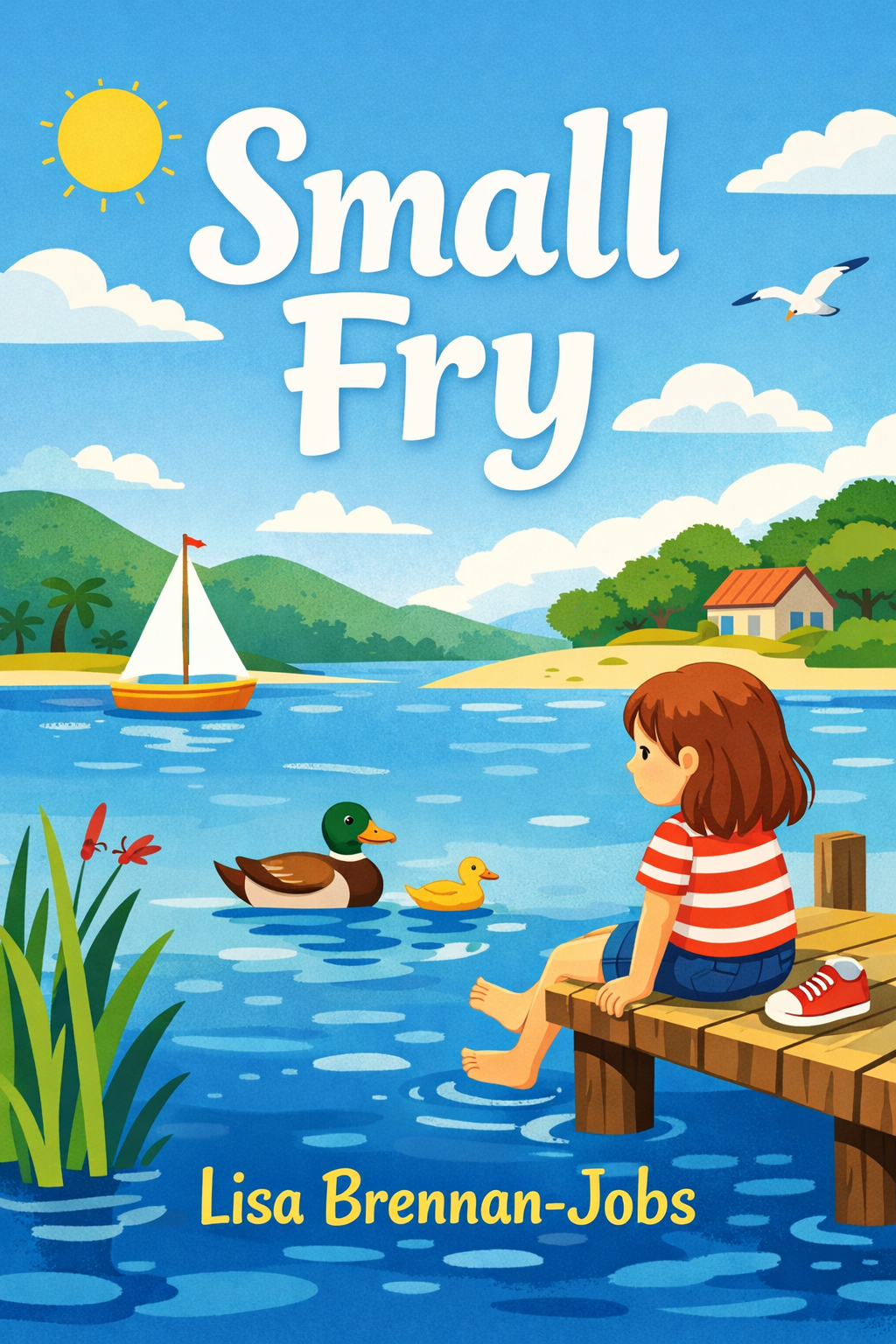
Lisa Brennan-Jobs’s story begins not with fame or fortune, but with a complex and often painful intimacy. Her memoir, “Small Fry,” offers a raw and deeply personal window into the life of Steve Jobs from the perspective of his first child, a figure largely absent from the polished mythology of the Apple founder. This is not a tale of boardrooms or product launches, but of a girl seeking a father’s love, set against the backdrop of California in the 1980s and 90s, a landscape of bohemian dreams and burgeoning Silicon Valley wealth.
Her parents’ relationship was a turbulent series of connections and ruptures, beginning in high school. Her mother, Chrisann Brennan, was an artist caught in a whirlwind with the mercurial Steve. Their reunion years later, as Steve and Steve Wozniak were founding Apple, resulted in an unplanned pregnancy. Steve’s reaction was one of anger and denial, a stance he would maintain for years. He was not present for Lisa’s birth on an Oregon farm and, upon visiting, famously declared to those gathered, “It’s not my kid.” Chrisann was left to raise Lisa alone, often struggling financially on welfare, while Steve’s star began its meteoric rise. Even a paternity suit and a DNA test proving a 94.4% probability of fatherhood—the highest possible at the time—did little to change his public denials. He settled on child support just days before Apple’s IPO made him a multimillionaire, a timing that spoke volumes.
For young Lisa, her father was a secret and a source of awe. In her difficult, peripatetic life with her emotionally volatile mother, Steve was a distant, almost mythical figure. She would whisper her connection to him as a secret to school friends, who often had no idea who he was. Life with Chrisann was a mix of profound love and intense instability, where outbursts could turn terrifying. By her early teens, the situation became untenable, and school officials intervened, compelling Steve to take her in. To Lisa, moving into her father’s elegant Palo Alto home with his new wife, Laurene Powell, and their young son, Reed, felt like a fairy tale beginning.
Reality, however, was far more complicated and cold. The integration into this new family was fraught. Steve’s condition for the move was that Lisa not see her mother for six months, instilling a deep sense of guilt. In the Jobs household, she walked on eggshells, performing chores diligently and caring for her baby brother, desperate to belong. Her attempts to impress her father—excelling in school, founding clubs—were often met with indifference or criticism. He pointedly refused to help with practicalities, like fixing the broken heater in her room or replacing her stolen bicycle, while simultaneously accusing her of not being committed to the family. The magical home she envisioned became a place of emotional scarcity, where her father would bluntly tell her she had “no marketable skills” and jokingly point to a local bar as her future workplace.
Education became her sanctuary and her strategy. Gaining admission to Harvard represented not just an academic achievement, but a desperate bid for her father’s respect and a means of escape from his relentless disapproval. The moment she learned of her acceptance, she taped exuberant signs all over the house. The news, however, was met with a muted, puzzled response from Steve, who had not been involved in her application process. This moment crystallized the chasm between them: her monumental victory was a peripheral event in his world.
The relationship continued to fray, culminating in a final, seemingly trivial rupture. After a bitter argument, Steve and Laurene invited Lisa to the circus in a gesture of reconciliation. Emotionally raw and feeling the invitation was an imposition, Lisa refused. This refusal led to a complete cessation of communication. For years, they did not speak, a silence that persisted even as Steve’s health declined following his cancer diagnosis.
The memoir’s powerful conclusion arrives in the shadow of his illness. As Steve neared the end of his life, a tentative reconciliation began. In their final conversations, Lisa confronted the central question of her life: did he love her? His answer was not a simple declaration, but a pained, “You know I do.” More tellingly, she discovered that he had kept a childhood drawing of hers tucked in his wallet, and that, in his final days, he repeatedly looked at old pictures of her, his eyes filled with tears. She learned that he had confessed to a friend, “I owe that girl an apology.” These fragments of evidence, arriving too late for a repaired relationship, offered a bittersweet and ambiguous resolution. They suggested a care that was profound yet tragically inarticulate, a love that existed but was often obscured by his own demons and neglect. “Small Fry” is ultimately a haunting portrait of a daughter piecing together the puzzle of a parent who changed the world, yet struggled with the simplest human connections, leaving her to navigate the vast emptiness between his monumental legacy and her very personal need for a father.