Description
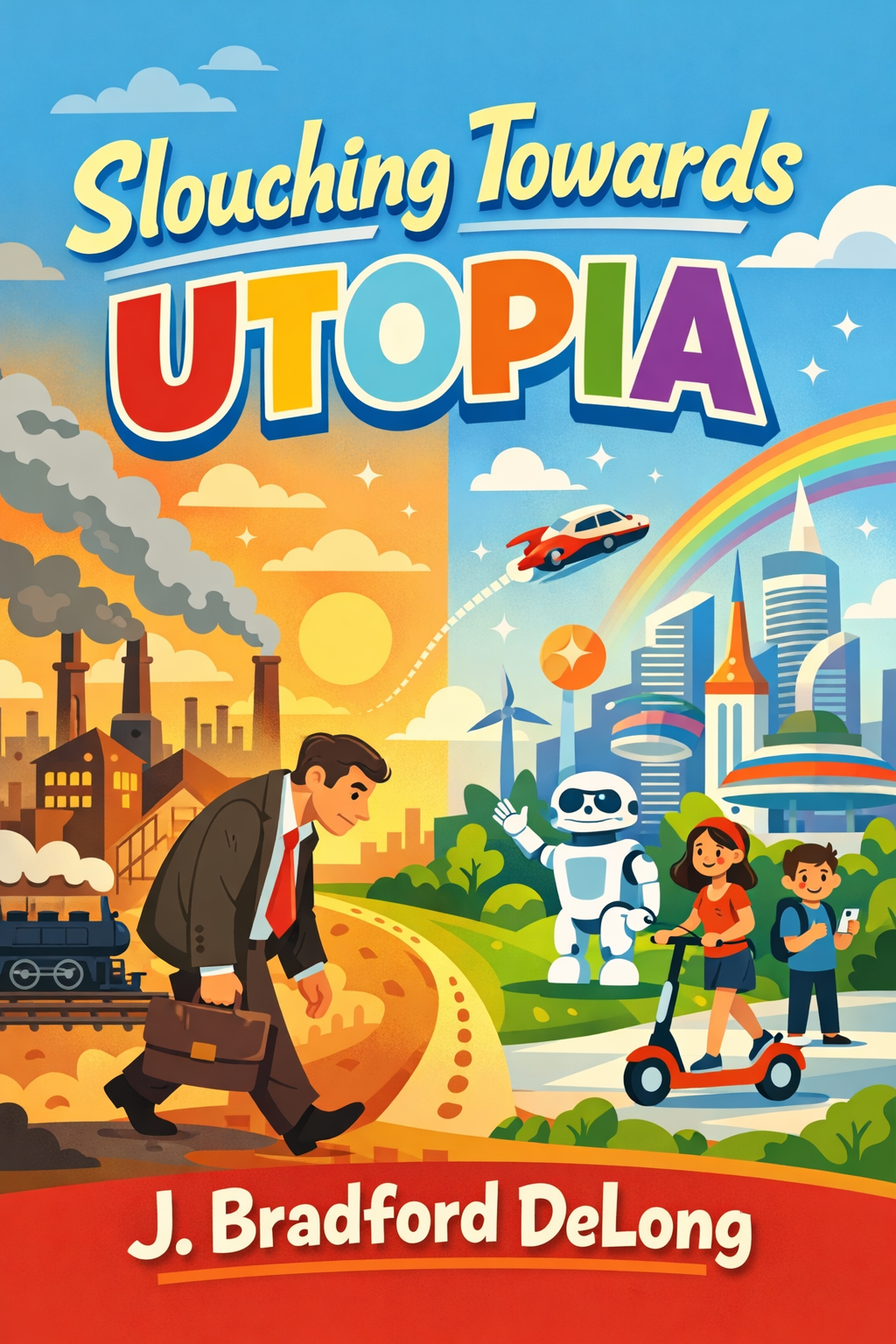
The book presents a grand narrative of the period from 1870 to 2010, framing it as the “long twentieth century.” This era, the author contends, was uniquely transformative, bookended by two pivotal developments: the rise of the networked research laboratory and the corporate form, which unleashed sustained technological innovation, and the fall of the Berlin Wall, which signaled the apparent triumph of a single global economic system. The central paradox of this century is that humanity finally solved the ancient problem of production, generating unprecedented material abundance, yet failed to create a stable, just, or widely satisfying utopia. Instead, the world “slouched” towards it—lurching forward unevenly, plagued by crises, inequality, and profound discontent.
Prior to 1870, the author argues, human economic life was defined by the Malthusian trap, where any increase in production was quickly swallowed by population growth, leaving the vast majority in poverty. The great escape began with the coordinated application of science to business through new institutions. This engine of innovation—powered by figures like Edison and the corporate labs of companies like Bayer—drove a relentless increase in productivity. It birthed the technologies that defined modern life: electricity, synthetic chemicals, the internal combustion engine, and later, the computer. For the first time, the production of goods and food could outpace population growth, creating the potential for widespread wealth.
This potential, however, was channeled through the competing ideologies that fought to shape the new global order. The book meticulously traces the clash between laissez-faire liberalism, socialism, and nationalism. The first half of the long century was a brutal contest, culminating in the world wars and the Great Depression, which seemed to discredit unfettered capitalism. From the ashes arose a mid-century compromise, particularly in the West: the “social democratic bargain.” This system blended regulated markets, strong labor unions, progressive taxation, and a welfare state to distribute the fruits of growth more broadly. For a few decades, it appeared that utopia might be within reach, with rising living standards, relative equality, and a sense of shared progress.
Yet this golden age was fragile and geographically limited. The book shows how the social democratic order was undermined from within by its own successes and from without by global pressures. The oil shocks of the 1970s, the resurgence of free-market fundamentalism championed by figures like Friedrich Hayek and Milton Friedman, and the powerful forces of globalization began to unravel the post-war consensus. The neoliberal revolution, victorious after the collapse of the Soviet model, promised a new utopia of global markets and individual freedom. Instead, it accelerated the very inequalities the earlier compromise had mitigated.
The author demonstrates that the post-1990 world, while richer than ever, is characterized by deep fissures. Financialization turned finance from a servant of industry into a master of the economy, leading to instability and spectacular crises. Globalization created winners and losers, hollowing out industrial communities in the West while fueling growth elsewhere, but often without the protective institutions of the mid-century bargain. Technology continued to advance, but its benefits were captured disproportionately by a small elite, while leaving many feeling insecure and left behind. The promise of leisure and fulfillment gave way to a culture of anxious overwork and consumerism that failed to deliver deep happiness.
Ultimately, the book is a story of a great failure of imagination and institutions. Humanity mastered the science of production but not the art of distribution, governance, or meaning-making. The economic system became brilliantly efficient at generating wealth but proved incapable of ensuring that wealth translated into broad-based security, dignity, or purpose. The political ideologies that emerged to manage this abundance either collapsed, like communism, or became corrupted and ineffective, like liberalism and social democracy, leaving a vacuum filled by populist anger and technocratic management.
The journey from 1870 was not a march but a slouch—a messy, uneven, and often tragic process. We arrived at a world of miraculous technology and profound discontent, of plenty alongside precarity. The long twentieth century solved the problem of scarcity but left us with the more complex problems of fairness, stability, and human fulfillment. The book concludes not with a blueprint but with a sobering question: having built the engine of abundance, can we now build the political and social wisdom to steer it toward a genuinely better world for all, or will we continue to slouch indefinitely, never quite reaching the utopia that once seemed within our grasp?