Description
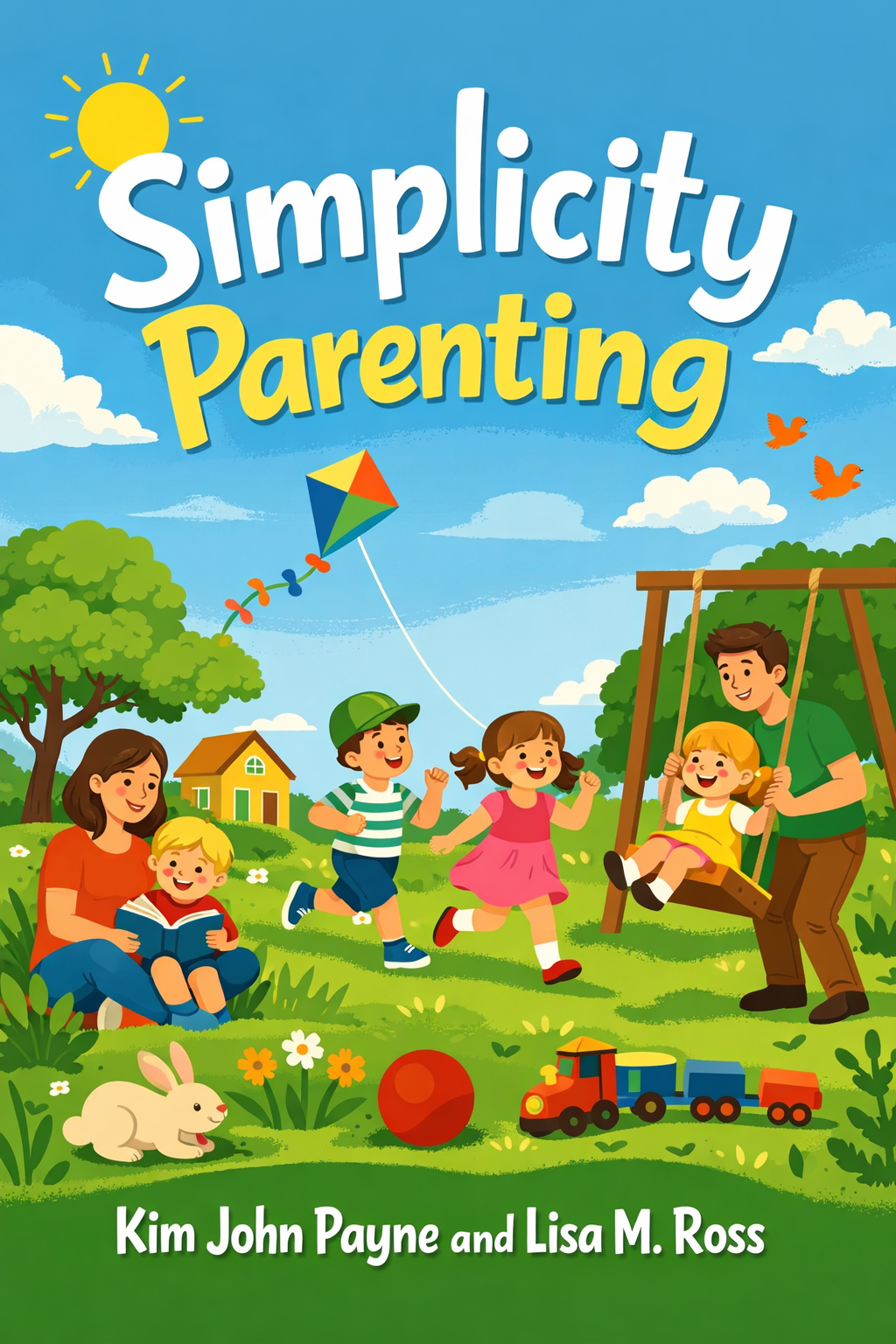
In a world that feels increasingly fast, noisy, and complex, our children are paying a hidden price. “Simplicity Parenting” presents a compelling case that the relentless pace and clutter of contemporary life are overwhelming young minds, leading to anxiety, hyperactivity, and a loss of childhood’s natural rhythms. The book argues that by intentionally simplifying a child’s environment and schedule, parents can build a sanctuary of calm, fostering resilience, creativity, and deeper family connections.
The modern child is often subjected to a state of cumulative stress, a low-grade but constant bombardment of stimuli, choices, and information. This isn’t about the normal stresses of growth, like skinned knees or friendship squabbles, which build resilience. This is a background noise of too much stuff, too many options, and too much adult-world anxiety seeping into their consciousness. The result can be children who are nervous, controlling, or emotionally brittle, struggling to find their footing in a whirlwind they cannot control. The solution begins not with managing the child’s reactions, but with detoxifying their world.
One of the most tangible places to start is with the mountain of toys. The book challenges the assumption that more toys equal more enrichment. In reality, an overabundance of playthings can paralyze a child’s imagination and foster a materialistic mindset where the thrill of acquisition replaces deep, sustained play. The author suggests a radical edit: significantly reduce the number of toys. Begin by removing broken items, then those that are too fixed or “complete” (like highly detailed action figures that leave little to the imagination), and finally, store away or donate the excess. A curated collection of simple, open-ended toys—blocks, fabric, art supplies—invites creativity and focus, allowing a child to build their own worlds rather than merely consume pre-packaged ones.
Beyond the physical clutter, the chaos of an unpredictable daily life can be deeply unsettling for a child. Children crave rhythm and predictability; it provides the secure foundation from which they can confidently explore. Establishing consistent rhythms for meals, play, and bedtime isn’t about rigid scheduling, but about creating a reassuring flow. Knowing what comes next—that after bath comes a story, then sleep—frees a child from anxiety about the unknown. Even in busy families, offering a simple “preview” of the day ahead can provide crucial anchors, transforming a confusing sequence of events into a manageable narrative.
This principle extends to a child’s schedule of activities. With the best of intentions, parents often fill calendars with lessons, sports, and clubs, believing they are providing every advantage. However, an overscheduled child loses the essential, fertile space of “nothing time.” It is in unstructured moments that boredom gives birth to invention, that daydreams weave inner narratives, and that a child learns to be at peace with themselves. Balancing enriching activities with ample, unscheduled downtime is not neglectful; it is a gift that allows for authentic growth, self-discovery, and the simple joy of being.
Finally, the book addresses the pervasive influence of the adult world, primarily funneled through screens. Television and digital devices deliver a constant stream of information, much of it sensational, violent, or anxiety-inducing, that a child’s mind is ill-equipped to process. This isn’t just about content; it’s about the medium itself replacing vital, real-world interactions. Research shows that for healthy brain development, young children need to engage with people and their environment, to solve tangible problems and read human faces—none of which happens during passive screen time. Protecting childhood means creating a filter, significantly reducing screen access at home to make space for hands-on play, conversation, and the slow, organic process of learning about the world firsthand.
Ultimately, “Simplicity Parenting” is more than a set of tips; it is a philosophical shift. It invites parents to push back against the cultural currents of “more, faster, sooner” to defend the slow, messy, and profoundly human experience of childhood. By simplifying—whether it’s the toy box, the weekly calendar, or the media diet—we are not depriving our children. We are giving them the rarest of modern commodities: room to breathe, to imagine, to grow at their own pace, and to build a core of calm that will sustain them for a lifetime. The path forward is not about adding another parenting strategy, but about having the courage to subtract.