Description
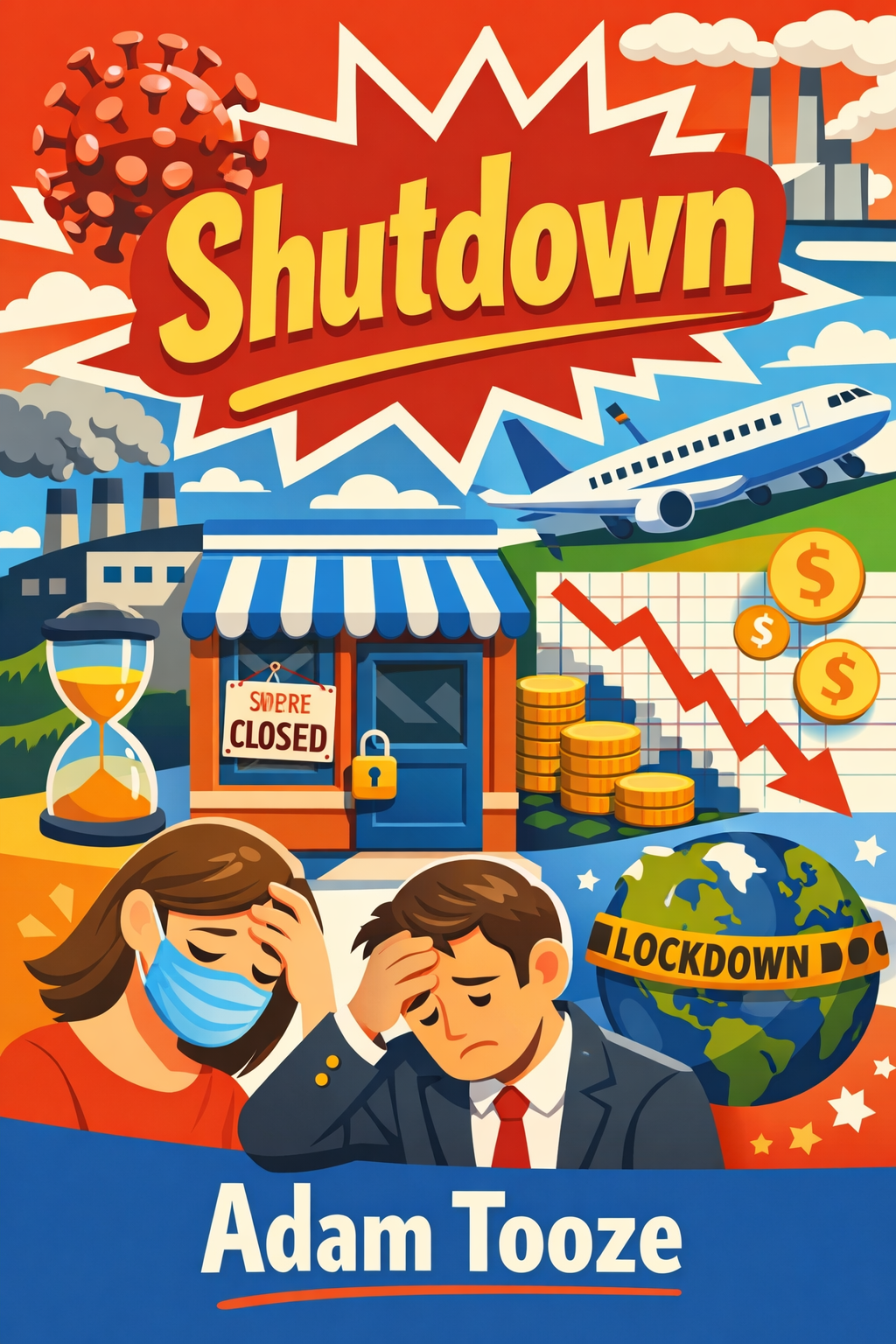
The year 2020 delivered a seismic shock to global society, an event of such scale that its economic data resembled the aftermath of an asteroid strike. A novel coronavirus, SARS-CoV-2, swept across the planet, afflicting the vast majority of the world’s economies and triggering the most severe and synchronized economic contraction in recorded history. The human cost was staggering, with millions of lives lost and billions more upended through job losses, furloughs, and shuttered schools. Public life, in all its forms, ground to a halt for populations worldwide. Yet, for all its unprecedented impact, this catastrophe was not unforeseen. Experts had long warned of a “gray rhino”—a highly probable, high-impact threat barreling toward a world that chose to look away. The story of the pandemic is a stark lesson in the consequences of widespread, willful unpreparedness and a revealing test of how different societies respond when faced with a universal crisis.
For decades, the conditions for a pandemic had been meticulously cultivated by modern life itself. Human encroachment into wild spaces, industrial farming, hyper-urbanization, rampant global travel, and the warming climate all conspired to increase the emergence and spread of new pathogens. Following earlier outbreaks like SARS and MERS, virologists were nearly certain a dangerous, flu-like virus was imminent. The potential toll of a moderately lethal but highly contagious pathogen was understood to be catastrophic, likely exceeding the combined death counts of the world wars. The vulnerabilities were also clear: a threadbare and underfunded World Health Organization, national healthcare systems—like that of the United States—oriented toward profit over preparedness, and deep-seated inequities that guaranteed the poorest would suffer most. Despite this knowledge, the necessary investments and systemic changes were consistently deferred, leaving the world dangerously exposed when the virus first emerged in Wuhan, China.
China’s response, once initial local suppression of the alarm was overcome, was swift and authoritarian. Framing the fight as a “People’s War,” President Xi Jinping mobilized the full force of the party-state. The metropolis of Wuhan, with its 11 million people, was sealed off. With breathtaking speed, emergency hospitals were constructed and staffed by tens of thousands of medical workers. A nationwide lockdown followed, idling hundreds of millions and causing the largest labor market shock in history. The state’s security apparatus enforced compliance, silencing dissent and controlling the narrative. By the end of February, the World Health Organization declared China had effectively suppressed the virus. The economy, though initially hammered, showed signs of a robust recovery within months. For the Chinese leadership, the crisis became an opportunity to demonstrate the efficacy of its centralized control and to solidify its political legitimacy, a victory that would be cast in even sharper relief by the chaotic responses that followed in the West.
In contrast, Western nations reacted with a slow, fragmented, and often contradictory approach. As the virus spread globally in early 2020, political leaders in Europe and the United States were preoccupied with other matters—Brexit celebrations, political acquittals, and domestic agendas. The first major economic tremor was a catastrophic 65% crash in oil prices, triggered by plummeting Chinese demand and a price war between major producers. Recession was suddenly imminent. Yet coordinated action was absent. The European Union struggled to present a unified front, with member states adopting a patchwork of restrictions. The United Kingdom’s initial strategy was dangerously lax. In the United States, federal leadership was largely passive, with President Donald Trump downplaying the threat, promoting unproven remedies, and closing borders in an arbitrary manner. The American response consequently emerged not from the top down, but from the bottom up—a haphazard “shutdown from within” driven by individual states, cities, school districts, private businesses, and even workers themselves. This lack of central coordination cost precious time and lives.
The economic fallout was immediate and devastating. As fear of the virus spread, the global economy began to evaporate. Entire sectors reliant on human proximity—travel, hospitality, retail—collapsed. This shockwave eventually reached the heart of the global financial system: the market for U.S. Treasury bonds, traditionally considered the world’s safest asset. In a moment of panic, a rush to sell these bonds overwhelmed buyers, causing their value to plummet and threatening the stability of all other financial markets. In response, the U.S. Federal Reserve, led by Chair Jerome Powell, took radical, unprecedented action. It slashed interest rates and then embarked on a massive program of quantitative easing, essentially creating money to buy the unwanted Treasury debt itself. This intervention stabilized the core of the global financial architecture. The scale was historic, with the Fed’s balance sheet ballooning to trillions of dollars, and it set a new precedent for direct government intervention to prevent total economic collapse.
As the United States and Europe reeled within this new fiscal reality, deploying trillions in stimulus to support idled workers and failing businesses, China was already resuming its upward trajectory. Its early and severe lockdown had allowed it to suppress the virus domestically and restart its economic engine while the West was still in the throes of the first wave. This accelerated the ongoing shift in economic momentum toward Asia. Meanwhile, emerging markets faced their own dire crises, surviving through stress-tested methods of accessing credit and often relying on remittances from citizens working abroad, even as those flows dwindled. The pandemic thus acted as a great amplifier, deepening existing geopolitical and economic fissures.
The narrative did not end with the initial spring wave. In the fall of 2020, the virus surged again across the United States, deepening the country’s political, social, and public health wounds. The story of COVID-19 remains unfinished, but a critical consensus has crystallized around the economic lesson of the shutdown. The old orthodoxy that prioritized austerity in a crisis was decisively overthrown. The demonstrated success of massive, direct government spending to sustain economies through the freeze of the shutdown has rewritten the policy handbook. It has provided a potential blueprint for confronting other looming “gray rhinos,” such as climate change, suggesting that vast public investment is not only possible but necessary for survival. The pandemic proved that the greatest threats are often those we see coming but fail to confront, and that a society’s resilience is determined long before the crisis ever arrives.