Description
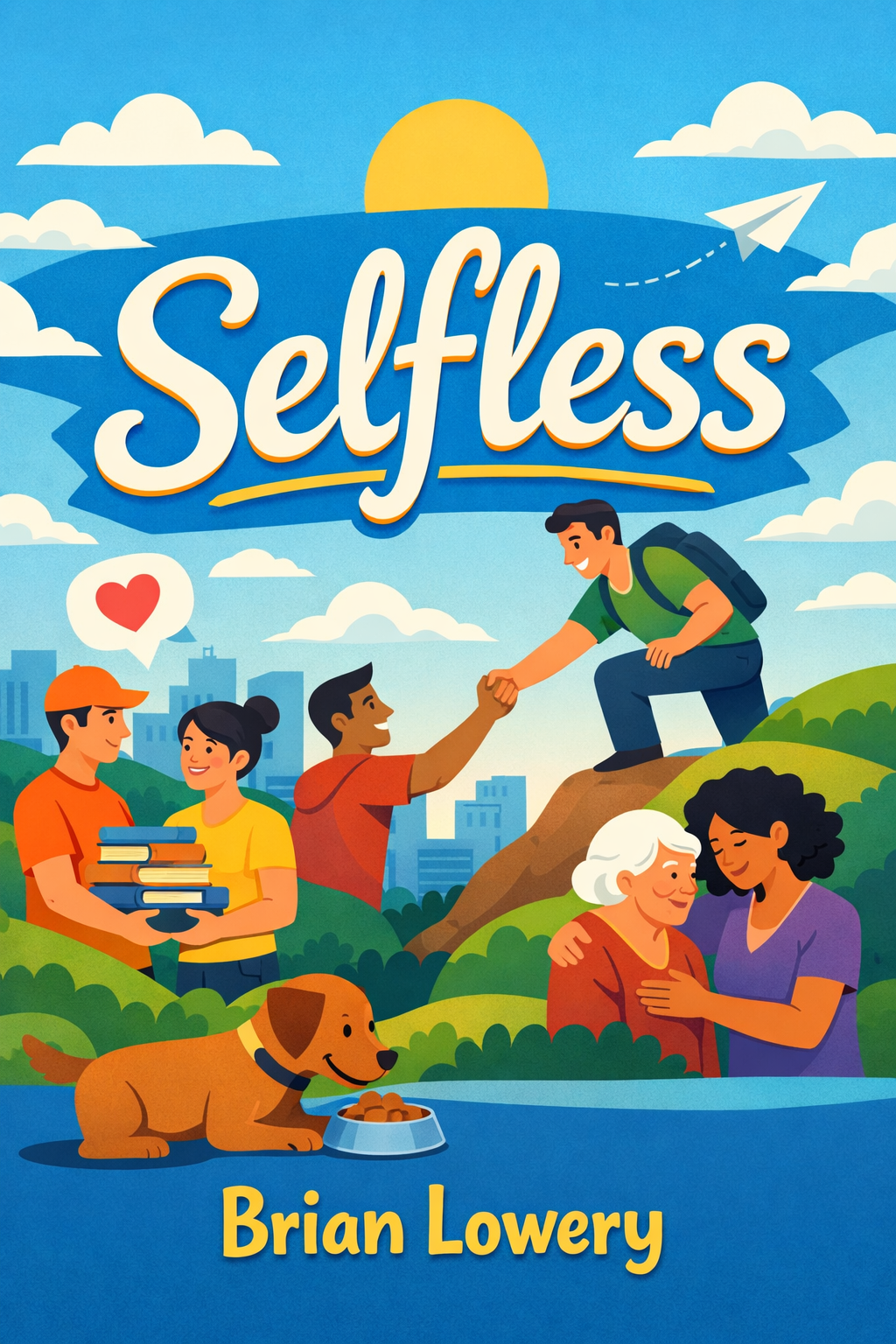
What is the self? We often feel it as a constant, inner puppeteer pulling the strings of our thoughts and actions, the core “me” that seems separate from everyone else. Yet, according to psychologist Brian Lowery, this feeling is a beautiful illusion. The self is not a pre-packaged essence you are born with, nor is it simply your body, your brain, or a set of fixed core values. Instead, your self is a unique creation, woven from the countless relationships and social interactions you experience from birth to death. You are a distinct self precisely because you have a distinct combination of connections to other people.
This perspective fundamentally shifts how we see ourselves. It means the self is not trapped within our skin. When your body changes or ages, your self does not necessarily change with it. More profoundly, when your physical form ceases to be, your self does not instantly vanish. It lives on in the relationships you forged, the impacts you made, and the memories you left in others. Your self persists as long as your influence on the world and the people in it continues to resonate. Even the values you hold dear—generosity, honesty, respect—are not innate truths you discovered in isolation. They are understandings transmitted and shaped through your interactions with the people around you.
The construction of your self begins with your closest relationships. Your family provides the first and most powerful layer of influence, shaping your initial worldview, habits, and assumptions about life. The circumstances of your birth—your family’s status, beliefs, and resources—set the initial stage upon which your self begins to form. As you grow, friendships and romantic partnerships introduce new perspectives, challenge familial norms, and teach you about belonging outside the home. Every significant bond, and even fleeting connections with mentors, teammates, or colleagues, leaves a subtle imprint, collectively steering the development of who you are.
Beyond your inner circle, you are inevitably shaped by the communities, or social groups, you belong to. These range from your local neighborhood and workplace to larger identities based on gender, race, ethnicity, or shared interests. Humans have a deep need to belong, and we naturally gravitate toward groups we share similarities with. In turn, these groups impart their own distinct characteristics, norms, and expectations. We often begin to talk, dress, and think in ways that align with our chosen communities, and their collective moral compass influences our own. However, membership is not always a choice; it is a negotiation between your identification and the group’s acceptance of you. Rejection from a group you identify with can profoundly wound your sense of self, while acceptance can solidify it.
Perhaps the most pervasive social force shaping the self is the nation-state. The country you live in governs vast aspects of your existence, actively molding your identity through its laws, cultural norms, and institutional structures. It defines legal and often moral boundaries of right and wrong, which become ingrained in societal values. It can enforce residence restrictions, determining the neighborhoods and environments where you build your early community relationships. Crucially, the state holds power over official membership in groups through policies on citizenship, gender, and race. Being denied recognition by these institutions can strip away not just a label, but also confidence, rights, and access to essential resources, deeply affecting one’s self.
In the modern era, technology has become a powerful new architect of the self. It explosively expands our potential for connection, allowing us to form relationships and join communities unbounded by geography. This digital landscape enables the exploration of identities that might be suppressed in our physical lives, offering new avenues for belonging and self-expression. Technology floods us with a whirlwind of ideas and perspectives, potentially transforming our worldview. Yet, this influence is a double-edged sword. The algorithms that curate our online experiences can also subtly limit us, creating echo chambers and manipulating our behaviors, leaving a profound, often unnoticed, mark on who we are becoming.
Given that the self is built from this ever-shifting network of relationships, it possesses two key characteristics: it is constantly changing, and it is multifaceted. The self is not a fixed monument but a flowing river. It transforms not only during major life events—a move, a new relationship, a societal shift—but also through countless tiny, daily interactions. A passing comment from a stranger, a new song shared by a friend, a news article read online—all these micro-moments accumulate, gradually reshaping your self, often without your conscious awareness. Furthermore, you are not one single self. You are a collection of selves. You are one person with your family, another with close friends, another at work, and yet another in an online community. These various identities arise from the different relational contexts you inhabit, and together, they form the complex, dynamic totality of you.
Understanding the self as a social creation leads to a profound sense of freedom and responsibility. If the self is built, then it can be rebuilt. You are not irrevocably chained to a past or a single story about who you must be. By mindfully choosing your relationships, engaging with new communities, and critically assessing the influences around you—from family to nation to digital feeds—you gain agency in your own becoming. This perspective also highlights our deep interdependence. Your actions ripple through your relationships, actively shaping the selves of others, just as they shape yours. Recognizing this interconnectedness fosters a powerful responsibility to contribute thoughtfully to the social fabric, understanding that in shaping our connections, we are ultimately shaping each other.