Description
Most of us navigate life wearing a mask of polite falsehoods. We say we’re “fine” when we’re not, offer fake compliments to avoid conflict, and construct elaborate stories to protect our egos and manage others’ perceptions. According to the philosophy presented here, this habitual dishonesty is the primary source of our human misery. It isolates us, creates anxiety, and traps us in a self-made prison of inauthenticity. The book proposes a daring alternative: a commitment to Radical Honesty. This is not merely about avoiding big lies; it is a comprehensive practice of telling the truth, the whole truth, about everything in your present-moment experience—especially the things you are most afraid to reveal.
The core argument is that our lies, both big and small, are ultimately attempts to control the uncontrollable: other people’s feelings, opinions, and actions. We lie to be liked, to avoid anger, to maintain a certain image. In doing so, we trade short-term comfort for long-term alienation. The energy required to maintain our fictional selves is immense, leading to stress, resentment, and a deep-seated loneliness, because no one can truly connect with the character we are playing. The book asserts that nearly all psychological distress, from mild anxiety to deep depression, is rooted in this fundamental disconnect between what we feel and what we express.
Radical Honesty is presented as the tool to dismantle this prison. It begins with self-honesty: acknowledging your own judgments, desires, fears, and attractions without immediately editing or moralizing them. The practice then extends outward into communication. This means saying “I’m angry with you” instead of sulking. It means admitting “I feel insecure and want your approval” rather than fishing for compliments. It involves sharing unattractive feelings like jealousy, boredom, or lust that social convention teaches us to hide. The process is described as profoundly uncomfortable, often messy, and guaranteed to disrupt the stagnant peace of dishonest relationships.
A significant portion of the text is dedicated to the mechanics and consequences of this practice. It provides practical guidance on how to speak honestly without being brutally cruel, emphasizing the importance of staying with your own subjective experience (“I feel hurt when you…”) rather than making absolute, accusatory statements (“You are a terrible person”). The book anticipates the chaos this can cause—friends may be shocked, partners may leave, family gatherings may become tense. It frames this not as disaster, but as a necessary clearing of the dead wood. Relationships built on a foundation of pretense may indeed collapse, making space for connections that are real and resilient.
The promised rewards of this arduous journey are substantial. By ceasing to manipulate reality with your words, you release a tremendous amount of mental and emotional energy previously spent on crafting narratives and managing impressions. Life becomes simpler and less stressful. Your relationships, having survived the crucible of truth, become deeper and more intimate, as people are relating to the real you. You develop a robust sense of self, no longer defined by others’ opinions. Furthermore, the practice cultivates a powerful presence in the current moment, as you are constantly checking in with your genuine feelings and sensations rather than living in a story about the past or future.
The author does not shy away from the darker, more challenging implications of this philosophy. It explores how honesty can dismantle not just personal neuroses, but societal ones. It questions the lies embedded in politeness, marketing, and even our cultural myths about love and success. The practice is shown to be a form of personal rebellion against systems of control that rely on our fear of judgment and desire to belong. Ultimately, the book is a call to arms for a more authentic existence. It posits that the raw, unfiltered truth of our shared human experience—with all its messiness, conflict, and beauty—is far more interesting and nourishing than the safe, sanitized fiction we collectively maintain. To choose Radical Honesty is to choose aliveness over artifice, connection over control, and the freedom of reality over the confinement of a lie.
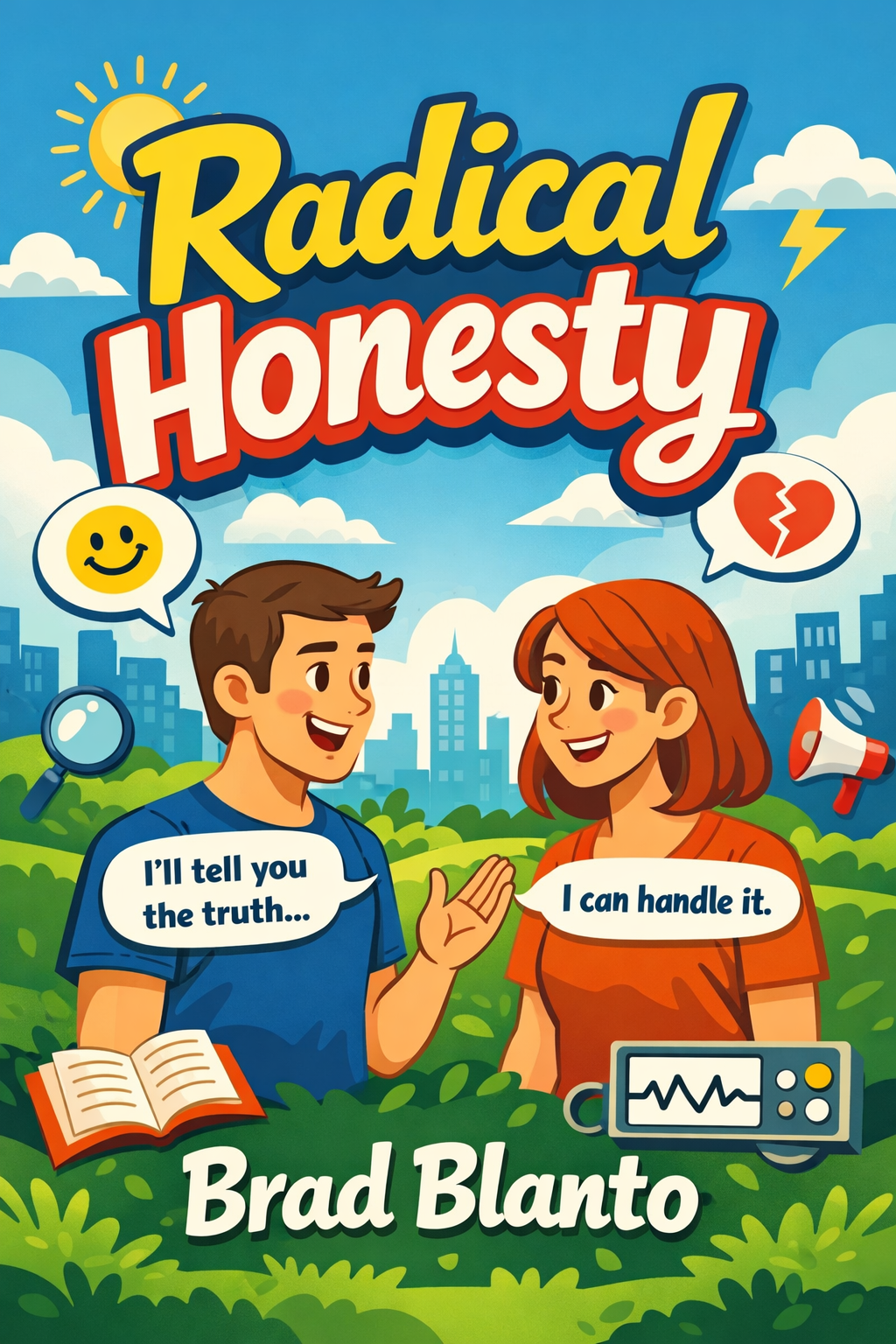
Book Title: Radical Honesty