Description
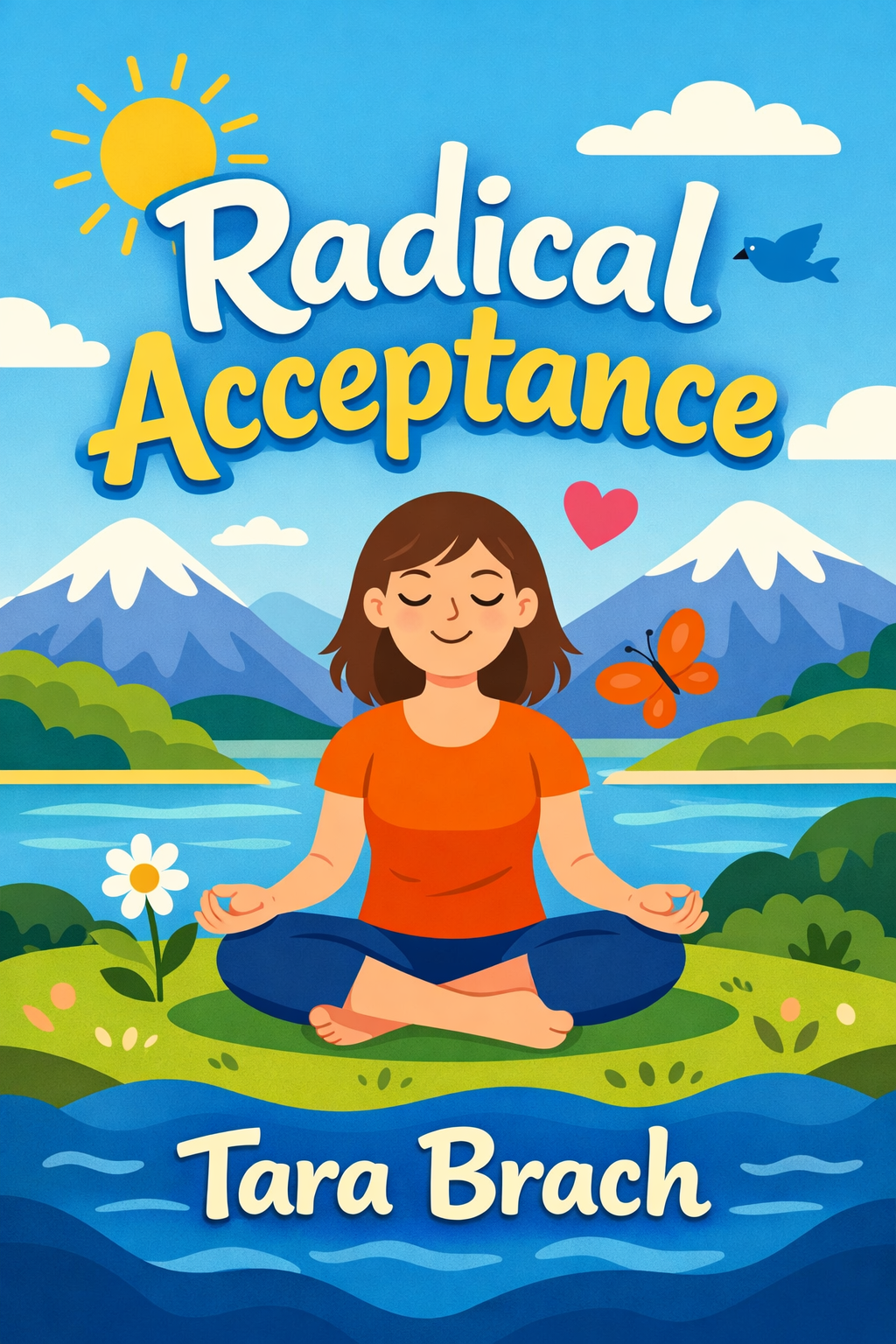
Many of us move through life burdened by a quiet but persistent sense of not being enough. We critique our bodies, our work, our reactions, and our very nature, believing we must constantly strive to fix our inherent flaws. This feeling is deeply woven into the fabric of Western thought, which often frames the human condition as one of original inadequacy, a fall from grace requiring endless effort to mend. But there exists another, more compassionate perspective. This book explores the liberating practice of Radical Acceptance, drawn from Buddhist psychology, which proposes that we are not broken. It suggests that beneath our layers of self-judgment, we are already whole, possessing natural wisdom and compassion. The path to realizing this wholeness is not through fighting ourselves, but through a profound and unconditional friendship with our entire experience.
We often live in what can be described as a trance of unworthiness. Like a dream where we run but go nowhere, we fixate on future goals and past regrets, rarely fully inhabiting the present moment. Our culture reinforces this, subtly teaching that our current state is insufficient. This creates an inner cage built from the bars of self-criticism. We pace within its narrow confines, much like a tiger who, after years in a small cage, continues to tread only that familiar space even when offered a vast field. Our own negative narratives—the voice that says we are not smart, loving, or disciplined enough—keep us trapped in limited versions of our lives, preventing us from loving openly or living freely.
The key to unlocking this cage is Radical Acceptance. This is not passive resignation, but a dynamic process of becoming fully aware of our present-moment experience—our thoughts, emotions, and bodily sensations—without trying to judge, control, or alter them. When a harsh thought about ourselves arises, or an unwelcome feeling like jealousy or anger surfaces, our habitual reaction is to condemn it and, by extension, condemn ourselves. Radical Acceptance invites us to simply acknowledge what is happening within us with an open and kind curiosity. By meeting our inner world with this quality of attention, we disarm the inner critic. We see that thoughts and feelings are transient events in consciousness, not definitions of our worth. This practice begins to dissolve the bars of our cage, creating space for genuine self-acceptance and a more expansive life.
When faced with painful or uncontrollable situations, our instinct is often to manage, fix, or flee. If someone hurts us, we retaliate. If we feel a craving, we either rigidly suppress it or impulsively indulge it. This struggle against reality is a form of rejection, a message that our experience—and therefore a part of us—is unacceptable. A powerful alternative is to insert a conscious pause. In that moment of stopping, we step out of automatic reaction and create an opportunity to recognize our inner landscape. Before snapping at a child or reaching for that comfort food, we can pause to feel the tumult inside: the tightening in the chest, the heat of frustration, the ache of longing. By naming these sensations and emotions without judgment, we see them clearly. This clarity allows us to respond from choice rather than compulsion, breaking the cycle of struggle and self-condemnation.
Central to this practice is cultivating unconditional friendliness toward ourselves, especially toward our pain. We are often only kind to ourselves when we succeed. In failure or distress, we become our own worst enemy. Consider treating yourself with the same compassionate presence you would offer a dear friend in distress. The book shares the story of a meditation teacher who, in the midst of a confused and frightening episode due to early Alzheimer’s, chose to honestly share his fear and disorientation with his class. He did not reject his experience as wrong or shameful; he acknowledged it with courage and vulnerability. In doing so, he transformed a moment of potential panic into a profound teaching on humanity. This is the heart of Radical Acceptance: greeting every part of our experience, especially the difficult ones, with a gentle, welcoming awareness. It is about making friends with ourselves, exactly as we are.
This awareness must extend to our physical bodies, which we frequently ignore in favor of our racing minds. We live in our thoughts about the past and future, becoming disconnected from the alive, sensing reality of the present. Emotions are not just mental events; they manifest as physical sensations. Anger might feel like a clenched jaw and a hot face; sadness like a heavy chest. By deliberately tuning into these bodily sensations—the pressure of the chair, the rhythm of the breath, the texture of an emotion in the body—we ground ourselves in reality. The author describes how, upon feeling anger toward her son, she shifted her focus from her furious thoughts to the physical tension in her body. This simple act of embodied awareness created space for empathy and a calmer, more connected response. Reconnecting with the body is a direct path out of the trance of thinking and into the vividness of life itself.
Ultimately, the journey of Radical Acceptance reveals a paradoxical truth: by stopping the war against our own suffering, we discover a deeper, truer self. Our instinct is to believe that self-judgment protects us, that by being hard on ourselves we will avoid mistakes or motivate improvement. In reality, this judgment only deepens our sense of isolation and inadequacy. When we instead learn to hold our suffering with compassion, we uncover a wellspring of resilience and understanding. Suffering, when met with acceptance, becomes a gateway to connection—with ourselves and with the shared human condition. It teaches us about our deepest longings and fears. By embracing our imperfect, fleeting, beautiful human experience with a radically accepting heart, we cease to be prisoners of our own criticism. We find that freedom is not the absence of difficulty, but the capacity to be present with all of life, from the mundane to the magnificent, with an open and tender awareness. This is the path to becoming a happier, calmer, and more authentically whole person.