Description
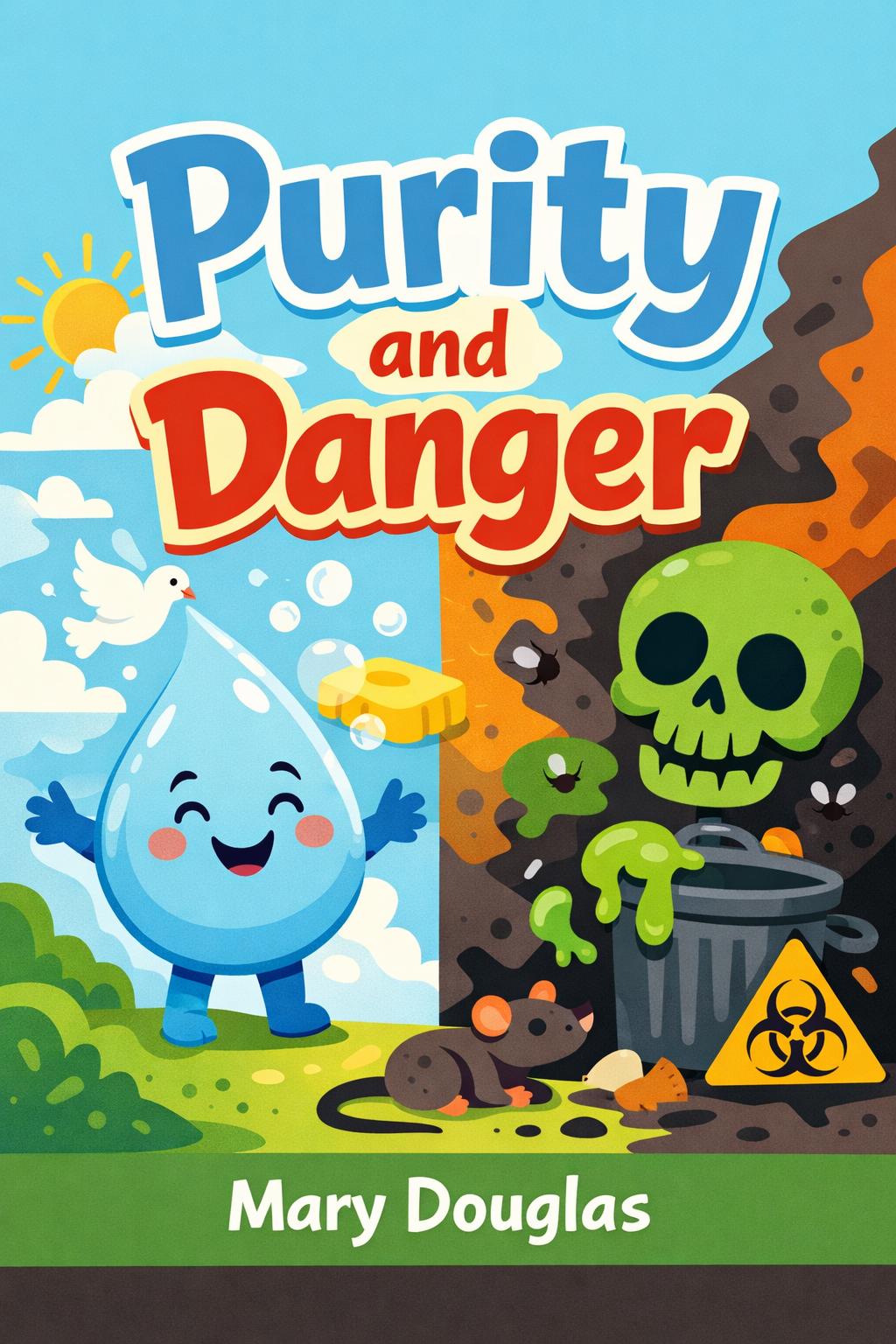
In her groundbreaking work, Mary Douglas challenges the notion that ideas of dirt and purity are based on universal hygiene or inherent disgust. Instead, she proposes a revolutionary concept: dirt is fundamentally “matter out of place.” Something becomes dirty not because of its essential nature, but because it violates a society’s cherished system of classification. A clump of soil is vital in a garden but revolting on a dinner plate. This simple insight opens a window into how all human cultures construct their world. By defining what is unclean or taboo, a society reinforces its boundaries, upholds its moral order, and creates a shared reality from potential chaos. The enforcement of these categories is what holds communities together, and anything that blurs or threatens these lines is perceived as dangerous.
Douglas meticulously applies this framework to dismantle the biased perspectives of earlier anthropology, which often dismissed non-Western belief systems as irrational or “primitive.” She argues that so-called primitive thought is not inferior, but a coherent system where the individual feels a direct, symbolic connection to the forces of the universe. Every ritual and prohibition makes sense within its own cultural context, serving to maintain a specific social structure. To label another culture’s practices as mere superstition is to misunderstand the profound human need for order. For example, she critiques “medical materialism,” the tendency to explain dietary taboos (like the ancient Jewish prohibition on pork) as early health codes. While pragmatic concerns may exist, Douglas contends the primary purpose is symbolic. The pig, as an animal that has a cloven hoof but does not chew the cud, is an anomaly that does not fit the clear categories laid out for permissible animals. Rejecting it is an act of upholding spiritual order and striving for holiness, which itself is defined as being “set apart.”
The book delves into the fascinating power of ambiguity—things or beings that cannot be easily classified. These ambiguous entities are often treated with extreme caution, as they possess the power to disrupt the entire system. However, they can also be sources of tremendous sacred power. Douglas illustrates this with the Lele people’s view of the pangolin, a scaly anteater that climbs trees and bears live young. It defies easy categorization as fish, reptile, or mammal. This very ambiguity elevates it to a sacred status, a symbol of fertility consumed in special rituals to transfer its potent, boundary-crossing essence. Conversely, other ambiguous creatures might be universally avoided as dangerously polluting.
This logic extends from objects to people. Those who exist in social limbo, or who defy a community’s core classifications, are often seen as threatening and may be labeled as witches or sorcerers. They become the personification of danger, the human equivalent of dirt out of place, and their persecution serves to reinforce the community’s norms by vividly defining what lies outside them. Ultimately, *Purity and Danger* is not merely about hygiene or religious ritual. It is a profound exploration of the human mind’s need to create order. Our deepest cultural instincts about cleanliness, sanctity, and taboo are not random but are the very architecture of our social worlds. By examining what we cast out as dirty, we can see the blueprint of what we hold dear.