Description
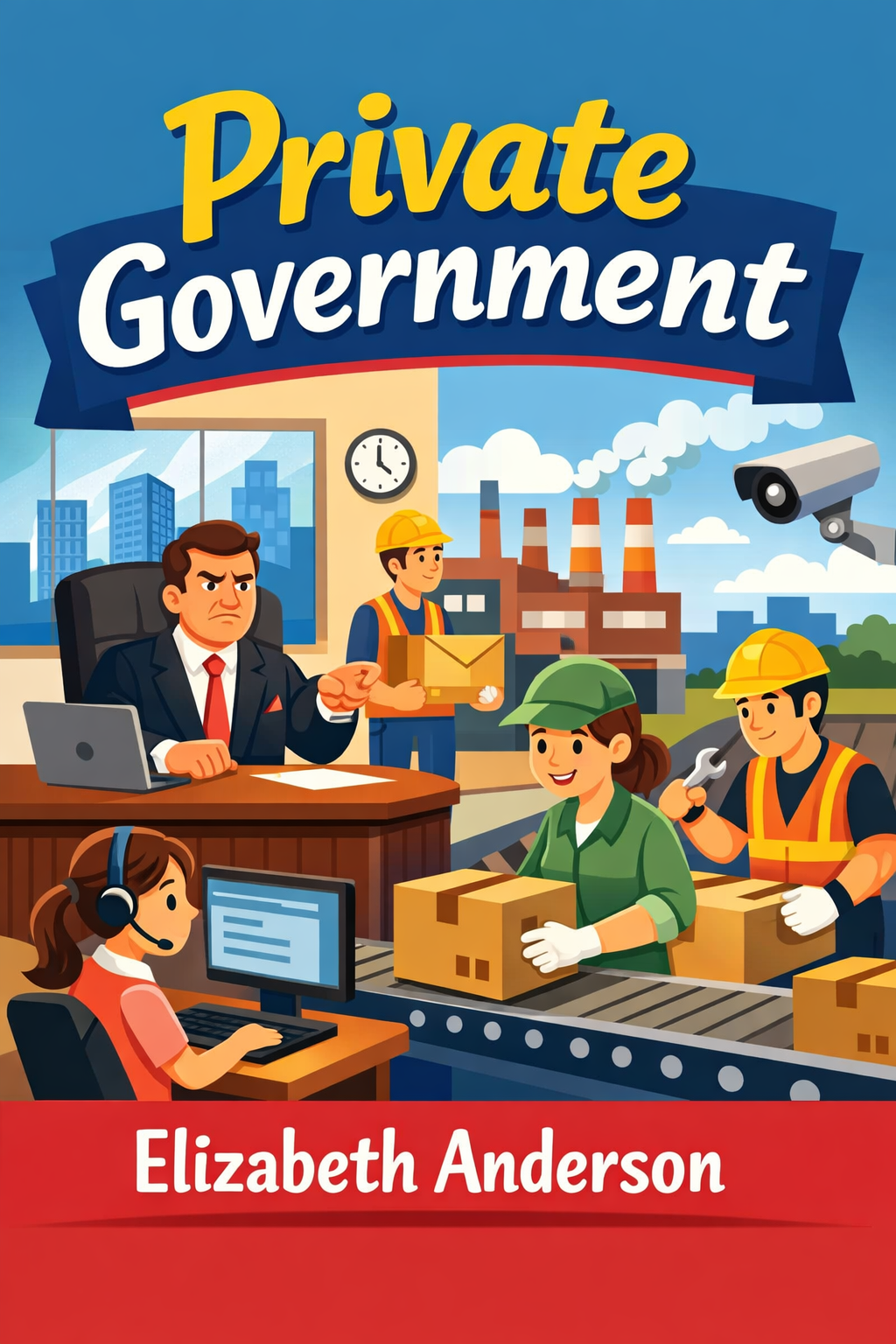
We often think of our jobs as simple economic exchanges: labor for wages, freely entered into by both parties. But this view obscures a profound and unsettling reality. The modern workplace is not a neutral marketplace of skills; it is a private government. Within its walls, a rigid, hierarchical authority structure operates with powers that would be considered deeply undemocratic and invasive in our public lives. A CEO or manager holds a position akin to an unelected dictator or oligarch, issuing commands that employees are expected to obey without question. This private government owns the means of production, engages in central planning, and enforces compliance through surveillance and the ultimate threat of exile—termination.
While this analogy may seem extreme, it withstands scrutiny. Critics might argue that corporate leaders are appointed by boards, not self-anointed, but this merely replaces a single dictator with an unelected oligarchy from the employee’s perspective. Others might point to legal protections against egregious abuses like harassment. Yet these are narrow exceptions within a vast landscape of employer control. The most powerful tool of this private government is its ability to sever an individual’s economic lifeline. The consequence of disobedience isn’t imprisonment, but it is the loss of livelihood, healthcare, and stability—a form of coercion that ensures compliance just as effectively.
A common retort is that workers possess the fundamental freedom to quit. In theory, this is the check on employer power. In practice, this freedom is largely illusory. The job market is inherently constrained by geography, economic conditions, and personal circumstance. For many, leaving a job means facing financial ruin, loss of benefits, and ineligibility for safety nets. The rise of non-compete clauses, even for low-wage workers, further traps employees by confiscating the human capital they’ve developed. Choosing to quit often means choosing to inflict upon oneself the very punishment an employer uses to enforce obedience. Moreover, the freedom to exit one authoritarian system does not constitute freedom if all available alternatives are similarly structured. Moving from one corporate dictatorship to another is not liberation.
The scope of this employer power extends far beyond the work itself. In many jurisdictions, particularly in the United States with its “at-will” employment norms, employers can legally dictate significant aspects of an employee’s private life. They can mandate wellness programs, control speech on social media, influence political activities, and monitor personal behavior, all under the threat of termination. The workplace private government thus claims jurisdiction over the whole person, not just the worker, blurring the line between professional service and personal sovereignty.
This system did not emerge from a deliberate design for tyranny. Its roots lie in the Industrial Revolution, which dismantled older models of self-sufficient artisans and smallholders. As people were separated from their own means of production, they became dependent on selling their labor to those who owned the factories and tools. The early promise of capitalism—a free market of independent contractors bargaining as equals—was quickly supplanted by this new reality of concentrated power and subordination. We cling to the antiquated ideology of free contract, which blinds us to the actual, authoritarian nature of the employment relationship.
The core problem, therefore, is not that workplaces have governments. All organized human endeavor requires governance. The problem is the *type* of government they have: private, unaccountable, and authoritarian. The solution is not to wish away governance but to transform it. We must begin to imagine and advocate for workplaces that are more democratic, where those who are governed have a real voice in the rules that bind them. This could take many forms, from worker cooperatives to robust union representation to seats on corporate boards. The goal is to bring the democratic values we cherish in our public life into the private governments where we spend so much of our time.
Yet this transformation is hindered by a profound lack of awareness. We are so accustomed to the dictatorship of the workplace that we often fail to see it for what it is. We internalize its logic, mistaking the power to quit for genuine freedom, and accepting intrusive control as a normal condition of employment. By naming this system—private government—we can start to challenge its inevitability and work toward building workplaces that respect both our labor and our liberty.