Description
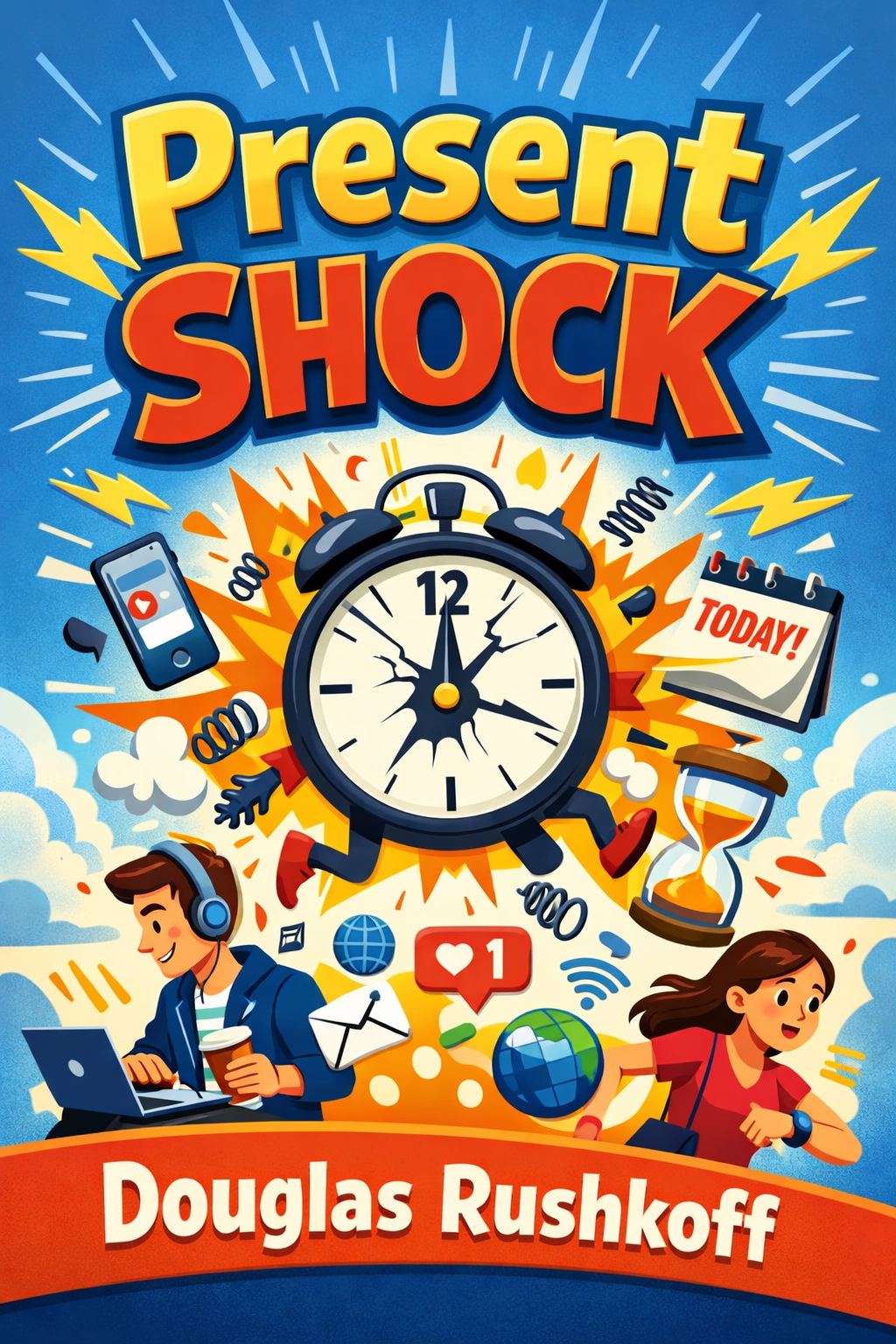
Have you ever felt a persistent anxiety that you’re missing something crucial, even while drowning in a stream of social media updates and news alerts? This is not a personal failing, but a cultural condition. We have built a world of instantaneous digital connection, and now these technologies dictate our pace, leaving us overwhelmed. We are biological creatures tethered to natural rhythms, yet we are forced to interface with systems operating at machine speed. This experience is the essence of a new reality: a state of perpetual, disorienting focus on the immediate moment, where the future feels irrelevant and the past is just a series of disconnected updates. Our personal lives, our culture, and our very perception of time are being transformed, creating profound conflicts between our humanity and our tools.
This disorientation stems from a fundamental shift in our relationship with time. For much of the twentieth century, society was future-oriented, excited by the promise of technological progress. But the pace of change has accelerated so dramatically that we have hit a wall. The predicted “future shock”—the stress of too much change in too short a time—has morphed into something new. We are no longer in shock from the future; we are in shock from a ceaseless, overwhelming present. We have lost a clear sense of direction and, consequently, have abandoned long-term planning. The drive is for instant results, whether in financial trading, where stocks are flipped in hours, or in our personal quests for gratification. The grand narrative of progress has collapsed into a frantic, eternal now.
Our confusion is compounded by a breakdown in traditional storytelling. For centuries, we used linear narratives with clear beginnings, middles, and ends to make sense of the world. These stories provided order and meaning, charting a hero’s journey from ordinary life through challenge to resolution. However, we have grown deeply skeptical of these tidy arcs, having seen them used to manipulate us in politics and advertising. This distrust, combined with the affordances of modern technology like remote controls and video playlists, has led us to prefer fragmented, non-linear forms of narrative. We zip from one clip to another, crafting our own disjointed anthologies of experience. While this offers a sense of control, it robs us of the cohesive understanding that stories once provided, leaving our worldview fractured and our sense of purpose adrift.
Digital technology actively fuels this fragmentation, not just of stories, but of our very identities and perception of time. In the pre-digital age, time felt linear and place was singular: you were where your body was. Now, your smartphone allows you to be in multiple places at once, maintaining a collection of digital selves—a professional profile, a gaming avatar, an anonymous forum handle. This splintering of identity, a kind of digital schizophrenia, means we are never fully present in our physical environment. We are pulled away by constant streams of information masquerading as the “live” present: notifications, feeds, and alerts that actually refer to past events elsewhere. This illusion of real-time connection distorts our experience, making the immediate moment feel shallow and constantly interrupted by digital ghosts.
Ultimately, our present shock has caused us to lose sight of the vital importance of different timescales. Change does not happen at a single speed; it occurs in layers, from the glacial pace of geology to the rapid churn of fashion. A healthy society understands and respects these layers, allowing for long-term cultural development alongside short-term trends. However, obsessed with the immediate, we conflate these scales. Politicians govern according to hourly poll shifts instead of decades-long policy, and we judge cultural movements with the haste of a news cycle. This myopic focus prevents us from addressing slow, critical issues like climate change or societal well-being, because they do not generate the urgent ping of a new notification. We are trapped in the fastest spinning wheel at the center of the clock, dizzy and unable to perceive the slower, larger hands moving around us.
The key realization is that our technologies have fundamentally altered our experience of existence. We dreamed of using them to build a better tomorrow, but we have instead used them to tether ourselves to a frantic, disorganized today. We are bombarded by information that pulls us out of the physical moment while preventing meaningful contemplation of the future. We navigate life through fragmented clips rather than coherent narratives, and our understanding of time has flattened. To navigate this present shock, we must consciously reclaim our attention, re-learn the value of long narratives and longer timescales, and reassert the human rhythm in a world designed for machine speed.