Description
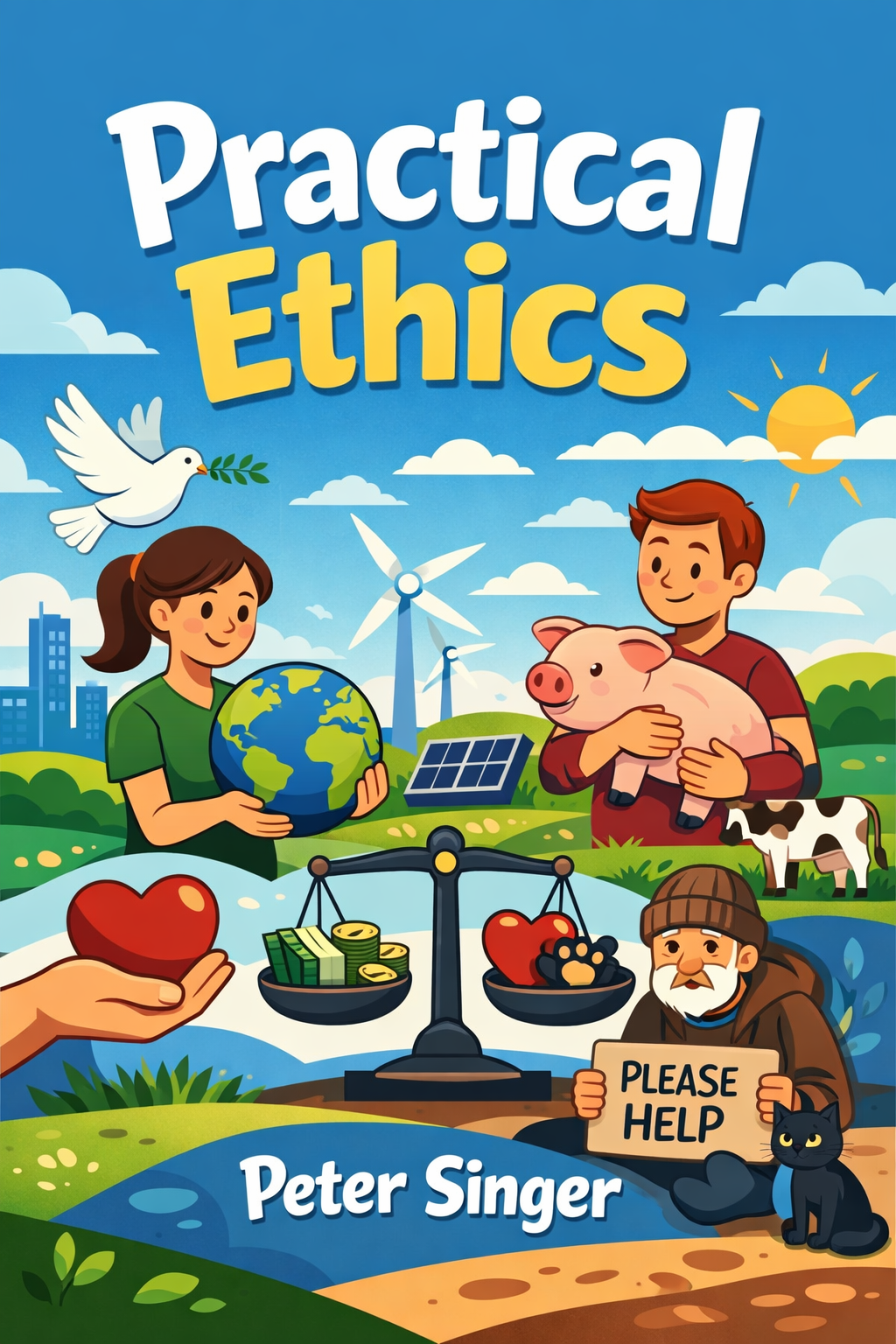
In a world brimming with complex choices, from the food on our plates to the funds in our bank accounts, we often navigate without a coherent moral framework. This book presents a powerful and challenging system of practical ethics, urging us to scrutinize the everyday assumptions that guide our lives. It moves beyond abstract philosophy, applying rigorous reasoning to the most pressing and controversial dilemmas of our time. The core argument is that ethics is not a set of rigid rules from religion or tradition, but an active, reasoned process of considering the consequences of our actions for everyone affected. This approach, while often leading to uncomfortable conclusions, offers a path toward a more just and compassionate existence.
The foundation of this ethical system is a deceptively simple principle: the equal consideration of interests. This means giving equal weight to the comparable interests of all beings, regardless of their species, nationality, or relationship to us. It is not a demand for identical treatment, but a call for impartiality. For instance, if a child and a dog are experiencing pain of similar intensity, the moral urgency to relieve that pain is equivalent for both. This principle radically expands our traditional moral circle, which often prioritizes humans, especially those within our immediate community. It forces us to ask why we readily condemn cruelty to a pet while ignoring the systemic suffering of billions of farm animals, or why we feel a greater obligation to a neighbor than to a stranger dying from preventable poverty overseas. The geographical or temporal distance of suffering does not diminish its moral significance. This impartial standpoint challenges the very fabric of our consumer lifestyles, suggesting that choosing a luxury over a life-saving donation requires serious ethical justification.
This expansion of moral concern leads directly to a profound reevaluation of our relationship with animals. If the capacity to suffer is the bedrock of moral consideration, as argued, then many non-human animals are undeniably within our moral sphere. The book meticulously details the realities of modern industrial farming, where sentient creatures endure lives of intense confinement and distress for the sake of cheap meat, dairy, and eggs. The common defense of human superiority based on intelligence is dismantled by a simple thought experiment: we would not deem it ethical to inflict such suffering on a human with severe cognitive impairments, so why does intelligence justify it for animals? The conclusion is that for most in affluent societies, consuming animal products is not a necessity but a preference, one that causes immense suffering. The ethical imperative, therefore, is to drastically reduce or eliminate our support of these practices, moving towards a plant-based diet. This is not a call for purity, but for a significant shift that acknowledges the moral weight of animal interests.
The ethical lens is then turned to the profound questions at the boundaries of life. Regarding reproduction and abortion, the argument shifts the debate from a focus on biological humanity to a concept of personhood—defined by characteristics like self-awareness, rationality, and the capacity for a future. From this view, a fetus in early stages of development does not possess the same moral status as a person. This framework permits abortion under many circumstances, particularly to prevent severe suffering, while simultaneously demanding a stronger societal commitment to support wanted children and their parents through healthcare, education, and economic security. Similarly, at the end of life, the principles of autonomy and the reduction of suffering are applied to the debate on euthanasia. If a person facing unbearable, incurable pain consciously wishes to end their life, respecting that informed preference can be an ethical act of compassion. These positions are presented not as dogmatic answers, but as reasoned applications of core principles, requiring careful safeguards against abuse and a society-wide conversation about dignity and choice.
Perhaps the most personally demanding application of this ethics is our obligation to address global poverty. The principle of equal consideration makes our current global disparity morally indefensible. If we accept that the interest of a child in Bangladesh in not starving is equal to our interest in a new piece of clothing or an expensive meal, then our inaction becomes a choice we must ethically account for. The book presents a compelling case that for those with substantial wealth, donating a significant portion of income to effective aid organizations is not an act of charity but a moral duty. It is a direct implication of taking the equal interests of all people seriously. Living an ethical life, therefore, involves a continuous assessment of how our resources can best be used to prevent the most severe suffering, a practice that fundamentally challenges the pursuit of luxury and complacency in a world of radical inequality.
Ultimately, this work does not provide a comfortable checklist for moral living. Instead, it offers a demanding, consistent, and expansive framework that can unsettle our deepest habits and social norms. It argues that to live ethically is to engage in an ongoing project of critical thought, expanding our empathy, and aligning our actions with a commitment to reduce suffering and respect the preferences of all sentient beings, regardless of how distant or different they may seem. The journey it proposes is difficult and often inconvenient, but it promises a more coherent and principled way to navigate the moral complexities of the modern world.