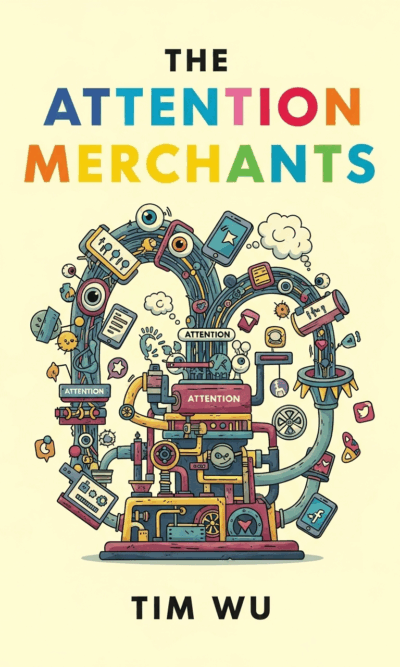
Description
In a world that often celebrates the myth of the lone achiever, a more powerful truth awaits discovery. Our most significant accomplishments and our deepest sense of fulfillment do not spring from isolated effort, but from the rich soil of human connection. This book argues that we are in the midst of a quiet crisis of loneliness and superficial interaction, even as the solution lies plainly before us: the conscious cultivation of enduring, meaningful partnerships. By examining the lives of extraordinary collaborators—from world leaders and Nobel-winning scientists to visionary entrepreneurs and lifelong companions—a blueprint emerges for how deep connections can become our greatest source of strength, purpose, and positive impact.
The journey begins with a fundamental shift in perspective. Rather than viewing our life’s purpose as a solo mission to be uncovered, we can see it as something elevated and amplified through partnership. When individuals unite around a shared mission, their combined potential transcends what any one person could achieve. The story of scientists Sherwood Rowland and Mario Molina illustrates this perfectly. Their partnership, driven by a shared curiosity about atmospheric chemicals, led to the discovery that common refrigerants were destroying the planet’s protective ozone layer. Facing immense opposition from industry and skepticism from peers, their united purpose gave them the resilience to advocate for change. Their collaborative work ultimately informed the global Montreal Protocol, a testament to how a partnership fueled by a shared, higher purpose can alter the course of history. This principle invites us to reframe our relationships, asking not what we can extract from them, but what grander purpose we can serve through them.
Building such transformative alliances requires more than shared goals; it demands an unwavering, all-in commitment. This is the foundation of unconditional support and safety that allows for vulnerability and courageous risk-taking. The decades-long partnership between former U.S. President Jimmy Carter and his wife Rosalynn exemplifies this depth. Their bond, described as the most important partnership of Carter’s life, provided a bedrock of resilience through political triumphs, a painful electoral loss, and the everyday challenges of a long marriage. They credit their endurance to facing failures as a shared responsibility, celebrating successes as joint victories, and consistently choosing to resolve conflicts before the day’s end. This “all-in” mentality creates a sanctuary of trust, freeing both individuals to pursue their fullest potential with the confidence of a steadfast ally.
To sustain these deep connections over a lifetime, we must move beyond transactional interactions and cultivate a shared moral ecosystem. This internal framework, built on practiced virtues, acts as a guiding compass for the partnership. Six essential virtues form its core: Enduring Trust, Unshakeable Mutual Respect, United Belief, Shared Humility, Nurturing Generosity, and Compassionate Empathy. Of these, Enduring Trust is paramount. It extends beyond trusting one’s partner to trusting in the journey of life itself—believing that the choices made within the relationship will lead to growth and grace. When fear recedes, partners can show up fully, without masks or reservations. This principle was vital for the founders of a now-global hospitality company, who, in their early days of uncertainty, had to place profound trust in each other and in their unconventional idea of strangers sharing homes. That foundational trust became the bedrock of their world-changing enterprise.
The magic of a partnership is often crystallized in daily rituals and shared experiences—the magnetic moments that weave a shared history. These are not grand, occasional gestures, but the consistent, intentional practices that build a unique culture for two or more people. They can be as simple as a morning coffee shared in silence, an annual trip to a favorite place, or a ritual for celebrating small wins. For the founders of a successful beverage company, their ritual was a weekly “listening booth” where any employee could voice concerns directly to leadership. These practices create a rhythm of connection, reinforcing the partnership’s identity and providing touchstones of joy and solidarity amidst life’s chaos. They transform ordinary time into a tapestry of shared meaning.
Inevitably, even the strongest partnerships face friction. However, conflict need not be a destructive force; when approached correctly, it becomes a powerful engine for learning and innovation. The key is to celebrate friction as a sign of passionate engagement and diverse perspectives. Instead of avoiding disagreement, partners can learn to navigate it with creativity, seeing it as an opportunity to forge a stronger, more nuanced solution than either could have conceived alone. This requires replacing the desire to “win” an argument with the goal of understanding and synthesizing viewpoints. By establishing ground rules for respectful debate and focusing on the shared purpose behind the disagreement, conflict can deepen respect and lead to breakthroughs that solidify the partnership.
Finally, the principles of deep connection can scale beyond a duo to energize entire teams and communities. This is achieved through collaborative design, which intentionally architects groups and organizations to foster collective connection. It involves creating spaces—both physical and cultural—where psychological safety thrives, where every voice is valued, and where the group’s shared mission is clear and compelling. Leaders of such ecosystems act not as commanding chiefs, but as humble gardeners, nurturing the conditions for trust, open dialogue, and co-creation. They understand that a group built on these principles can achieve a level of synergy and innovation that feels almost alchemical, turning a collection of individuals into a unified force for good.
Ultimately, this book is an invitation to rethink the architecture of a meaningful life. It posits that our legacy is not a monument built alone, but a garden cultivated together. By intentionally seeking and nurturing deep connections—grounded in shared purpose, unwavering commitment, and a common moral code—we do more than enhance our personal lives. We unlock our capacity to contribute to a better world, finding that in lifting others, we ourselves are elevated to heights we could never have reached on our own. The path to true impact is walked together.