Description
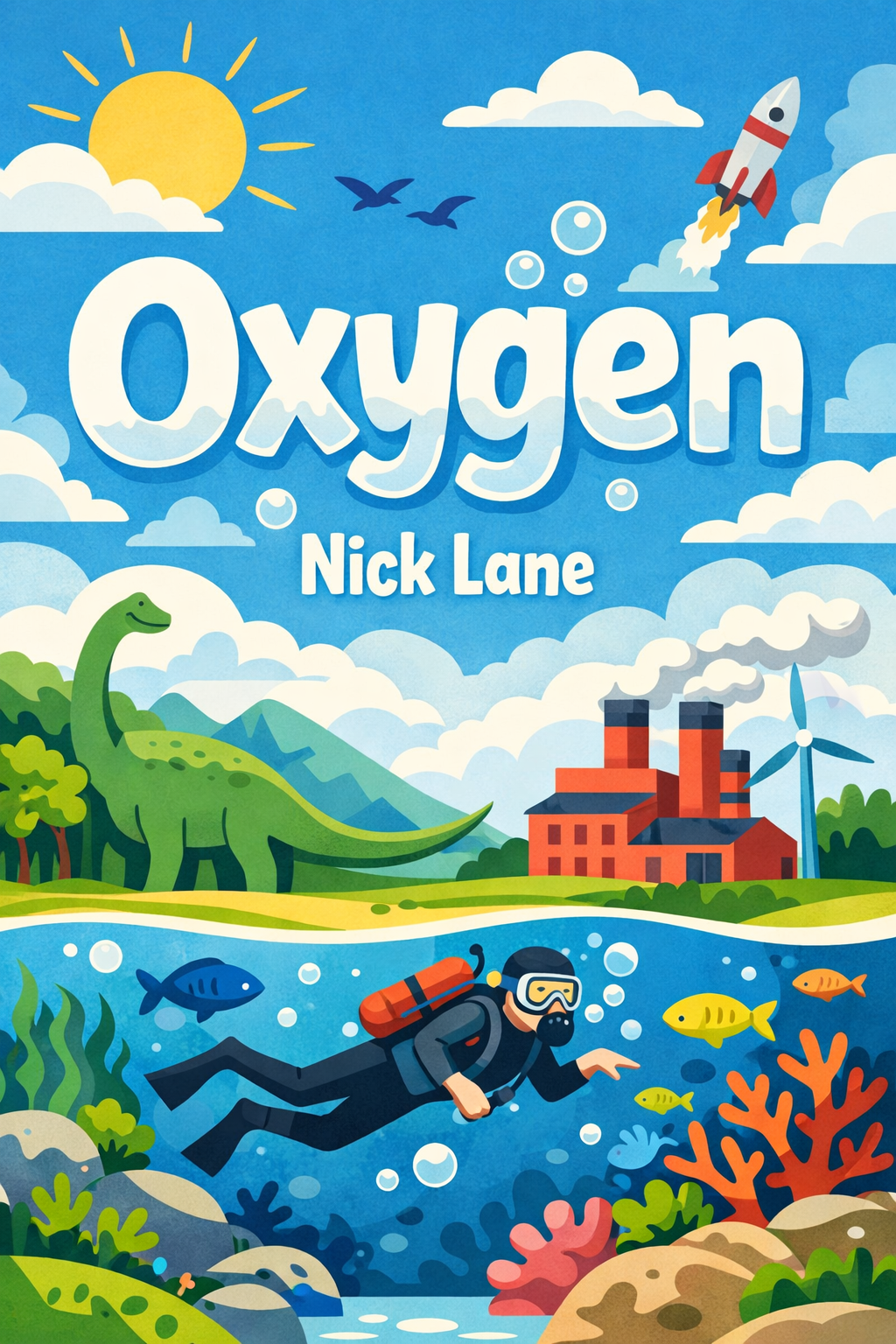
Oxygen is the air we breathe, the invisible element so fundamental to our existence that we rarely give it a second thought. We know that without it, life would cease in minutes. But the story of oxygen is far more complex and fascinating than its simple role in respiration suggests. It is a story of creation and destruction, a cosmic paradox that has shaped the very fabric of life on Earth. This element is both the giver of life and a slow, persistent poison.
Four billion years ago, Earth’s atmosphere was a starkly different place, almost entirely devoid of free oxygen. The planet was losing water at an alarming rate. Without an oxygen-rich atmosphere, hydrogen, a component of water, would escape Earth’s gravity, leaving the planet to slowly dry out. The turning point was the evolution of photosynthesis. This revolutionary process, harnessed by early microorganisms, used sunlight to split water molecules, releasing vast quantities of oxygen as a byproduct. This atmospheric oxygen then bonded with escaping hydrogen, forming new water and saving our world from becoming a barren desert. It created the blue planet we know today.
However, for the earliest life forms, this new, oxygen-rich world was a catastrophe. Oxygen is a highly reactive element that rips electrons from organic molecules in a process called oxidation, causing cells to disintegrate. To these ancient microbes, oxygen was a lethal toxin. Life was forced to adapt or perish. Many organisms evolved antioxidants, chemical defenses that neutralize oxygen’s destructive power. Others found a different strategy: they began to cluster together. By forming a single, larger mass, individual cells could disperse the toxic burden, sharing the oxidative damage. This simple act of self-preservation may have been the very first step toward multicellular life, the precursor to every plant and animal on Earth today.
This transformation culminated around 500 million years ago in the Cambrian explosion, a period of unprecedented evolutionary creativity. In a geological heartbeat, most of the major animal groups that exist today appeared. This explosion of life has long been a puzzle, but rising oxygen levels offer a compelling explanation. Following a massive ice age, the planet warmed, and photosynthesizing organisms flourished in the nutrient-rich waters. They pumped enormous amounts of oxygen into the atmosphere, providing the high-octane fuel needed to support larger, more complex, and more active multicellular life. Oxygen, once a poison, had become the engine of evolution.
The influence of oxygen levels on the scale of life is dramatically illustrated by the Carboniferous period, about 300 million years ago. During this era, the atmosphere’s oxygen content may have soared to as high as 35%, compared to our 21% today. This super-oxygenated environment allowed life to grow to terrifying proportions. Coal miners have unearthed fossils of dragonflies with wingspans of half a meter and scorpions as long as a car tire. In an atmosphere so rich in oxygen, flight would have been easier, and the respiratory systems of these creatures could support much larger bodies. Oxygen literally fueled the age of giants.
The dark side of oxygen never truly went away. The same chemical process that rusts iron and fuels fires is constantly happening inside our own cells. Breathing is, in essence, a controlled form of combustion. The process of turning oxygen into water during respiration creates highly toxic intermediate molecules, or free radicals. These aggressive compounds damage DNA, proteins, and cell membranes. The biological damage is remarkably similar to that caused by radiation poisoning, which also works by creating these same toxic intermediates. In this sense, living is a form of slow-motion oxygen poisoning. Our bodies are in a constant battle against this oxidative stress, a battle that we slowly lose over time. This continuous “wear and tear” is a leading theory for why we age.
Organisms have developed a sophisticated arsenal of defenses. We shield our vital organs behind layers of dead skin cells. We have internal antioxidant systems that neutralize free radicals. We also get help from our diet, most famously from Vitamin C. However, even this relationship is complicated. Under certain conditions, interacting with iron and oxygen, Vitamin C can flip sides and become a pro-oxidant, promoting the very damage it usually prevents. The body is aware of this danger and carefully regulates its levels to maintain a delicate balance.
Ultimately, an organism’s lifespan appears to be intrinsically linked to the intensity of its relationship with oxygen. There is a striking correlation between an animal’s metabolic rate—the speed at which it consumes oxygen—and its maximum lifespan. A horse and a squirrel, for example, consume roughly the same total amount of oxygen per kilogram of body weight over their entire lives. The squirrel just burns through its allotment much faster, living a shorter, more frantic existence. It seems that every creature is given a finite “allowance” of oxygen to metabolize. The rate at which we use it, and the rate at which we produce the resulting toxins, may be the ultimate determinant of how long we live. Oxygen gives us the fire of life, but like any fire, it eventually consumes that which it animates.