Description
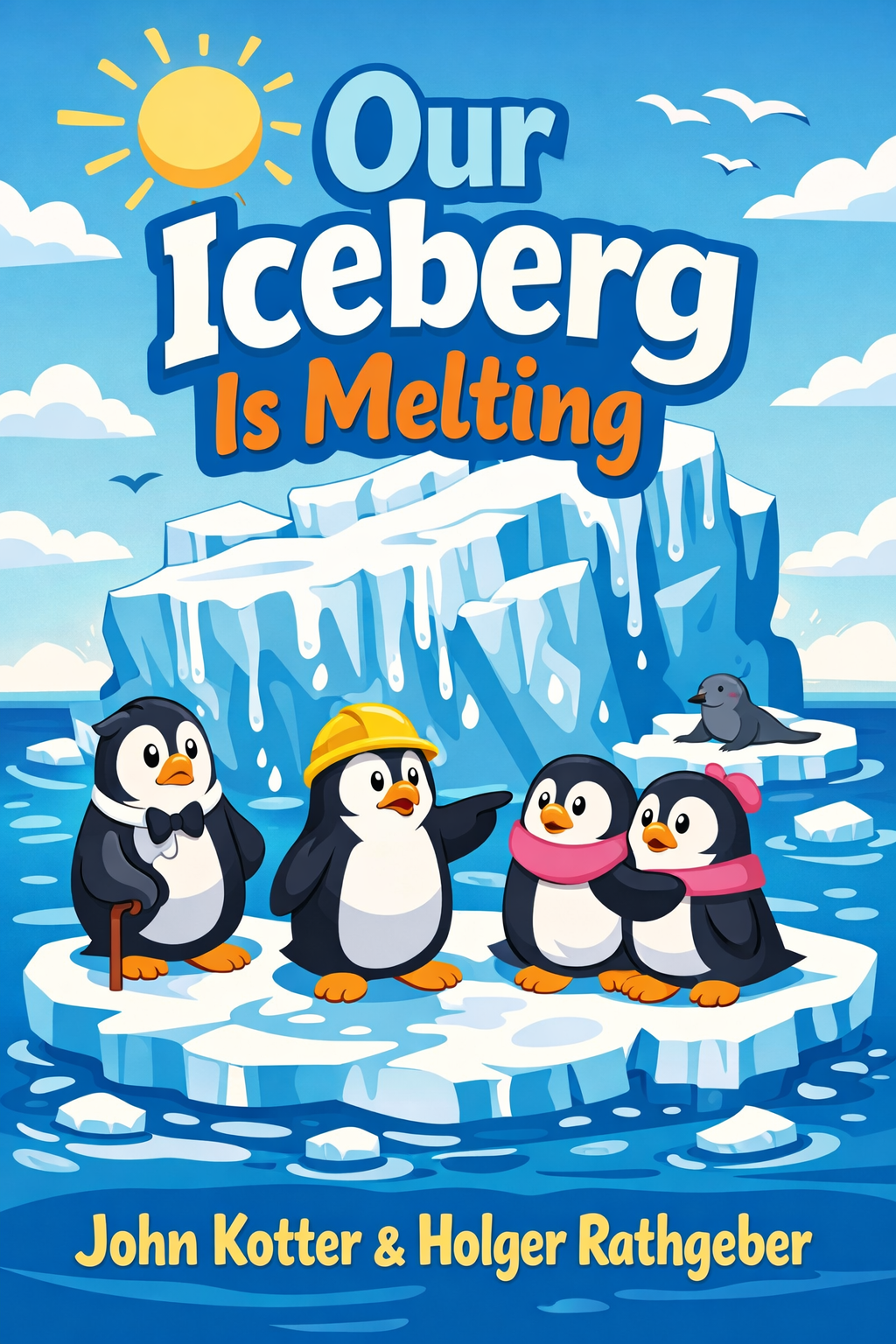
On a seemingly stable Antarctic iceberg, a community of penguins has thrived for generations. Their world is orderly, predictable, and secure. This illusion of permanence is shattered when a curious and observant penguin named Fred uncovers a terrifying truth: a massive internal cavity, filled with seawater, threatens to shatter their entire home when it freezes. The initial reaction from the colony’s leadership is a mix of denial and dismissal, a natural resistance to an uncomfortable and frightening reality. However, one pragmatic leader, Alice, insists on confronting the evidence. She understands that ignoring a looming catastrophe is a failure of duty. The Head Penguin, Louis, ultimately makes the courageous decision to face the facts head-on. He presents the undeniable truth to the entire colony, fostering a crucial sense of urgency. Instead of dictating a solution, he creates a space for collective anxiety and, more importantly, for collective thought, knowing that the path forward must be built with communal buy-in.
With time running out before the winter freeze, Louis forms a small, diverse guiding team. He recognizes that a group with varied perspectives is essential for innovative problem-solving. Interestingly, his first act with this new team is not to brainstorm logistics, but to build cohesion. He takes them squid hunting, an activity that requires cooperation and trust. This investment in team dynamics proves invaluable. United, they break from routine by exploring new territory, where a chance encounter with a nomadic seagull sparks a revolutionary idea: perhaps their colony, too, could become mobile. The concept of abandoning their ancestral home is radical and frightening, but it presents a viable survival strategy. The team’s next challenge is communication. They must translate this abstract, scary plan into a compelling vision for the hundreds of penguins accustomed to their static way of life. A charismatic penguin named Buddy, a natural storyteller, helps frame the narrative not as a loss, but as an adventurous new beginning. Persistent and creative communication through community talks and simple signage keeps the vision alive, steadily turning the tide of opinion.
Execution is where theory meets the icy water of reality. Fred, whose discovery started it all, leads a scouting party to find a new home. This creates a practical crisis: the scouts cannot hunt for themselves, and the colony’s rigid tradition forbids adults from sharing food. As winter nears, skepticism resurfaces, fueled by fear-mongering about external dangers. Progress stalls under the weight of doubt and logistical impossibility. The breakthrough comes from an unexpected source: the youngest members of the community. A penguin chick, inspired to help, devises a clever festival that uses social persuasion to gather fish for the returning scouts. This small, successful event is a pivotal victory. It solves a practical problem, reinvigorates community spirit, and demonstrates that everyone has a role to play in the collective effort. The scouts’ triumphant return, bearing news of a suitable new iceberg, converts the plan from a concept into an imminent reality.
The final phase is the monumental task of relocation itself. It requires meticulous planning and the courageous first steps of a few pioneers to prove the path is safe. The process is imperfect and messy, but the colony learns and adapts as it goes. Not every penguin embraces the change immediately; some hold onto the past until the very last moment. The story concludes with the colony established in its new, safer home. The most profound lesson, however, is not about the move itself, but about the transformation it sparked. The experience of navigating this existential crisis fundamentally changes the colony’s culture. They institutionalize the practices that saved them: maintaining a watchful eye for new challenges, fostering teams that encourage innovation, and valuing the contributions of every member. They learn that their greatest security no longer lies in the immobility of a single iceberg, but in their newfound agility, resilience, and capacity to face change together. The melting iceberg was not just a threat; it was the catalyst that taught them how to thrive in an ever-changing world.