Description
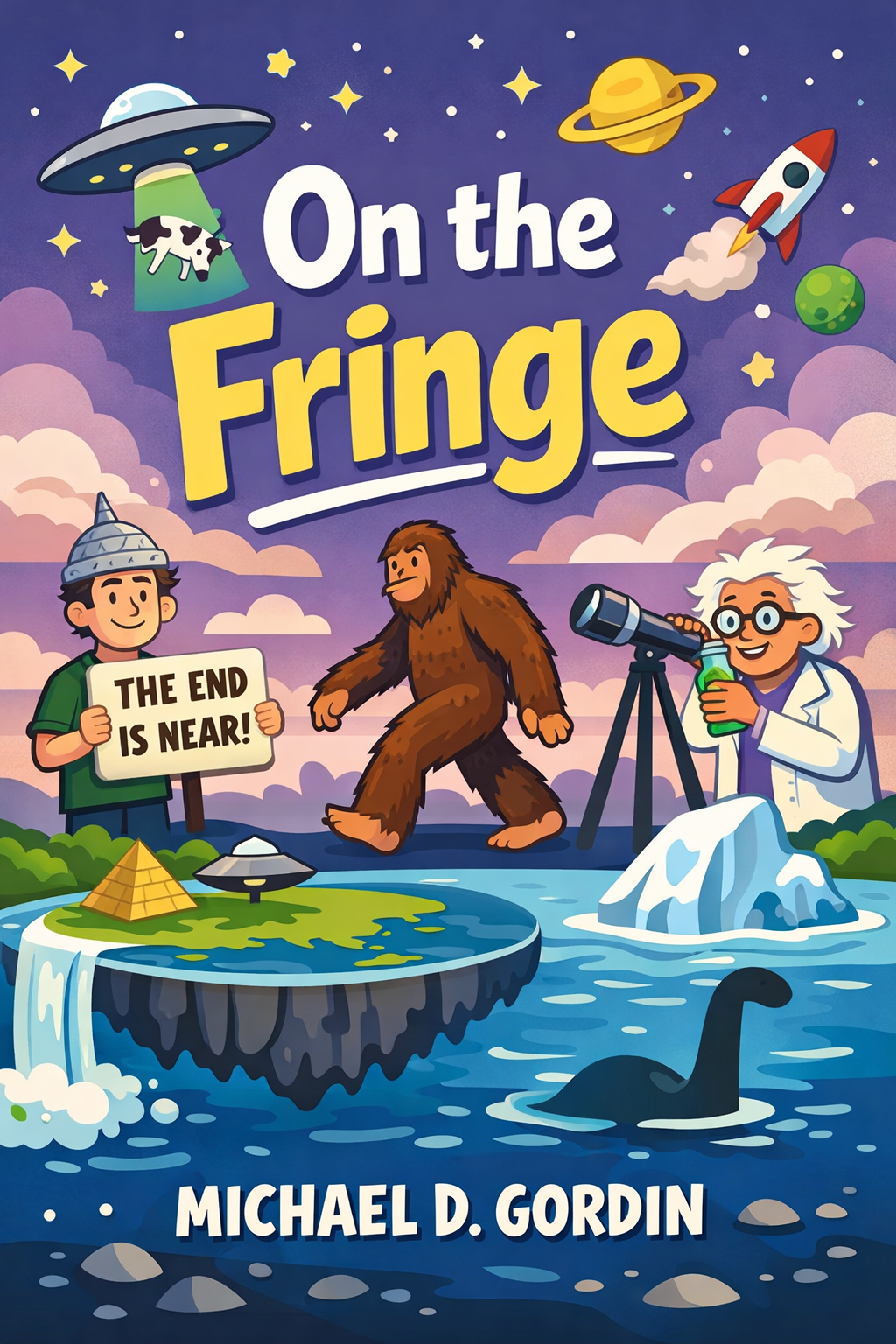
The line between science and pseudoscience is far more porous and contested than it might first appear. This exploration delves into the fringe, not to simply dismiss unconventional ideas, but to understand how the scientific mainstream is formed, challenged, and maintained. The journey reveals that what we label as “pseudo” is often a reflection of cultural, political, and historical forces as much as it is about empirical failure. By examining doctrines from the past and present, we gain crucial insight into the very nature of scientific authority and the inevitable debates that arise at its edges.
Attempting to draw a perfect, permanent boundary between science and non-science is a philosophical endeavor known as the demarcation problem. The most famous criterion, proposed by Karl Popper, suggests that for a theory to be scientific, it must be falsifiable—capable of being proven wrong. This idea has even been used in legal settings, such as rulings on what can be taught in public schools. However, this criterion is imperfect. Some clearly pseudoscientific claims could technically be made falsifiable by their adherents, while established fields like geology or cosmology often deal with claims that are not easily testable in a single experiment. The imperfection of any single rule suggests that we must think in terms of categories and contexts rather than a strict, one-size-fits-all definition.
History provides a powerful lens, showing that many ideas now considered pseudoscience were once pillars of accepted knowledge. These are vestigial sciences—expired doctrines that have faded from the mainstream. Astrology, for instance, was for centuries a sophisticated discipline blending mathematics and observational astronomy, used by European rulers to make state decisions. Its decline was gradual, spurred by the shift to a heliocentric model of the solar system and changing cultural attitudes, not by a single disproof. Alchemy followed a similar path. This process of “fringing” reminds us that today’s cutting-edge science may become tomorrow’s historical footnote, and that the rejection of an idea is often a slow societal shift rather than a sudden event.
Politics and ideology can aggressively shape what is deemed scientific. In extreme cases, regimes enforce doctrines that serve their goals, branding legitimate science as pseudoscience in the process. In the Soviet Union, Trofim Lysenko’s agricultural theories, which rejected Mendelian genetics, were declared the only valid science by Stalin. Classical genetics was banished as a bourgeois pseudoscience for decades, devastating Soviet biology. Meanwhile, in the United States, the pseudoscience of eugenics was used to justify racist policies and forced sterilizations, its authority lingering long after its scientific foundations were discredited. These examples demonstrate that the label of pseudoscience can be a weapon of power, used to suppress inconvenient truths and promote ideological agendas.
Some fringe beliefs are born in opposition to the scientific establishment. Adherents of these counterestablishment sciences see themselves as brave defenders of truth against a corrupt or closed-minded mainstream. UFOlogy, for example, grew from mid-20th century sightings and thrives on narratives of government cover-up. Similarly, the modern flat-Earth movement, despite overwhelming evidence to the contrary, positions itself as a community of free thinkers uncovering a global deception. These movements are often fueled by conspiracy thinking and a deep distrust of institutional authority, illustrating how the social dynamics of belief can persist independently of empirical evidence.
The field of parapsychology, which investigates phenomena like telepathy or psychokinesis, offers a case study of a domain perpetually kept at the fringe. Despite attempts by some researchers to employ scientific methods, the field is met with intense skepticism from the broader scientific community. This skepticism acts as a gatekeeping mechanism, often rejecting evidence out of hand due to its conflict with established physical laws. The fate of parapsychology highlights how the scientific community’s social and professional norms—its skepticism and adherence to prevailing paradigms—actively police the boundaries of acceptable inquiry.
Denialism, such as climate-change denial or HIV/AIDS denial, shares core characteristics with pseudoscience but operates with a more targeted goal: rejecting a well-established scientific consensus for ideological or economic reasons. Denialists often employ rhetorical tactics similar to pseudoscientists, cherry-picking data, magnifying uncertainties, and appealing to conspiracy. However, their impact is more directly harmful, as they work to undermine crucial scientific findings that inform public policy and global health, showing how battles over scientific authority have real-world consequences.
Ultimately, the existence of pseudoscience is not a sign of science’s failure but an inevitable feature of its adversarial environment. Science advances through criticism, debate, and the challenging of orthodoxies. Pseudoscientific claims, however flawed, force the mainstream to clarify its methods, defend its conclusions, and examine its assumptions. The fringe acts as a constant, if often misguided, critique. Understanding this dynamic is key. By studying pseudoscience—its history, its politics, and its psychology—we learn less about the failures of fringe ideas and more about the complex, messy, and profoundly human endeavor that is science itself. The boundary is not a fixed wall but a contested frontier, and its very contestation is what keeps the core of science alive and evolving.