Description
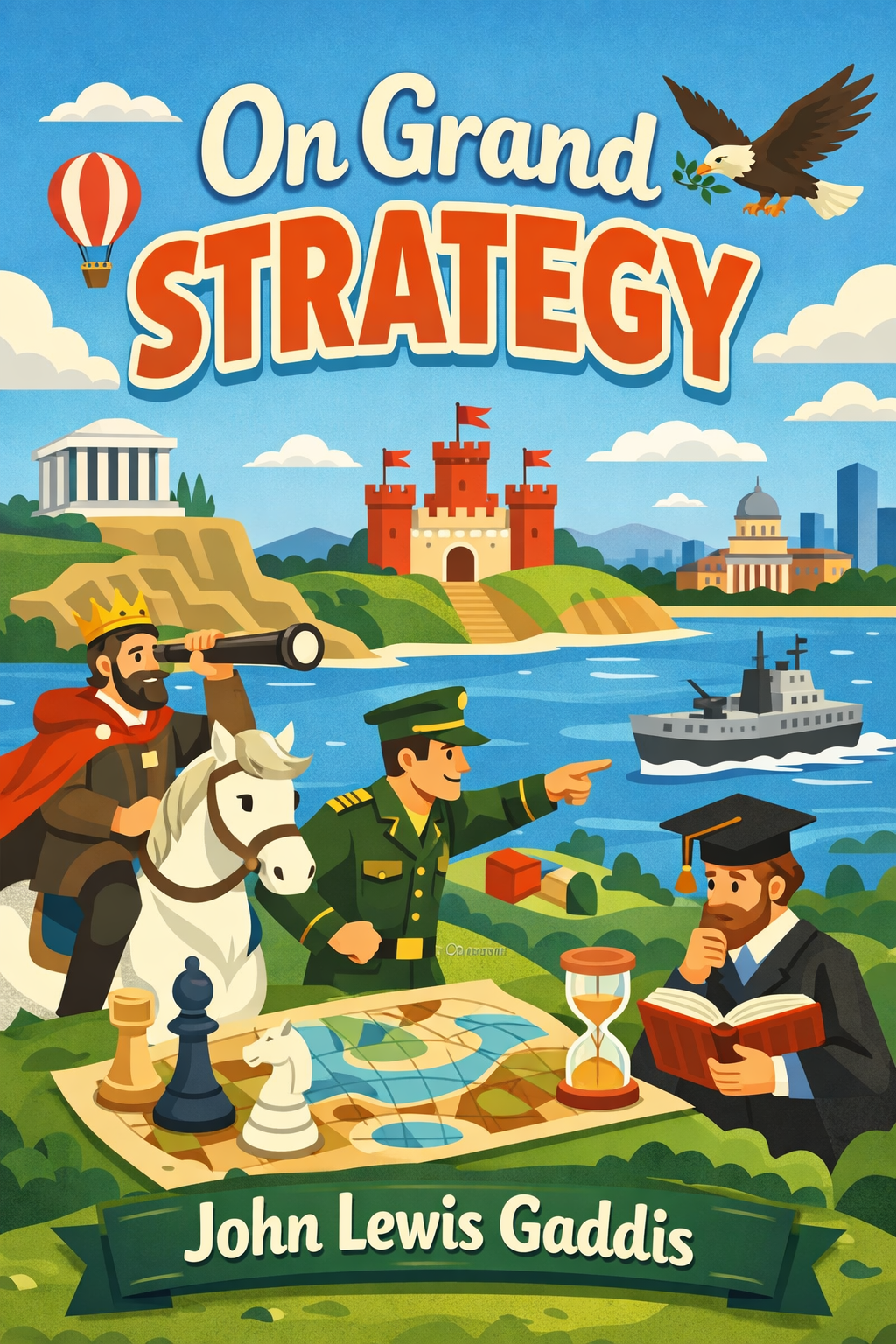
The true art of leadership and statecraft lies not in rigidly adhering to a single doctrine, but in cultivating a dynamic balance between ambition and prudence. History offers a rich tapestry of lessons, revealing that the most effective strategists are those who can hold a grand objective in mind while remaining acutely sensitive to the ever-shifting landscape of reality. They understand that a powerful vision provides direction, but it is a flexible, nuanced approach that ensures survival and success. This delicate equilibrium is the core of strategic wisdom, a skill demonstrated by some of history’s most enduring figures and catastrophically ignored by others.
A useful lens for understanding this balance comes from an analogy between two animals: the hedgehog and the fox. The hedgehog operates from one central, defining idea, viewing the world through a singular, cohesive lens. In contrast, the fox draws upon a wide variety of experiences and ideas, embracing complexity and contradiction. Translated to leadership, a pure “hedgehog” is a single-minded visionary, prone to overlooking practical obstacles in pursuit of their grand goal. A pure “fox” is a cautious tactician, so attuned to details and potential pitfalls that they may never commit to a decisive course. The most successful leaders, however, synthesize these traits. They possess the hedgehog’s clarity of purpose but employ the fox’s resourceful and adaptive methods to achieve it. Abraham Lincoln’s relentless pursuit of the Thirteenth Amendment, achieved through a mix of principle, political maneuvering, and pragmatic compromise, exemplifies this synthesis perfectly.
This framework extends beyond leadership style into the very accuracy of judgment. Research into expert predictions has shown that those with a fox-like mindset—characterized by intellectual humility, openness to diverse information, and comfort with uncertainty—consistently make more reliable forecasts about world events. They are less likely to force new information into a pre-existing dogma. Hedgehog-like thinkers, with their compelling, simplified narratives, often capture public attention but their predictions are far less dependable. This reveals a crucial strategic insight: wisdom is not about unwavering certainty, but about the capacity to doubt, adjust, and integrate new perspectives.
A sound strategy begins with a clear-eyed assessment of one’s own resources and limitations. Effective leaders build plans that leverage their unique strengths while mitigating their weaknesses, rather than blindly imitating others. The young Octavian, later Augustus, provides a masterclass in this approach. Lacking the military glory of his great-uncle Julius Caesar, he used political cunning, patronage, and strategic patience to outmaneuver more experienced rivals, ultimately founding the Roman Empire. However, the corrupting influence of unchecked power is a perennial danger. Success can erode the very adaptability that made it possible, as seen in Napoleon’s disastrous invasion of Russia. Blinded by past glory and a quest for personal triumph, he abandoned strategic sense, leading his army into a catastrophic retreat. Power, it seems, can make common sense vanish.
Ultimately, adaptability is the bedrock of stability, not rigidity. This principle is vividly illustrated in the contrasting colonial styles of Britain and Spain in the Americas. The Spanish crown imposed a uniform, top-down system of governance and culture across its vast territories. While creating a coherent empire, this rigidity fostered a brittle society with little local capacity for problem-solving. When the empire collapsed, it left a political vacuum. In contrast, the British, particularly under Elizabeth I, allowed for a more decentralized and varied approach. This fostered local governance and adaptability, which meant problems were often contained and solved locally. This foundational experience in pragmatic, responsive rule provided the nascent United States with a resilient political infrastructure that enabled its survival and growth. The Spanish model sought stability through control; the British model, inadvertently, achieved it through a degree of flexibility.
The final, subtle trap for any strategist is the tension between immediate tactics and long-term goals. A relentless focus on short-term advantage can actively undermine a grand strategy. Every tactical move must be evaluated not just for its immediate payoff, but for how it shapes future possibilities and aligns with the ultimate objective. History is littered with pyrrhic victories—battles won at such cost that they lost the war, or political maneuvers that secured a party a seat while eroding public trust in the entire system. True strategic thinking requires the discipline to sometimes forgo an easy win today if it jeopardizes the position needed for success tomorrow. It is the continuous, difficult work of aligning the minute-by-minute decisions with the distant horizon, ensuring that the steps taken do not lead the journey irrevocably off course.