Description
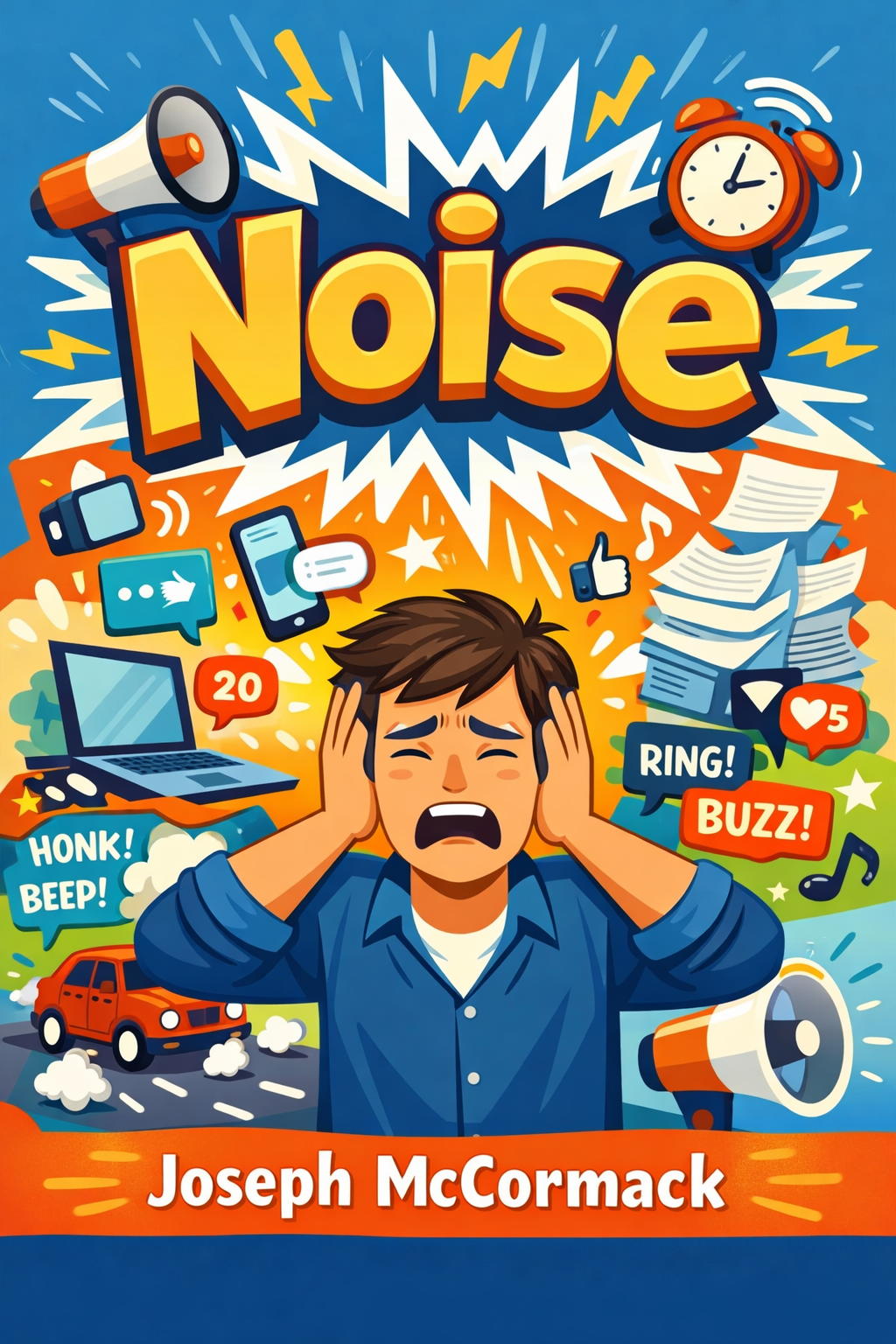
In our hyper-connected world, the constant barrage of information isn’t just an annoyance—it’s a fundamental threat to our ability to think deeply, connect meaningfully, and live purposefully. This book argues that we are drowning in a sea of digital chatter, from social media notifications to relentless news cycles, which fragments our attention and weakens our cognitive capacities. This state of perpetual distraction leads to sloppy thinking, superficial living, and a gradual erosion of our most important relationships. The consequence is a life lived on autopilot, where hours and days blur into a haze of missed opportunities and unfulfilled potential.
The problem begins with the myth of multitasking. Our brains are not designed to process multiple streams of information simultaneously. Attempting to do so doesn’t make us more efficient; it actively depletes our mental resources. Research suggests that the cognitive toll of divided attention can be more significant than the impairment caused by certain substances. We wouldn’t make critical decisions while intoxicated, yet we routinely attempt to work, learn, and communicate while our focus is shattered by a relentless ping of alerts. This superficial engagement with information is like subsisting on mental junk food; it provides a quick hit of stimulation but starves the mind of the substantive nutrition it needs for complex, creative thought.
This fractured attention doesn’t only harm us internally; it corrodes our connections with others. Look around any public space, and you’ll see the symptom: groups of people physically together but mentally absent, their heads bowed to their personal screens. This scene is a microcosm of a larger communication crisis. When our primary mode of interaction competes with the curated, dopamine-driven world in our pockets, real conversation suffers. We become less adept at listening, less sensitive to emotional cues, and more likely to speak past one another. The irony is palpable in places like Silicon Valley, where the architects of this distracting technology often choose to send their own children to schools that emphasize analog tools and face-to-face interaction, implicitly acknowledging the dangers of the very noise they help create.
Reclaiming control starts with a simple but radical act: managing your awareness. You must begin to treat your attention as the finite and valuable currency it is. Ask yourself constantly: Is what I’m focusing on worthy of my time and energy? Cultivate the habit of noticing when your mind begins to drift down an unproductive rabbit hole. A disciplined mind functions like a powerful flashlight, casting a bright, clear beam on what matters. An untrained mind, by contrast, is like a flickering lantern, casting a weak and diffuse glow that illuminates little of value. This heightened awareness is the essential foundation for all change.
With this awareness, you can begin the crucial work of tuning into what is truly paramount. In a noisy world, a lack of clear priorities leaves you vulnerable to every passing distraction. You must identify your core values and long-term ambitions with precision. What is the most important thing? Writing down your goals, discussing them with a trusted ally to create accountability, and rigorously auditing your daily habits are all methods to bring this clarity into focus. The goal is radical simplification—to strip away the clutter of obligations, digital and otherwise, that do not serve your paramount aims. This isn’t about doing more; it’s about doing less, but with far greater significance.
The path to sustained focus is paved with intentional habit formation. The battle against noise feels less like an uphill slog and more like a manageable practice when supported by routines. Start by designing your environment for success. This could mean turning off non-essential notifications, scheduling specific “deep work” blocks in your calendar, or establishing tech-free zones in your home. The practice of single-tasking—devoting your full attention to one activity at a time, whether it’s a work project, a book, or a conversation—re-trains your brain for depth. Over time, these behaviors cease to be strenuous efforts and become automatic, creating a natural buffer against the world’s distractions.
Finally, honing your own communication skills becomes an act of generosity in an age of divided attention. When you speak or write, do so with clarity and purpose. Structure your messages to be easily digestible, get to the point, and respect your audience’s time. By cutting through the noise with precision in your own communications, you make it easier for others to focus, fostering more meaningful and effective connections. Ultimately, the journey this book outlines is not about rejecting technology, but about mastering your own mind within a technological landscape designed to hijack it. It is a call to move from passive consumption to active, intentional living, where you choose what deserves your spotlight and confidently disregard the rest.