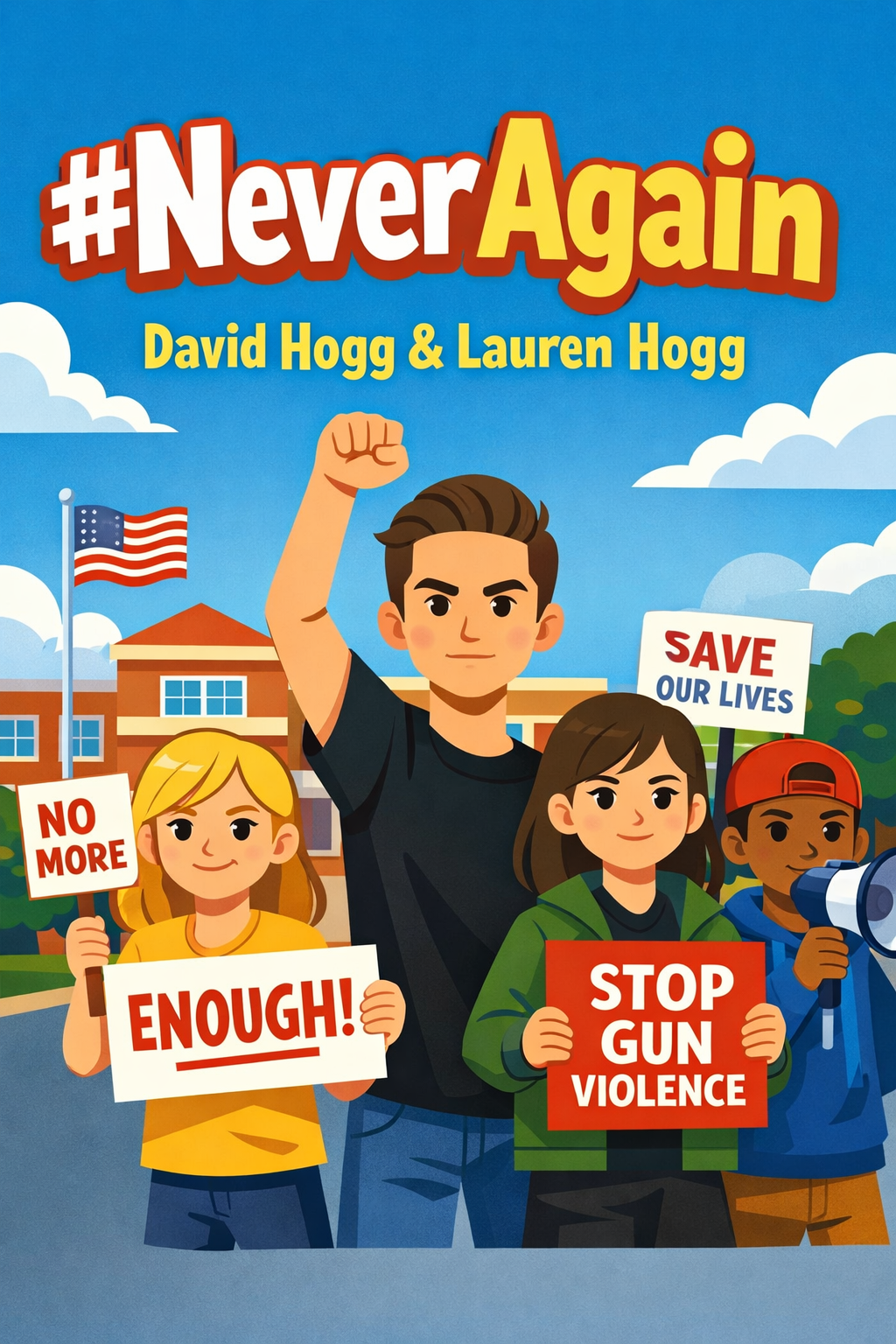
Description
The tragic shooting at Marjory Stoneman Douglas High School on February 14, 2018, shattered the community of Parkland, Florida, claiming seventeen lives. For siblings David and Lauren Hogg, the day began with Valentine’s celebrations and ended in unimaginable horror. Hiding in a classroom closet for three hours, Lauren grappled with terror and confusion, only to later learn she had lost four close friends. The familiar, depressing cycle of national grief followed by political paralysis seemed inevitable. Yet, this time, something was different. The student survivors, a generation raised on active-shooter drills and digital connectivity, refused to be silent. They instinctively turned to the tools they knew best—social media and video—to broadcast their raw pain and urgent demand for change, breaking the script that had followed previous tragedies.
David and Lauren’s path to becoming activists was paved long before that day. Their childhood in California involved an unusual mix of entrepreneurial hustle, selling cookies during holiday light displays, and a sober familiarity with firearms through their father, a former FBI agent. They witnessed the impact of shootings, like the 2012 Sandy Hook tragedy, from a distance, yet these events remained abstract. Moving to Parkland introduced them to a curriculum that emphasized real-world debate, media literacy, and civic engagement. David immersed himself in television production and political commentary, learning the mechanics of news cycles. Lauren studied gun control and mental health policy in her debate class. These experiences equipped them not with answers, but with a framework for understanding power, narrative, and policy—a toolkit they would desperately need.
In the attack’s immediate aftermath, grief took different forms. Lauren, mourning her friends Gina, Jamie, Alaina, and Alyssa, channeled her anguish onto Twitter, expressing a collective sentiment that survivors needed action, not just condolences. She faced a brutal backlash, including conspiracy theories labeling her brother a “crisis actor,” amplifications that came from the highest levels of political influence. David, processing his trauma differently, returned to the school with a camera. Drawing on his media training, he gave impassioned interviews, arguing that students must be protected. He wasn’t seeking the spotlight but was driven by a need to *do* something, to find a purpose in the chaos. They, along with classmates like Emma Gonzalez, realized their studied understanding of media was now a weapon for survival and mobilization.
This nascent student energy quickly coalesced into the March for Our Lives movement. The students strategically leveraged their moral authority as victims and their fluency in digital communication to command national attention. They confronted politicians, debated powerful opponents on television, and organized the massive March for Our Lives rally in Washington, D.C., alongside sibling marches worldwide. Their approach was savvy; they shifted the conversation from abstract political debates to the visceral reality of children fearing for their lives in classrooms. They refused to be sidelined by thoughts and prayers, demanding concrete legislative action.
The movement crystallized its goals into a clear, ten-point strategy aimed at reducing gun violence. This plan went beyond vague calls for “change,” advocating for specific measures like universal background checks, a ban on high-capacity magazines, funding for gun violence research, and the creation of a national gun registry. By articulating a precise agenda, the students ensured their movement had sustained purpose beyond a single moment of protest. Their story is not one of a spontaneous outburst, but of a generation applying hard-won skills—in media, debate, and organization—to confront a crisis their elders had failed to solve. It is a testament to how profound grief, when coupled with preparation and relentless resolve, can forge a new and formidable force for change.