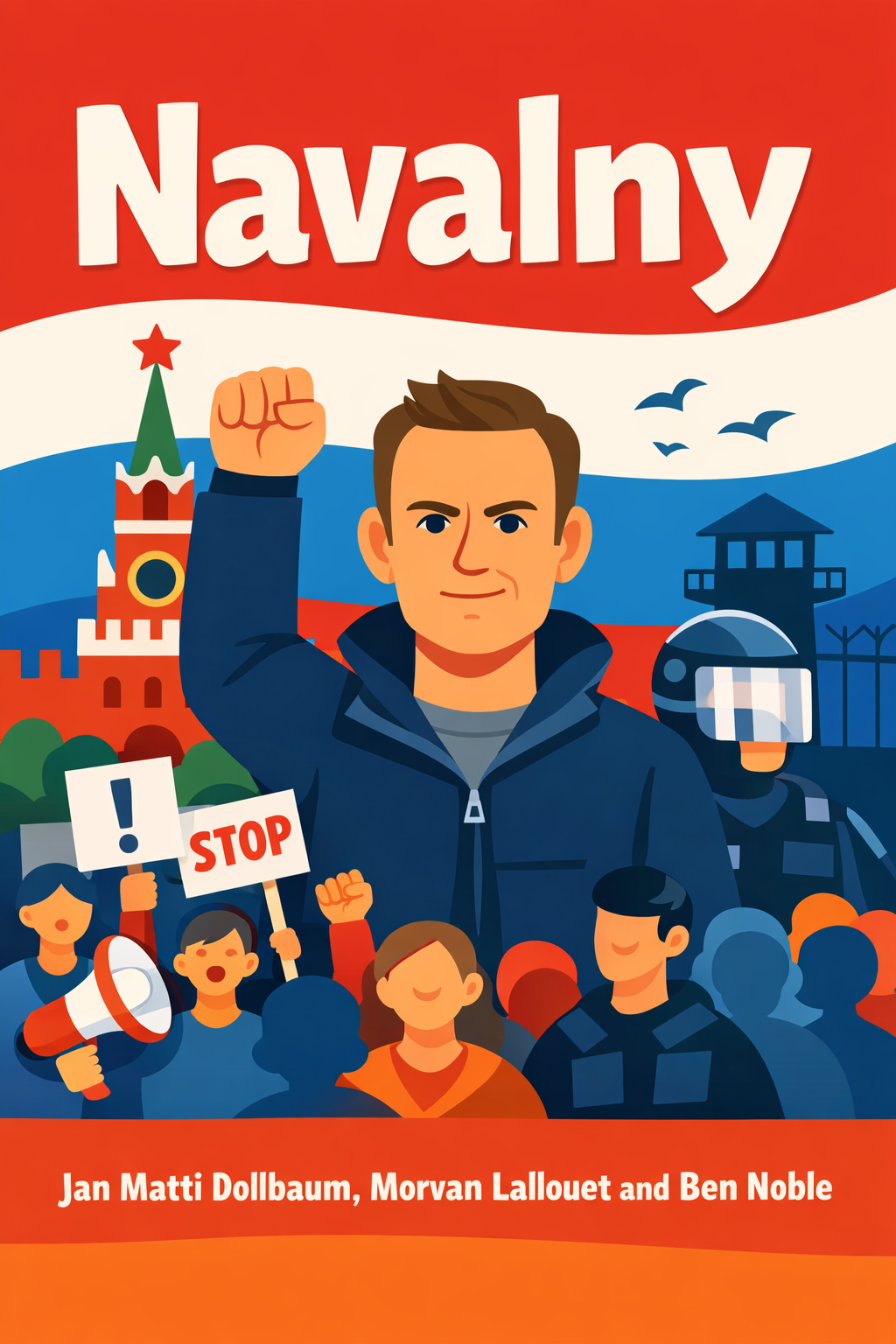
Description
The political landscape of modern Russia, long dominated by a single powerful figure, has been persistently challenged by the emergence of a defiant outsider. This is the story of Alexei Navalny, a man who transformed from a wealthy professional into the nation’s most prominent opposition leader, weaving a complex narrative of activism, political ambition, and relentless confrontation with a formidable state apparatus. His journey reveals the intricate and often dangerous mechanics of dissent within a system designed to suppress it.
Navalny’s path was unconventional. Born as the Soviet Union neared its end, he initially embraced the new capitalist era, building a successful career in finance and law. His foray into public life began not on a political stage, but in the shareholder meetings of Russia’s giant corporations. Using his own capital to purchase minor stakes, he gained a platform to interrogate executives about opaque finances and suspicious transactions, broadcasting his findings to a growing online audience. This shareholder activism evolved into a full-fledged crusade against the systemic corruption he saw as a national plague. He founded the Anti-Corruption Foundation, an organization dedicated to producing detailed, viral investigations that named names and exposed the luxurious lifestyles of the political elite, framing corruption not as an abstract ill but as a direct theft from ordinary citizens.
His activism naturally bled into formal politics, though his career there was marked by constant obstruction. Navalny’s political identity defied easy categorization, blending liberal economic views with nationalist sentiments on immigration, a mix that reflected Russia’s own turbulent post-Soviet identity. His central, unifying message was a scathing critique of the ruling United Russia party, which he famously labeled “the party of crooks and thieves.” He experimented with strategic voting initiatives to undermine their dominance and even mounted a campaign for the presidency. However, the formal electoral route was systematically closed to him through a series of criminal convictions widely seen as politically motivated, barring him from the ballot.
Frozen out of official politics, Navalny and his team masterfully pivoted to building a vibrant, decentralized protest movement. They understood that in a system where elections were managed, the street and the internet became alternative arenas. His organization cultivated a vast network of regional offices and local coordinators, moving beyond his base in Moscow to ignite support across Russia’s vast territory. Through savvy use of social media and meticulously produced investigative videos, they mobilized a new generation. Navalny himself became a charismatic rallying point, drawing thousands to unauthorized protests with a message of hope and tangible change, despite the ever-present risk of arrest.
The state’s response to this challenge was multifaceted and severe. Beyond legal harassment, the authorities employed a strategy of bureaucratic suffocation, denying protest permits, pressuring venues, and labeling his organizations as “extremist.” The conflict reached its most sinister pitch with a near-fatal poisoning using a military-grade nerve agent, an attack Navalny and the international community attributed to the state. His defiant return to Russia after recovering in Germany, knowing he would be immediately imprisoned, cemented his image as a figure of extraordinary personal courage and conviction.
Today, Navalny remains behind bars, serving a lengthy sentence in a remote penal colony. Yet, his imprisonment has not erased his influence. The movement he built, though officially banned, represents a significant and enduring strand of modern Russian history. It demonstrated the potential for coordinated opposition, gave a voice to widespread grievances, and exposed the lengths to which the establishment would go to maintain control. His story is more than a biography; it is a case study in the struggle for political change under an authoritarian system, a testament to the power of investigative journalism and grassroots organizing, and a sobering reminder of the high costs of dissent. The ultimate legacy of his fight, whether as a symbol of resilience or a cautionary tale, continues to unfold.