Description
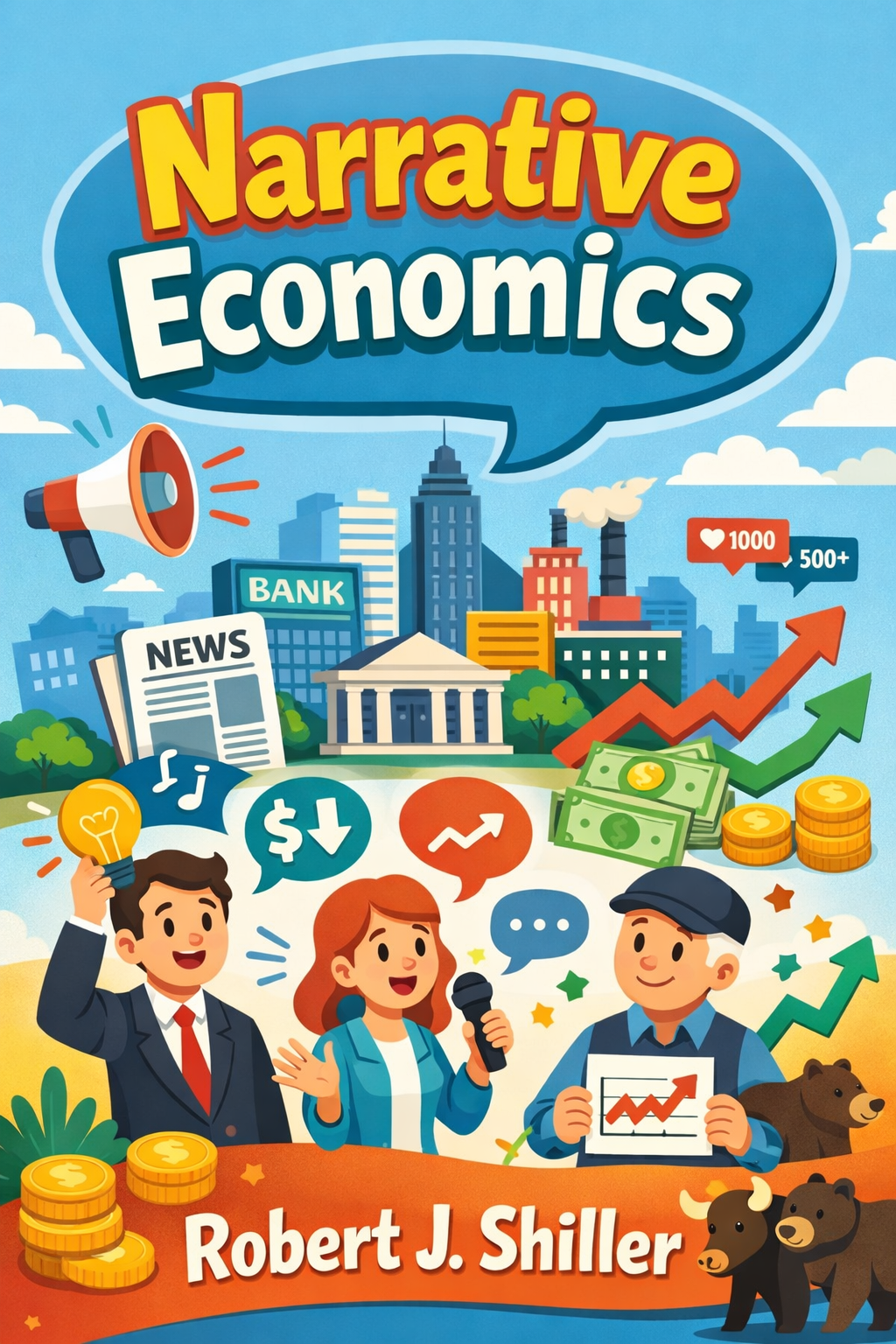
At first glance, the cold, mathematical world of economics seems far removed from the emotional realm of storytelling. Yet, as this compelling work argues, the two are inextricably linked. The central premise is that narratives—simple, contagious stories that spread through populations—are a fundamental, yet long-overlooked, driver of economic events. The book posits that to truly understand booms, busts, depressions, and innovations, we must study the epidemiology of ideas, tracking how economic narratives go viral, mutate, and eventually fade, much like biological viruses.
The author builds a persuasive case that humans are not the perfectly rational actors of classical economic models. Instead, we are storytelling creatures who make sense of the world and communicate values through shared tales. An economic narrative is more than just news; it is a simplified, emotionally resonant story that offers an explanation for complex phenomena. For instance, the story of a “housing shortage” or the “get rich quick” potential of a new technology like the internet or cryptocurrency are not mere observations. They are powerful narratives that, once they capture the public imagination, can compel millions to act in concert, buying homes or investing in stocks, thereby turning the story into a self-fulfilling prophecy for a time.
The text delves into historical examples with the precision of a detective, showing how narratives have repeatedly steered the economic ship. The Great Depression of the 1930s was not just a collection of bad data points; it was accompanied and exacerbated by a potent narrative of fear, lost confidence, and bank failures that spread from person to person, paralyzing consumption and investment. The book examines the “Laffer Curve” narrative of the 1980s, a simple story about tax cuts stimulating so much growth that they would pay for themselves, which significantly influenced U.S. fiscal policy. It revisits the dot-com bubble through the lens of the “new economy” narrative, which suggested old rules of valuation no longer applied, and the 2008 financial crisis, fueled by stories of ever-rising home prices and financial alchemy that could eliminate risk.
A crucial insight is the concept of narrative constellations. Major economic events are rarely caused by a single story. Instead, they are the result of several interconnected narratives reinforcing each other. A technological boom might be supported by a narrative of national destiny, coupled with stories of young, charismatic founders and fears of being left behind. The book also explores the lifecycle of these tales, identifying seven key features that make an economic narrative contagious: human interest, identity, immersion, simplicity, causality, familiar tropes, and time-specific relevance. A story about a neighbor who quit his job to trade Bitcoin and now drives a Lamborghini checks almost all these boxes and is far more powerful than a chart of price volatility.
The implications of this narrative lens are profound for economists, investors, policymakers, and everyday citizens. For forecasters, it introduces a layer of humbling complexity, suggesting that predicting the economy requires not just tracking indicators but also gauging the public mood and the stories it believes. For investors, it serves as a warning to be aware of the prevailing market folklore, as buying into a dominant narrative at its peak is often a recipe for loss. For leaders and central bankers, the book suggests that managing economic confidence is, in essence, managing narratives—crafting and communicating stories of stability and resilience during a crisis.
Ultimately, the work is a call for a new discipline. It advocates for the creation of a comprehensive “narrative economics,” a systematic effort to collect data on the prevalence and evolution of economic stories through tools like word-frequency analysis in digital archives. By understanding the patterns of how stories spread, we might better anticipate their economic impact. The book leaves us with a powerful conclusion: the economy is not just a machine of incentives and resources; it is a theater of the human mind, a collective dream shaped by the stories we tell each other. To ignore these stories is to ignore the very heartbeat of economic life, leaving us perpetually surprised by the booms we create and the busts we endure. Recognizing the power of narrative is the first step toward a wiser, more nuanced understanding of the forces that shape our material world.