Description
Our journey begins not with gods, but with a formless void known as Chaos. From this nothingness, the first entities—Night and Erebus—emerged, and from them, Love was born, bringing light and order. Earth, known as Gaea, and Heaven, called Ouranos, followed, personifying the very world itself. Their union produced monstrous children, including the mighty Titans. The youngest Titan, Cronos, overthrew his cruel father, only to become a paranoid ruler who devoured his own offspring to prevent a prophecy of his downfall. His son Zeus, hidden away by his mother Rhea, would eventually return to challenge Cronos, leading a war that established a new order and Zeus as the supreme ruler of the cosmos.
This new order was populated by gods who, unlike the distant or animal-headed deities of other ancient cultures, were profoundly human in their appearance and passions. They formed the core of a rich mythology that sought to explain the world through relatable narratives. The practical Romans, deeply religious in their own right, later adopted and adapted these Greek gods, merging them with their native spirits. Thus, Zeus became Jupiter, Ares became Mars, and Aphrodite became Venus, creating a blended pantheon that has endured through the ages.
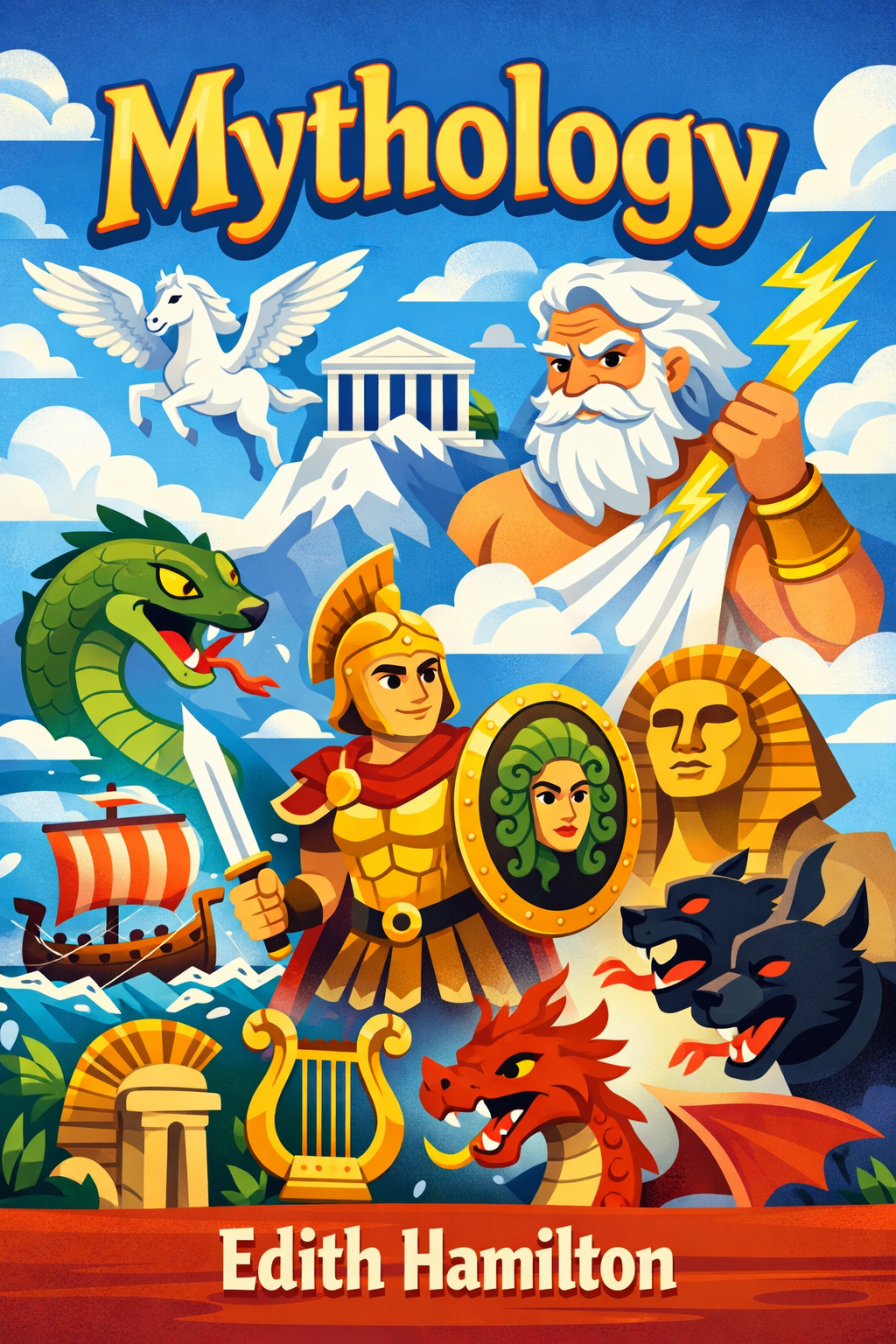
The most powerful of these gods resided on the misty peak of Mount Olympus, functioning like a magnificent, if dysfunctional, family. Zeus, wielder of thunderbolts, ruled alongside his wife Hera, the often-jealous guardian of marriage. His brothers Poseidon and Hades commanded the seas and the underworld, respectively. Among his many children were figures like Athena, goddess of wisdom and civilization, who sprang fully formed from his head; Apollo, the god of light, music, and prophecy; and Artemis, the fierce hunter. Hermes served as the swift messenger, while Ares embodied the brutal aspects of war. Aphrodite, born from sea foam, represented love and beauty, and was married to the skilled but unlucky smith-god Hephaestus. These divine beings were not all-knowing or all-powerful, but rather immensely powerful personalities whose squabbles and romances directly influenced the mortal world below.
Not all major deities lived in remote splendor on Olympus. Two gods, deeply woven into the fabric of daily human life, had their domain on Earth itself. Demeter, the goddess of the harvest, controlled the fertility of the land. Her profound grief over the abduction of her daughter Persephone by Hades explains the very cycle of the seasons. When Persephone is in the underworld, Demeter’s sorrow brings winter; her return each year restores life and brings spring. The other was Dionysus, the god of wine, ecstasy, and theater. Born from Zeus and a mortal woman, his myths tell of a god who traveled the world, spreading both the joy of viticulture and the terrifying power of divine madness, representing the dual nature of liberation and chaos.
The myths are also filled with heroes, mortals of extraordinary strength and destiny who performed impossible feats. The greatest of all was Heracles, known for his superhuman strength and his famous Twelve Labors, a series of grueling tasks assigned as penance. His stories are a mix of triumphant victory and tragic folly, showcasing the heroic ideal. Another poignant tale is that of the musician Orpheus, whose love for his wife Eurydice was so powerful he journeyed to the underworld to retrieve her. His music charmed Hades himself, who agreed to release Eurydice on one condition: Orpheus must not look back at her until they reached the surface. At the last moment, doubt overcame him, and he turned, losing her forever—a timeless story of love, trust, and irreversible loss.
Grand quests define other legends, most notably the voyage of the Argonauts. Led by the hero Jason, this crew of legendary figures sailed on the ship *Argo* to the edge of the known world to retrieve the Golden Fleece. Their journey was packed with monstrous encounters, sorcery, and betrayal, notably from the Colchian princess Medea, who used her magical powers to help Jason before their relationship descended into vengeance and tragedy.
The most significant collective heroic endeavor was the Trojan War, sparked by the abduction of Helen. The *Iliad* chronicles a pivotal period in this decade-long conflict, focusing not on grand strategy but on the human emotions of its warriors—the rage of Achilles, the nobility of Hector, and the interplay of gods favoring different sides. The war concluded not just with the infamous Trojan Horse, but with a series of poignant endings for its champions: Achilles was killed by an arrow to his vulnerable heel, and the cunning Odysseus began his own epic, decade-long voyage home.
This journey home, the *Odyssey*, is an adventure story of perseverance and cunning. Odysseus faced mythical perils like the cyclops Polyphemus, the enchanting sirens, and the terrifying whirlpool Charybdis. His story is ultimately one of a man using his wit and endurance to overcome supernatural obstacles and return to his family, completing a vast narrative cycle that moves from the creation of the cosmos to the intimate reunion of a husband and wife.
These myths formed the bedrock of classical education and imagination. They are not mere fairy tales, but foundational narratives that have shaped art, literature, psychology, and language for millennia. They explore universal themes—the struggle for power, the pain of love and loss, the nature of heroism, and the human attempt to explain the natural world and our place within it. To know these stories is to understand a vital layer of our cultural heritage, providing the keys to countless references in everything from Renaissance paintings to modern films, and offering timeless insights into the human condition itself.